Showing posts with label 5 Stars. Show all posts

Wednesday, June 14, 2017

Review: The Names They Gave Us by Emery Lord


Title: The Names They Gave Us

Author: Emery Lord

Rating: 5 Stars

The Names They Gave Us is tied with The Start of Me and You as my favorite novel by Emery Lord. I enjoyed Open Road Summer but When We Collided made me re-evaluate whether Lord and I had gone our separate ways. We haven't; not yet, at any rate.

Lord's latest follows Lucy, from the night of her junior prom when she finds out that her mother's breast cancer is back after two years, to her boyfriend "pausing" their relationship for the summer, just as Lucy goes off to be a counselor at Camp Daybreak, a far cry from the Camp Holyoke, the Christian camp where she typically spends her summers helping her pastor father. Lucy's voice is so fresh and honest. I couldn't help but be enamored by her from the beginning. Lord always writes characters I'd want to be friends with and Lucy was no exception. Even in the beginning of the novel, when Lucy simply wants to yell at the world--and especially at God--I knew The Names They Gave Us would be a gem.

Lucy's summer isn't easy, but the friendships she makes and the person she grows into are all wonderful. Camp Daybreak is a summer camp for children who have their own griefs to deal with, whether it be parental neglect, a teenage pregnancy, the death of a loved one, or something else entirely and, in that respect, The Names They Gave Us is an emotional novel. It isn't a cancer story, even though Lucy's mother's cancer is such a huge part of the book and especially a large part of Lucy and her mother's evolving relationship, not to mention family dynamic. It also isn't a religious novel, despite the fact that Lucy's father is a pastor.

Lucy has been raised in the Christian faith all her life but now, with the re-emergence of her mother's cancer she begins to doubt everything she knew. And, as someone who didn't grow up in the Christian faith, I can testify that I could still relate with Lucy. Her struggle to reconcile her experiences with her faith is a journey I think a lot of teens can relate to and Lord writes it with aplomb, balancing the religious and self-discovery aspects perfectly. I especially enjoyed that Lucy struggles to fit in because she's the pastor's daughter--people make assumptions about her personality, whether or not she drinks, her sexual limits, etc.--and watching Lucy grow and own who she is is such a rewarding part of this novel.

The Names They Gave Us features a trans best friend, people of color (and a love interest of color, actually!), discussions of privilege and sex, and is just all-round fantastic. It passes the Bechdel Test with flying colors, the friendships in this novel make me wish for the past, and this story made me tear up on more than one occasion. I don't know how Lord manages to write such consistently fantastic YA novels which simply breath life into the genre, but she does. And I sincerely hope she doesn't stop.

Tuesday, May 9, 2017

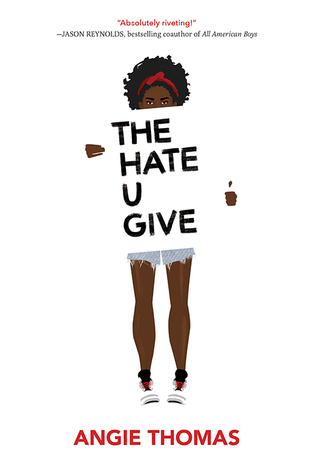
Review: The Hate U Give by Angie Thomas


Title: The Hate U Give

Author: Angie Thomas

Rating: 5 Stars

The Hate U Give is incredible, powerful, and an absolute must-read for everyone. Thomas's story begins with our heroine, Starr, witnessing the death of her childhood friend, Khalil, who is unarmed and shot by a white police officer. What ensues is chaos as Starr struggles to protect herself in the media and amongst the two worlds she straddles--her expensive private school where she is one of two black kids and the town where she grew up in which is overrun by gangs.

Starr's story is a beautiful rendering of what it means to be black in America; of the microaggressions and racial comments you have to bite your tongue from responding to, of the pain and fear and injustice. I may not have been able to relate to the community Starr lived in, but so much of this story hit so close to home. One of Starr's closest friends continues to make "slight" racial comments/jokes in the wake of Khalil's death and Starr is fed up of ignoring them and moving on. She finally confronts their toxic friendship and as someone who is currently biting my tongue in the face of "slight" racist comments/jokes on a daily basis (being as I am currently studying abroad in Europe and my program is very, very white) I completely understood.

But more than that, this is an incredible YA novel about family and growing up and finding yourself and what you believe in and what you're going to fight for. I especially loved the emphasis on family that this novel delved into, from Starr's parents to her uncle and even her brothers. I felt immersed in a loving African American family while reading this and I desperately want to go back. Thomas's writing is just that good, though--I cannot recommend this enough and I wish she had a backlog of twenty-five novels for me to comb through.

I think, often in YA, we tend to have "issue" books or "diverse" books which seem to stand on their own from other novels. I don't want readers to think of this novel as one of those books. Is it diverse? Yes. Does it tackle important social issues? Absolutely. But at its core, it's an important story about belonging that I think everyone will be able to relate to and definitely learn from.

In the wake of our election, I have been motivated to learn more now than ever before about what it means to live in America and have an experience different from my own. If you feel even a fraction of the anxiety and desire to create change that I have felt over these past few months, read this book. It'll make you feel as if you're on the right track, at the very least.

Tuesday, March 7, 2017

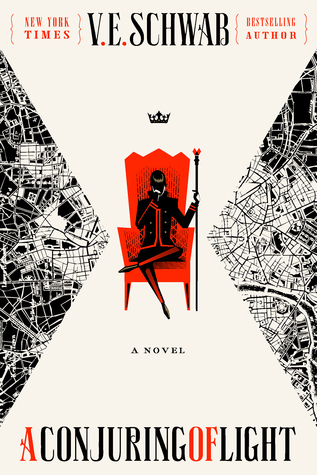
Review: A Conjuring of Light by V.E. Schwab


Title: A Conjuring of Light (Shades of Magic, #3)

Author: V. E. Schwab

Rating: 5 Stars

You can read my review of the first book in this series, A Darker Shade of Magic, HERE.

A Conjuring of Light was everything I hoped for and more. For me, this series has gone from a whimsical, adventurous fantasy tale to a thrilling story with brewing darkness to, now, epic fantasy. Schwab has transformed her trilogy from a more light, exciting novel that is a pleasure to read and re-read to a darker, more serious tale where the stakes are high and the repercussions are higher. This final installment loses none of the charm, wit, or humor of the first two books but it is dark, throughout, which makes for a thrilling finale but A Gathering of Shadows nevertheless remains my favorite.

That being said, I loved this book. And I love this series. The first 10% or so is high tension, heavy action as Schwab picks up where her torturous cliffhanger left off. Then, the darkness settles as the Red London we've come to know and love is transformed. What I love about Schwab's writing is that she strikes the perfect balance between action and contemplation, darkness and light. We delve deeper into the minds of the King and Queen, Maxim and Emira, as well as into Holland's past and getting the chance to understand these secondary characters better was an unexpected treat. I didn't think I'd come to care for them as much as Kell or Lila or Rhy, but I did.

Schwab further challenges each and every one of her characters in this story. We've seen Kell put the test, time and time again over the course of this series, and Holland as well, but this time we see Lila and Rhy, Alucard and Maxim, Emira and Tieren, all put to the test. It's not easy but it's a worthwhile journey. Kell and Holland aren't forgotten for, as always, these two Antari are tried and tested. The challenges facing these characters in this finale seem insurmountable but the conclusion--the second half of this story--is all fast-paced action and sacrifices, grief and bloodshed, and I couldn't put it down.

I set out to devour this novel slowly, and to a large extent I did. But I sped through the last half of this novel and I feel bereft and strangely alone now that this seductive series is over. I will miss it, terribly. And while I will read and re-read these books again and again, nothing can compare to the feeling of first flipping through these pages. If you haven't already picked up these books, do it. They'll change your life and your heart will never quite be the same again; these books have replaced my prior favorite books--that's how good they are. Anoshe. 

Monday, February 6, 2017

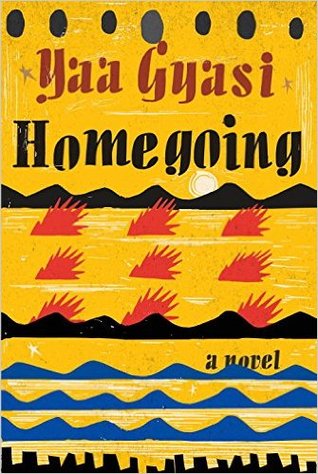
Review: Homegoing by Yaa Gyasi


Title: Homegoing

Author: Yaa Gyasi

Rating: 5 Stars

I love Chimamanda Ngozi Adichie's TED talk, titled "The Danger of a Single Story," and I thought of it often while reading Homegoing. In fact, the absolute best aspect of this novel is that it doesn't fall into the trap of the danger of a single story; instead, this a novel told from fourteen different perspectives, over seven generations of a family whose half-sisters are separated from birth and whose consequent lives take them down very different paths. Effia, who marries a white man, stays on in her homeland, the consequent generations of her family witnessing the rise and fall of colonization, all while playing a large part in the slave trade themselves. Esi, meanwhile, is sold into slavery and her lineage continues, in America, living a completely different life from their counterparts in Ghana.

It's a striking, beautifully written story. It took me a long time to read, not because it was slow or boring, but rather because it was so incredibly thought-provoking. Gyasi makes me care for each of her characters, wishing that I got more than just one chapter from their perspective before jumping years into the future onto the next generation. But, I'd feel the same sense of loyalty and care for the next character I encountered. Gyasi has a talent for weaving these fourteen perspectives together in such a way that it never felt as if a large chunk of time or ocean was missing as we went back and forth between Ghana and the United States.

As an American, the chapters told from the perspectives of Esi's descendants, first slaves and then black men thrown in jails and then victims of segregation, struck hardest. To be frank, the scariest part of reading them is that, in so many ways, not much has changed: black men are still thrown into jails, they are the victims of police brutality and hate crimes, their lives are dominated by the sole aspect that they are black. It's a rude awakening that America has so much farther to go, to change.

The chapters set in Ghana were a fascinating look into the lasting effects of colonialism, even well after the white man had left. What I appreciated most about these chapters are that Gyasi never writes stereotypical characters. Her characters are gay, disabled, angry, confused, labeled crazy, victims of their pride or ego, etc. She doesn't make it easy for them, even if they are in Ghana and seem, at first, to be the luckier half of this family tree.

There is so much more to say about this novel but, mostly, it simply demands to be read and pondered over. Homegoing is an incredible, ambitious debut. In the wake of this election, at a time when hate crims are surging and the lives of minorities seems most fragile, Homegoing offers a much-needed perspective that prides itself on being not just a single story, but many stories, over many generations and through many eras of history. It is incredible.

Wednesday, May 25, 2016

Review: The Unexpected Everything by Morgan Matson


Title: The Unexpected Everything 

Author: Morgan Matson

Rating: 5 Stars

I have a confession to make: I didn't expect to enjoy Morgan Matson's novels. I know, I know--how could I make a judgement like that without ever picking them up? But something about Matson's novels screamed "summer" and "contemporary" and somehow a little too...young? But I was really in the mood for a fun, contemporary summer romance so I gave The Unexpected Everything a shot and, color me surprised, I found a new favorite novel. I genuinely loved this book. It had everything I look for in my most cherished novels--a complex parental relationship, a prickly heroine who didn't always do the right thing, a tight-knit group of friends who grew and changed, and a slow-burn absolutely swoon-worthy romance. All against the backdrop of a sticky, hot summer and I wound up reading this with my window open, droplets of rain brushing my ankles as I stayed up late finishing this novel. 

As the daughter of a Congressman, Andie has grown up in the spotlight. Whether it be a new campaign or a speech or the funeral of her mother, Andie has been photographed through it all. This summer, though, she's about to do something for herself--attend a prestigious pre-med program for high school students in Johns Hopkins. But when a scandal is uncovered in her father's office, Andie's recommendation letter is withdrawn and she suddenly finds herself with no summer plans. Not only is her father home for the summer--taking a leave while an investigation is conducted in his office--but Andie now has to spend quality one-on-one time with her father for the first time in five years, since her mother's death. For Andie, the girl who always has a plan, living each day uncharted has never come easy. But maybe this summer, she'll discover more than she thought...about herself, her passions, and her father, too. 

For me, the best aspect to this novel is Andie's relationship with her father. It clearly isn't easy for either of them to be such a huge part of one another's lives this summer. Andie's father has been so dedicated to his job that he barely knows anything about Andie's life. Andie, similarly, has been managing on her own for so long that she can't handle having a curfew or a father who interrogates her dates. While these two begin the summer on a rough path, I really enjoyed seeing as they both made efforts to get to know one another. I loved their banter, the way Andie's father made himself a part of her life, and the manner in which they slowly began to move on from the grief they experienced over her mother's death--together. In fact, I think theirs is one of my all-time favorite fictional father-daughter relationships. 

Another huge part of this novel, though, are Andie's friendships. Andie is best friends with Palmer--who is dating a theater geek Tom--and Toby and Bri. Toby and Bri are best, best friends and have been since kindergarten. Though the four of them are a unit, Toby and Bri are together almost all of the time and their lives are so overlapped that half of their school gets the two of them confused. Toby is a romantic, determined to get her rom-com happily-ever-after while Andie treats relationships as three-week flings during which she has to sit patiently through the date to finally be able to make-out with the guy. The four of them are so different but I loved reading their group texts and watching as they made their summer a magical, entirely exciting experience. They've always got one another's backs and they talk about everything, from their families to their boy troubles and I loved that. This book definitely passes the Bechdel test and though their tight-knit friendship goes through its hurdles, I thought it was such a realistic dilemma and was handled in such a mature manner. I love a bittersweet, but realistic ending and that's exactly what this gave me. 

Of course, I can't not talk about the utterly adorable romance within these pages. Clark is nervous and shy, a fantasy author who falls for Andie and takes her on a disastrous first-date that neither of them enjoy. Where Andie avoids talking about herself, Clark pushes her to open up and Andie, who is closed-off and never lets any guy get "in", immediately shuts down. But somehow, Clark gets past Andie's defenses and their love story is just too cute. Clark has been home-schooled all his life and Andie pushes him out of that bubble, introducing him to her friends and her father and giving him a summer of memories he won't forget. On the other hand, Clark makes Andie comfortable enough to open up about her life--her father, her mother, her friend group--and for the first time in her life, Andie finds herself in a relationship lasting longer than three weeks. It's such a healthy, equal relationship and though it has its ups and downs, I really loved watching it unfold. I especially enjoyed that Clark wrote fantasy and his passion for writing is just as evident as Andie's passion for medicine or animals. Andie and Clark push each other to become their best version of each other and I loved that--not to mention I fell for Clark and his dimples so, so hard. 

The Unexpected Everything was such a lovely, unexpected surprise. I genuinely didn't expect to find my next favorite of 2016 when I picked this up but now all I want to do is re-read it. I can't recommend this enough to anyone looking for a realistic, mature, and romantic summer read. It's a contemporary YA that's cute, sure, but it's also deep and talks about sex and changing friendships and familial relationships. It has so much to offer and I can't wait to pick up Matson's other novels. I only hope they wind up being unexpected surprises too!

Saturday, April 23, 2016

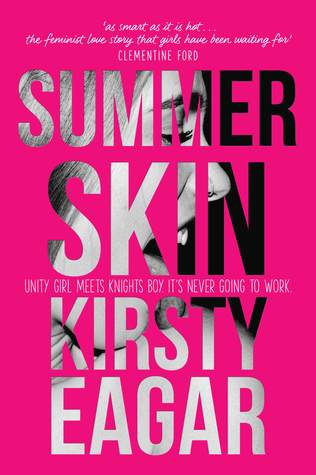
Review: Summer Skin by Kirsty Eagar


Title: Summer Skin

Author: Kirsty Eagar

Rating: 5 Stars

Summer Skin is the type of New Adult novel I've been waiting to be written; a book that is sexy, passes the Bechdel test, and discusses feminism without shame or pretense. It's a story of two rival schools--Unity, co-ed, and Knights, all-male and distinctly elite. Last year the Knights men made a bet to sleep with a Unity freshman and this year, the Unity girls are out for revenge. The story opens with Jess, a Unity girl, sneaking onto the Knights campus to steal a Knights jersey--the prize for the Unity who humiliates a Knights man the most on the night of their annual toga party. But Jess is seen by Blondie, an arrogant Knights guy who she can't seem to get out of her head and when she encounters him again at the toga party, that's when the fun truly begins.

Jess and Blondie have a crazy relationship. It's messy and isn't perfect, which I love. They'll be in a middle of a steamy scene and suddenly it'll get awkward or uncomfortable and it all felt so desperately real that I couldn't help but love each and every moment of this book. Plus, the majority of their relationship lies in their conversations trying to understand one another. To Jess, Mitch (Blondie) seems to be just another Knights guy--willing to use women for sex without sustaining a relationship with them first--and Jess wants to be more than that. But also, she doesn't want to judge Mitch for his actions or the women he's been with for their decisions. Just because she requires more than a nameless face for sex doesn't mean that everyone does. But that concept of feminism--of women owning their agency--is so difficult to internalize.

This book is all about understanding what it means to be a feminist and using that definition however you see fit; for Jess that means that she doesn't feel comfortable having sex unless she has some sort of relationship with the person, for her friends it means entirely different things and their difficulty navigating those waters is what makes this such a phenomenal story. There's one scene in particular where Jess is talking to her Instagram famous friend about her insecurities--why does her friend constantly feel the need to post on Instagram?--and she admits that though she has judged her friend, she also admires her. I think that's the crux of discovering feminism at any point in your life--you judge others for their actions, whether it be their sexual liberty or their lack of sexual actions--but you're also torn between admiring them and wanting to be them as well. It's so hard to be okay with being you and rationalizing your own decisions to yourself, especially when the whole world seems to be of a different opinion, so I really love that we get to explore this tension with Jess in such an authentic manner.

Mitch, too, isn't all he seems on paper. The guy is screwed up--won't kiss, won't have sex, definitely will touch--but his relationship with Jess evolves and changes with time which I appreciate. It's difficult and certainly not an easy slope to climb but I enjoyed getting a glimpse into his world as well--the pressures he faces from guys around him, the way his friends think about women, etc. It isn't easy to be a feminist and be a man. We think it is but sometimes, society and circumstances are built in such a way that it's so hard for men to break out of their molds, too. Like Jess, I'd often sway between frustration and swoon when it came to Mitch but by the end, I understood his perspective too do, kudos to Eagar for not making this one-sided and flat but instead turning this three-dimensional and complex and all-too-real.

Summer Skin is so, so good. It features healthy discussions about sex, not just with partners but also with friends and adults. It centers around Jess and Mitch's relationship but also revolves around them individually and their struggles with friendship and college and figuring out what they want. Plus, there's the tension between Unity and Knights that persists throughout, the forbidden element of Jess and Mitch's affair, not to mention Eagar's distinct writing style that never fails to amaze me. I only wish similar books were being written with different characters and different races and genders and socio-economic statuses so that we'd have a whole slew of novels that discussed feminism and sex so that teens didn't have to feel so alone when they glanced at their bookshelves. But maybe this is the start of that revolution; I certainly hope so.

Sunday, April 17, 2016

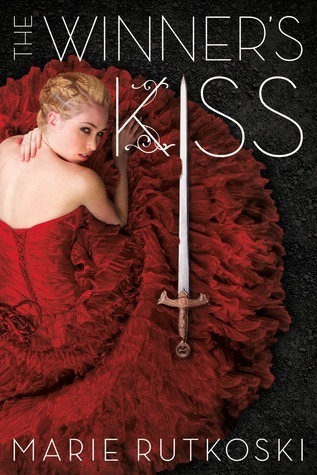
Review: The Winner's Kiss by Marie Rutkoski


Title: The Winner's Kiss (The Winner's Curse, #3)

Author: Marie Rutkoski

Rating: 5 Stars

I’ve struggled to write this review. Is this only the second time I’m re-writing it? It’s hard to tell. The Winner’s Kiss has occupied nearly all of my brain capacity since I picked it up and it hasn’t left me, even now that I’ve set it down. Rutkoski’s world has been bold and brilliant ever since The Winner’s Curse; this I knew. The Winner’s Crime only confirmed that her characters were passionate, vulnerable, and clever—a deadly combination if ever there was one. But The Winner’s Kiss is a seamless blend of romance and politics, infusing the best of this world and its people with a heart-stopping plot that ensures that though this series is truly at an end, its words will live on.

I’ve wanted Rutkoski to challenge her characters and push them beyond their comfort zone ever since first encountering them on the auction block of The Winner’s Curse. While they were intelligent and witty, motivated and brave even back then, I knew that they had the potential to be so much more. Finally, we see the darker underbelly of this world—its ruthlessness both on and off the battlefield. The Kestrel and Arin of The Winner’s Kiss are far different characters from those we have encountered before. In some ways, it’s safe to say that they hardly know themselves, let alone each other. The highlight of this novel, by far, was watching them navigate their memories—the past they thought they knew—and reconciling it with the present before them.

Their relationship has been a slow-start from the beginning and that isn’t an exception in this final installment but, seeing Kestrel and Arin interact in a setting wholly free of society’s shackles was refreshing. We get to finally see these two simply be and that, in and of itself, is a treat. Kestrel’s struggles throughout this novel are intense and painful, but also necessary. I understood her better outside the walls of the palace and I appreciated that Rutkoski didn’t make things easy for the daughter of the general. We see Kestrel become forced to assimilate within an army where she is the only Valorian among Herrani and Dacran alike. We see her face off her complicated emotions towards her father and the life he would have chosen for her—no easy task, especially when this is a relationship that has been complicated and nuanced from the start. With Arin, we experience a different set of challenges—his innate goodness contrasted with his skills on the battlefield; his vulnerability being pushed aside time and time in favor of the cold hard exterior of a leader; his willingness to trust contrasted against his history of mistakes. Neither Kestrel nor Arin are at a perfect place in their lives but watching them come to terms with one another, and themselves, is easily the best part about The Winner’s Kiss.

Roshar, the eastern prince who has allied himself with Arin, is the hidden gem of this series. Unfortunately, we don’t see much of Roshar in the first two installments of this trilogy but, finally, in The Winner’s Kiss we are able to experience him in all of his glory. Roshar is witty, always ready to crack a joke rather than discuss anything serious, but behind his veneer of laziness and nonchalance is a cunning mind whose allegiances are mysterious. What does Roshar hope to gain from helping the Herrani escape their masters? It’s unclear, which makes Roshar a dangerous character. Yet, I challenge you to cast doubt upon him and truly suspect him for more than a page before admiring and adoring him, again. His friendship with Arin is a bromance of the ages and his relationship with Kestrel, though unexpected, is another special aspect of this novel. Moreover, I enjoyed that through Roshar we are able to appreciate the full strength of Rutkoski’s world-building. The East is vastly different from the West but their animals, plants, poisons, customs, and rituals are not only fascinating, but relevant.

I have so much admiration for how Rutkoski uses every detail of her novels in an important way. Whether it be her battle scenes, tactical machinations revealing more about the characters than gritty details of bloodshed, or the political maneuvers made by these characters, every scene is intricately plotted. Truly, I couldn’t have envisioned a more apt way to end this story and the ending is perfection. I haven’t always loved this series and I’ve definitely felt as if the hype was unwarranted, at least once or twice, but The Winner’s Kiss makes it all worth it. Not only is this series achingly romantic, but it’s smart—it features strong characters, a brilliant heroine who embodies her agency in the strength of her mind, and a world whose politics can draw parallels to our own world (if we only looked hard enough). Thank you for this world and its characters, Ms. Rutkoski; they won’t be leaving me anytime soon.

Tuesday, October 20, 2015

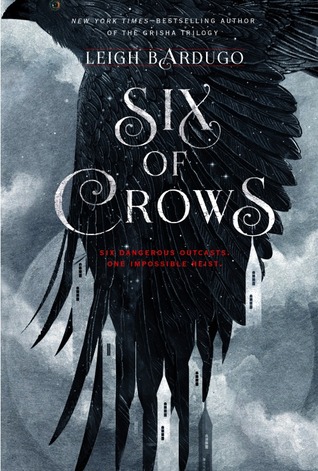
Review: Six of Crows by Leigh Bardugo


Title: Six of Crows (Six of Crows, #1) 

Author: Leigh Bardugo

Rating: 5 Stars

Six Reasons Why Six of Crows Is LIFE: 

1. A HEIST! 

If you haven't already heard by now, Six of Crows is a heist novel. I've heard it compared to Ocean's Eleven, which I haven't seen, but I'd liken it to The Avengers since there's an epic round-up of our team and an utterly satisfying journey as they learn to trust one another and work together, despite the fact that a handful of them are strangers. Moreover, I can promise that Bardugo doesn't disappoint. Not in the details, not in the plot twists, and definitely not in the sucker-punches to the gut (you know, that feeling you get every time you're reminded of how this is an impossible task and the team assembled is guaranteed to fail).

2. Legends 

Every one of the six characters who make up our heist team are legends in their own right. There's Kaz Brekker, the criminal mastermind and genius who is unstoppable. There's Inej, the Wraith, who is as silent as a shadow and can travel anywhere, anyhow, without being detected. There's Jesper, whose guns never miss their mark. And so on and so forth. We're introduced to these characters by their legends--the stories that surround them, the rumors that circulate about them--but by the end, we've slowly started to peel back the layers and expose that they, for all their impossible feats, are mere people. I love how Bardugo does this, so gradually, and it works perfectly. It forces us, as the reader, to become invested emotionally and then just keeps twisting the knife in deeper until our hearts are bleeding and our breath is becoming shallow and we can't imagine our lives before we knew about these characters; I am so in love with all six of them, it's desperate.

3. Multiple POVs

Bardugo writes Six of Crows from a third-person perspective, which works perfectly as she alternates between narrators. Each of the six have their turn, time and time again, and though I usually shy away from multiple perspectives, Bardugo perfected it. Not only is it ideal when we're working with a heist, especially one as elaborate as this where the team members need to be split up, but it's also ideal when peeling back the layers of a group of six people who don't trust each other, who don't know where they stand with one another, and who all want money desperately. I never thought the POV shifts were abrupt, unexpected, or unwanted so kudos to Bardugo for walking that fine line flawlessly.

4. Politics, Slavery, and Discrimination

Shadow and Bone revolved mostly around Grisha politics, centered in Ravka and working its way inward through the Second Army and the different ranks of Grisha. With Six of Crows, we've entered a whole new underbelly. Admittedly, some parts are familiar--Grisha, Fabrikators, Heartrenders, etc.--but others are relatively new. Bardugo expands this world so much, including different races of people and different customs, some of which despise the Grisha. I found it interesting to see how these six individuals, each with completely different--and tragic--backgrounds interact with one another despite their prejudices and pre-conceived notions which are, perhaps surprisingly, harder to let go of than we may think. Bardugo never info-dumps this onto us, instead revealing to us bits and pieces in multiple narratives. As a lover of fantasy, and particularly fantastical politics, I ate this all up.

5. Romance

No one can slay me with a romance quite like Bardugo can. Remember how, in Siege and Storm, your heart was breaking page after page because Mal and Alina so desperately wanted to be together and so clearly were destined to be together but their rank and circumstance and past just couldn't allow them to be in the relationship they once dreamed of? And it was so painful because of how unfair it was? Because neither of them could really do anything except give up a part of themselves? And how could we ask them to do that? Well, that's how the romance is in this novel. Except times fifty. So...just get ready for a lot of blood and tears. But it's so, so good. My favorite romance is, obviously, the one that seems utterly doomed and full of strife and peril but, I hold on to the smallest shreds of hope, even as the sexual tension kills me, slowly. There's another romance, too, one which I think is less subtle and I love the depth and complexity that this one has, too. Moreover, I strongly suspect there's yet another romance, hidden deep in small phrases and tiny gestures, so though I may simply be fangirling for no reason, I ship yet another couple in this novel (and I will go down shipping them, so they better become a prominent couple soon, Bardugo)!

6. Villains

Every good novel has a good villain--or two, or three--and this book is teeming with formidable villains. Ones I want to see go down. While the Darkling was more like Draco Malfoy--extremely attractive, to the point where you didn't want to hate him, and not entirely evil--the villains in this novel, much like the main characters, are flawed and without remorse. I love the fine line Bardugo emphasizes between hero and villain because, our crew? None of them are heroes. All of them have lied and stolen and cheated their way to where they are now and though they may have survived out of circumstance, none of them are without guilt or blame. Yet, Bardugo makes us root for them and believe in them, much like real people whose pasts are messy but whose futures still hold hope. We've gotten glimpses of our villains in Six of Crows; strong and potent glimpses. I am sure they will come further into the forefront as the series wears on and I cannot wait to meet them, head-on, with Kaz and his team.

If you need more than six reasons to pick up Six of Crows, I promise I can come up with them for you. This is a novel that features disabled characters, diverse characters, mature characters and if you're searching for a New Adult-esque fantasy novel that explores the ideas of a New Adult novel--finding your place in the world, albeit through mistakes and strange situations--then Six of Crows fits that bill too. It's so many incredible, wonderful, surprising stories and genres in one that I am truly astounded by it. Easily one of the best books of the year, if not the best, this is one I couldn't put down, classes be damned. (Although, Bardugo, I might be begging for more than just the next novel at this point. It would be nice if you could give me my GPA back too...)

Saturday, September 12, 2015

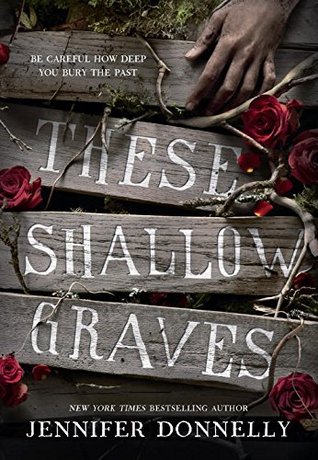
ARC Review: These Shallow Graves by Jennifer Donnelly


Title: These Shallow Graves

Author: Jennifer Donnelly

Rating: 5 Stars

Release Date: October 27th, 2015

These Shallow Graves is Jennifer Donnelly's third historical fiction novel for young adults and, like her previous two, I fell head-over-heels in love with it. Much like A Northern Light, Donnelly's latest features a curious, determined protagonist and a mystery whose secrets threaten the very lives of our characters. Moreover, it is littered with snippets of dialogue and scenarios which serve to distinguish the sharp line between women and men, particularly the hypocrisy and cruelty that kept women from attaining equal rights for so long.

I really, really love Donnelly's work, not only because it's well-written and entertaining, but because these are the types of novels I want young girls to read. I want them to open a book and find a heroine who is ambitious and driven, yet finds herself held back by society and still manages to push forward. I want them to read novels where men are supportive of a women's career and interests, even when most other men are not. I want them to find stories that entertain them but also teach them about the struggles women did have in the world and all the opportunities they have now--opportunities they should seize the way Jo Montfort seizes those before her.

These Shallow Graves has so much going for it, from its compelling murder mystery to its terrifying villain to its layers and layers of secrets. It has a slow-burn, swoon-worthy forbidden romance that will make you melt and a heroine who you can look up to. But more than that, it's a perfect snapshot of the lives of multiple women during this time period. Jo, our protagonist, is a wealthy young woman expected to marry well when her father suddenly commits suicide. While her uncle has it reported as an accident, Jo's curiosity and desire to become an investigative journalist propel her to uncover that her father was shot and murdered. While this leads her on a wild goose chase for the killer but it also brings her in contact with the dirty underbelly of the city, crawling with prostitutes whose eyes are dead, and Fay, a female thief who, despite not having family to tie her down, is nevertheless without freedom. A Donnelly novel stays with me long past its last page because of the themes it echoes, reverberating not only through the book but through my own life as well. I think all women can comprehend the situation these young girls are thrown in and the fact that we can still empathize with that, despite the progress we have made, is its own kind of sadness.

Nevertheless, there is much happy within this somber story as well, from Jo Montfort herself to Eddie Gallagher, the handsome journalist she meets and convinces to help assist her in solving this crime. Jo and Eddie are one of my favorite couples and their interactions are laced with a deeper understanding of one another which I truly appreciate. Moreover, their love story never takes away from the personal growth Jo experiences or the plot line but it is the cherry on top, which I appreciate.

These Shallow Graves is anything but shallow; a thought-provoking novel that pushes the boundaries of what YA is currently doing to what it could be constantly doing. Moreover, it's Jennifer Donnelly's latest book. It really needs no more endorsement than that.

Friday, August 7, 2015

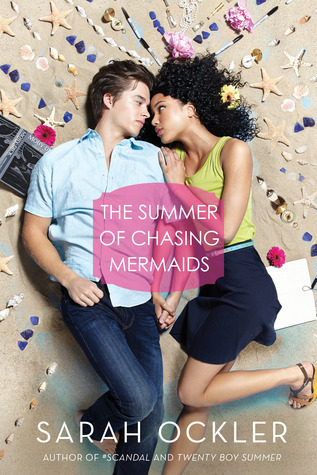
Review: The Summer of Chasing Mermaids by Sarah Ockler


Title: The Summer of Chasing Mermaids

Author: Sarah Ockler

Rating: 5 Stars

I blinked hard when I finished The Summer of Chasing Mermaids, both because of the sheer perfection of this novel and in a tireless effort to keep at bay the waves of emotion that Sarah Ockler's "Acknowledgements" section had inspired. Then, after a long moment of contemplation, I turned back to the beginning of the novel and re-read it, cover-to-cover, even more slowly and with ever more deliberation than before; desperately trying to make the experience last a lifetime, not a mere few hours.

I read The Summer of Chasing Mermaids in January. Only eight months later, in the summer heat of August, am I able to finally put words to my emotions. Ockler's latest hit me like a sucker punch to the gut; I didn't even know how desperately I yearned for this book. Elyse, the beautiful protagonist of our tale, is mute. Once a singer, about to embark on tour with her twin sister, Elyse is now merely a visitor in Oregon, a sea away from her home and at an arm's length from those around her.

As a singer myself, I understood Elyse's fear, tension, worry, and pain implicitly. Yet, The Summer of Chasing Mermaids did not resonate with me simply due to the fact that Elyse and I are both singers (obviously, she is MUCH better). No, the reason Ockler's novel hit so close to home is because it forced me to think of all the people in my life--myself included--who have felt as if they didn't have a voice, at some point or the other. Elyse literally has no voice but in losing her literal voice, she loses all other means of communicating her dreams, her hopes, and her desires. And for me, watching Elyse find a group of friends she could belong with, seeing her converse with a tight-knit group of females who are both inspirational and vulnerable, reading her fall in love with a guy who respected her boundaries and pushed her to be a better person--all of these pushed me to look beyond my own limitations in life, whether they be the literal loss of a voice or something else entirely, and persevere on.

Beyond the thematic, The Summer of Chasing Mermaids ticks off all the right boxes of what I seek for in Contemporary YA. Not only is Elyse a person of color, her heritage and culture is tastefully explored. Ockler has done her research and this novel truly pays homage to the diversity Elyse represents. Moreover, Ockler is, as always, one of the strongest proponents for sex-positive YA, which I appreciate on so many levels because it empowers her characters and allows them to be, without the pressure or stigma of society. I've already mentioned a host of strong female friendships but it's worth mentioning again: Elyse has at least two close female friends throughout the duration of this novel and, what's more, she has female role models she looks up to, respects, and can confide in. It's so rare to see such a strong host of woman-power in a YA novel so I appreciated the effortless manner in which Ockler incorporated her secondary characters.

Even more than the characters, though, this is a novel of place; time, wind, and the sun. This small coastal town in Oregon felt so real to me that I Googled it. I fell in love. For Elyse, being in Oregon is an escape; a way for her to avoid dealing with her twin sister, who is still pursuing the dream meant for the both of them, and the rest of her large family. Yet, place grows to take on a whole new meaning for Elyse as she begins to fight to keep the coastal town a place for natives, not tourists. Aiding her in this in Christian Kane, the gorgeous summer boy whose boat she helps to restore and vows to sail. Christian, at first glance, seems to be the classic womanizer. Known for the string of beach girls whose hearts he breaks, Christian seemed about as far away from swoon-worthy as you could get.

But then, the guy just charmed the pants off of me. I love how his relationship with Elyse begins as a firm partnership, something built on mutual respect, and grows into a genuine friendship. I began to look forward to their interactions not for the sexual chemistry but, rather, for the insight into their lives that I knew would accompany their dialogue. Christian's younger brother, Sebastian, is also an important character in his own right and the two brothers must deal with the baggage of never being quite "man" enough for their father. I really, really loved how Ockler explored both coins of the gender difficulties in this novel; the men, who face immense pressure to act a certain way and fulfill a quota of expectations and the women, who are meant to conform to a single "type". So much of the growth these characters experience is in learning to disregard those labels and feel comfortable in their own skin; in owning who they are, right now. And I love that.

The Summer of Chasing Mermaids is wildly entertaining and vividly romantic, all while being the type of YA novel to inspire teens and propel them in the right direction; the path that leads to self-discovery. Needless to say, it's a favorite; not just of 2015, but of my entire reading career. I lack the appropriate words to fully express just how much this novel moved me, but know that it did; intensely. If I had to recommend just one Ockler novel, or even just one Contemporary YA novel of 2015, it would be The Summer of Chasing Mermaids. I only recently discovered that it is a re-telling of "The Little Mermaid" and, truly, is has become a part of my world.

Saturday, March 14, 2015

ARC Review: The Start of Me and You by Emery Lord


Title: The Start of Me and You

Author: Emery Lord

Rating: 5 Stars

Release Date: March 31st, 2015

I don't know if this has ever happened to you, but sometimes I'll glance over at the cover of a novel or read the descriptive copy and I'll just know, viscerally, that I'm about to fall in love with literature all over again. It's not that there aren't more beautiful covers or better written descriptive copies out there; it's just a gut-reaction that hasn't led me astray. I felt it, first, in the fourth-grade while browsing through a Scholastic catalog for the upcoming book fair and stumbled upon The Cry of the Icemark, a fantasy novel which was read and re-read throughout the formative years of my young adolescence. I felt it again when I gazed at The Scorpio Races, trying to find a Stiefvater novel which would make me love her as her fans did. I experienced that pure love-at-first-sight longing with Fire, a novel I'd never seen or heard of but which remains my all-time favorite to this day. Even on Amazon, as I click on titles to pre-order, I knew, inexplicably, that Isla and the Happily Ever After would become my most beloved Stephanie Perkins novel yet. Most importantly, though, despite not having falling head-over-heels in love with Open Road Summer the way I know countless other readers did, I could not resist The Start of Me and You. It makes no sense, these random novels from different genres and authors, most of which I'd never typically pick up, yet gravitate towards only to fall madly, deeply, in love. The Start of Me and You is one of those unbelievable love stories for me; it fits into all the curves and prickly corners of my heart and thank you, thank you, thank you Emery Lord for writing it.

Lord's sophomore novel takes place roughly a year after Paige's boyfriend of mere months, Aaron, jumps of a cliff during a Boy Scout meet and accidentally drowns. Unlike a typical grief novel, however, Paige's pain following Aaron's death has far more to do with her own coming to terms about death and its sudden, fleeting quality than it does about him. Of course Paige mourns for Aaron, but mostly she grieves for the fact that his life was cut short; that he died so young and full of life. For nearly a year, Paige has suffered PTSD, fearful of drowning and unable to stop dreaming of it. Moreover, Aaron's death has affected her entire community, making her mother far more overprotective than before and thrusting Paige into the spotlight as a recipient of countless condolences. Commencing her junior year, however, the last thing Paige wants is to be the same, mopey person she's been for the past year. Lord's grief novel isn't about the immediate pain afterwards but rather about the lingering effects of mourning; the way it creeps into your thoughts without debilitating you, the way you try to move on and finally begin to succeed, the way you realize there are so many other types of grief in life beyond what you've already experienced. In order to truly become a new person, though, Paige carefully outlines a set of goals for herself to accomplish, one-by-one. Whether it be something as simple as attend a high school party or join a club, or something more difficult like date someone again (preferably her crush from sixth grade, Ryan Chase), travel, or finally get back into the pool, she's determined to make this year better than the last.

What I loved about The Start of Me and You, from the onset of the novel itself, is that it's set up as an introspective novel. Paige's voice jumps out from the beginning itself--raw, natural, and real--and as she changes, the self-assurance and happiness she finds leaks into her narrative and into our hearts. From just the beginning chapters, I knew Paige was the type of heroine I'd become friends with in a heartbeat; loyal to a fault, flawed but kind hearted, and a nerd to boot. Moreover, this story is, first and foremost, about her. For romance lovers, I hate to say it, but the majority of this novel is not a love story. It's a Paige story.

Paige's three best friends--Tessa, Kayleigh, and Morgan--play such a pivotal role in her life and I want to applaud Lord for writing authentic female friendships. Each of Paige's friends have their own strengths and weaknesses, their own struggles to resolve alongside Paige's, and they each bring a unique perspective to her life. Moreover, just as Paige changes over the course of the novel, her friends do too, each dealing with their own issues but coming out stronger and more beautiful than before. I admire the strength of their bond, their frank conversations, and even their disappointed musings as they discover that yet another cute teenage guy is a misogynist. What's more, Lord doesn't hesitate to dedicate chapters solely to these girls. In fact, I'd have loved this book even without the romance element; the rock-hard friendship between these girls was all I really needed.

Yet another aspect Lord nails is the familial relationships. Paige's divorced parents aren't her greatest allies; she doesn't get along with her overprotective mother and having to follow rules her friends don't have to abide by is difficult. What makes Paige's life at home all the more strange, though, is the fact that her divorced parents have been dating one another--for four months! Paige doesn't want to see her parents unhappy--after all, they got a divorce for a reason--and she can't see their new arrangement working out at all. In fact, it seems as if she and her younger sister are going to be caught in the middle of it all. But Cam, Paige's thirteen-year-old sister, is ecstatic about their parents reunion and Paige feels more alone than ever. The only person she can talk to is her Grandmother, suffering from Alzheimer's. Paige's relationship with her Grandmother--the strength she finds within her Grandmother's stories and the comfort she feels from her presence--are some of the most touching aspects of the novel. It's painful to see that her Grandmother often doesn't remember discussing Paige's life with her and watching her patiently re-tell the same fears, hopes, and dreams she had unburdened only a day prior isn't easy. But Paige's Grandmother doesn't enforce rules, like her parents, and isn't blinded by hormones, like her sibling. It becomes evident that Paige's Grandmother is, above all else, an inspiration to her; someone who encourages her through blind faith in her abilities. I love that Paige has someone like that in her life and that she is not only moved, but strengthened, by her Grandmother's past experiences and courage. For me, the fact that Paige is so heavily influenced by such an incredible female role model is such an important part of this novel.

Nevertheless, the aspect of this novel that kept me on the edge of my seat throughout those last few chapters is, of course, the romance. Paige has her sights set on Ryan Chase, recently single, but winds up befriending his cousin Max, who recently moved into their school district. Becoming friends with Max means being a part of Ryan's life too and as Paige's crush persists, she finds herself calling Max one of her best friends. Max and Ryan quickly integrate with her already close-knit group of girlfriends and Paige goes beyond to befriend her Quiz Bowl team, among which Max is the captain. The jump from strangers to best friends is slow-going between Max and Paige and, often times, Paige's crush on Ryan is infuriating. While Ryan is an incredible person, anyone can see that Max is the one who is perfect for her. But their love story is an entirely well-worth slow-burn. Paige shifts her attentions from Ryan to Max well before the end of the novel and though their journey isn't as straight-forward as you'd think, it's all the more rewarding despite that. More than a romance, though, Paige's friendships with Ryan and Max, particularly, allow her to let other people in and open her heart. Max understands her in ways even her best friends don't and their tight bond makes you wish for a male best friend of your own. Moreover, their love story is made all the more special by the fact that Max and Paige are the "plain" counterparts to their best friends, Ryan and Tessa, who are bold and beautiful. Paige never even considers Max crush-worthy because he doesn't have the classic good looks or charm Ryan possesses, so the fact that these two fall in love for all the right reasons and none of the artificial ones makes my heart melt.

The Start of Me and You has so much to offer to the YA community. From inspirational teachers to through-thick-or-thin friendships, from figuring-their-life-out parents to encouraging family members, from new beginnings and blossoming friendships, from feminist discussions to an authentic display of grief, from students determined to pursue their own interests to Jane Austen references...there's something in this book for everyone. It can be nerdy and light, funny and warm; it can be fearful and shaky, tentative and shy; it can be grief-stricken and sensitive, brave and bold. It's unlike anything you've read before and yet, it's all you could possibly want from this genre. Again and again and again and again.

Tuesday, October 14, 2014

Review: I'll Give You the Sun by Jandy Nelson


Title: I'll Give You the Sun 

Author: Jandy Nelson

Rating: 5 Stars

I often didn't want to read I'll Give You the Sun. Nelson's debut, The Sky is Everywhere, sits pristinely on my shelf despite numerous re-reads as I flip through my favorite passages, the poems most beloved to my heart, and swoon again and again and again because Joe Fontaine. I couldn't, for the life of me, imagine that I'll Give You the Sun would be able to compare. After all, I couldn't relate to a novel about twins. About art. About grief. A novel told from two different perspectives, two different genders, two different time lines. I'll Give You the Sun arrived on my doorstep as a pre-packaged risk--one I wasn't sure I was ready to take. Until, of course, I cracked open the spine and Nelson rendered me speechless, useless, and nearly heartless. Again.

I'll Give You the Sun is a vastly different novel from The Sky is Everywhere but the atmosphere created by Nelson--the distinct flavor of her--is still present. While Nelson's debut dealt, from the onset, with grief, with moving on, with battling the inner demons and wrestling the outer ones, I'll Give You the Sun is a far more subtle discussion of similar topics. It is told from the perspectives of Noah and Jude, twin brother and sister whose lives have been intertwined from womb to birth and beyond. Noah, at thirteen years old, begins the novel and his narration is a burst of color on the page. Noah is an artist. Not only does he see the world around him in the shades of his paintbrush and the strokes of his hand, but he's constantly cramped over a drawing pad. For Noah, art isn't a lifestyle; it's his life. At thirteen, Noah is shy, quiet, and often alone. Jude, by contrast, is popular. A complete dare-devil, she seems to have inherited the strong, "masculine" traits that their father always pushes Noah to attain. But Noah, thirteen years old, in love with his talent, often bullied, and burdened by the knowledge that he is attracted to the men, is a narrative voice I cannot forget. Once heard, it will stay with me; constantly. Every other chapter we hear Noah speak; first thirteen, then thirteen and a half, slowly pushing fourteen, until fourteen hits. Over the course of a mere year Noah will fall in love, he will destroy his relationship with his sister, he will grow green with envy, he will yearn to achieve his dream of gaining entrance into art school, and he will lose his true love.

Jude, whose narration picks up two years later at sixteen, is a changed individual from the flighty, fun, and flirty teen she used to be through Noah's eyes just three years ago. Now, Jude attends the prestigious art school Noah dreamed of attending. She wears conservative clothes, speaks to the ghost of her dead grandmother, is estranged from Noah, and blames herself for her mother's death. It's a shocking juxtaposition, at first, to read Noah's tender, innocent, and all too child-like perspective where he draws, dreams, and is constantly able to rely on his twin sister and then, suddenly, to be yanked into Jude's head, two years later, where she and Noah barely speak to one another; where she has lost her love for life; where, somehow, she is living her brother's dream while he lives the life of the popular high school jock. What happened? It's the question that plagues us, constantly, as we frantically flip the pages while simultaneously smoothing them down to make the words last longer, the sensations linger deeper, to soak in the full impact of the tale at hand.

I'll Give You the Sun is gut-wrenching, certainly, but only because Nelson makes you feel so deeply for her characters that their grief becomes our grief. It's beautifully written, descriptions of art grazing the pages opposed to the poetry of The Sky is Everywhere but, unsurprisingly, under Nelson's prose it is just as evocative and powerful. Moreover, I love the love stories Nelson creates. Like Gayle Forman and Stephanie Perkins, Nelson writes true love; love forged by fate, intertwined by destiny, and brought together by multiple life paths, not just one. It's the type of romance I simply cannot rip myself away from. I'm a sucker for these love stories, though countless readers likely point out their improbability, and Nelson made me fall hard not just for one or even two of the love stories told, but for all three within these pages. I have absolutely no qualms in admitting that the swoon Nelson writes in I'll Give You the Sun rivals the swoon of The Sky is Everywhere--and then some.

Yet, at its core, I'll Give You the Sun is a story of family. Of truths and deceptions. Of what love truly means. It leaves us thinking, by the end, after all the revelations are through, and the lingering unanswered questions of death remain, as in real life, the most bittersweet remembrances. Perhaps, though, what I love most about it is that the growth within it is not limited to age. Granted, both Jude and Noah grow and change immensely from Noah's perspectives to Jude's, two-three years in the future, but the adults around them are also, constantly, changing and being changed by the circumstances life throws at them. In The Sky is Everywhere the adult presence felt starkly adult; knowledgeable, reliable. A pillar, in other words. In I'll Give You the Sun, that isn't quite the case. Though it seems, to thirteen year old Noah, that his scientist father has it all figured out, to sixteen year old Jude it is evident that her father isn't himself. And though, to sixteen year old Jude, to seemed as though her mother knew it all, had all the right answers now, looking back, for fourteen year old Noah that wasn't the situation at all. For me, the lines blurring between by teenage-hood and adult-hood, these explorations of life, love, and longing at all stages truly spoke to me. Moreover, I loved seeing the beauty of existence shown through multiple generations in a manner only Nelson can possibly achieve.

For me, I'll Give You the Sun is a significantly more complex novel than The Sky is Everywhere. I love it because the intensity of its emotions is not linked solely to grief. I was able to understand, on so many levels, the complexity between Noah and Jude's relationship. From the stage where they fought for each parent's time and approval to the stage where they became jealous of one another and even beyond, so much of it rang true even without the added component of grief--which I, personally, enjoyed. Ultimately, I believe this novel will speak to every reader in some way or the other. It's just one of those novels. Pain demands to be felt; I'll Give You the Sun does too.

You can read my review of Nelson's The Sky is Everywhere HERE. 

Saturday, August 30, 2014

Review: Isla and the Happily Ever After by Stephanie Perkins


Title: Isla and the Happily Ever After (Anna and the French Kiss, #3) 

Author: Stephanie Perkins

Rating: 5 Stars

Sometimes, you can just feel when a novel is about to change your life. Isla changed mine.

Stephanie Perkins knows the deepest corners of my heart; the spaces where the darkest secrets and most tragic insecurities lie. In Anna, Lola, Isla--in them she painstakingly reveals, piece-by-piece, the fears I hesitate to lay before even those most beloved to me. But, in doing so, she reminds me that I am not alone in my swirling thoughts. To sit down and curl up with a Stephanie Perkins romance is to lose yourself in the flesh-and-blood ideal that you are human; you belong on this Earth. You, with your quirks and flaws and bad parts, are not an anomaly.

I experience such a personal, visceral reaction to the tales Stephanie Perkins weaves. In Isla I could not help but become lost in the lines of Josh's artwork, the strokes of his dreamlike love, or the coils of tension which dictate their tragic love story. Perkins does little to re-build Paris, for location is of next to no importance to either Isla or Josh. Where Anna comes to realize that her home is St. Clair, Isla and Josh measure their romance in distance. Josh returned three hours ago from D.C. Josh's flight left two hours before Isla arrived. Josh is seated across the table from Isla but it feels as if he is across the Atlantic. It's curious, to me, that I re-call my favorite scenes from Anna based on their setting. That heart-warming reconciliation atop Notre Dame. When Etienne buys Anna a collection of love poetry from Shakespeare & Co. Or that moment when St. Clair rests his foot against Anna's in the movie theater as they watch a screening of "It Happened One Night." With Isla it feels as if every moment of the novel melts fluidly together. Isla. Josh. Isla and Josh. Their limbs intertwined, their hearts beating as one, their silent spaces.

In comparison to Anna and Lola, both which read--from the surface--to be "just another" contemporary romance with a blossoming love story, indomitable hurdle, and all-too-happy reconciliation, Isla is intense, explosive, and--dare I say it?--sensual. It feels distinctly foreign from any brand of American romance, merely because it is such a tangle of limbs, mess of hearts, and all-round love affair. What Isla and Josh share is far more than a simple love affair but the pacing, the sensation, the hit-you-in-the-feels emotions...surely nothing but the movies can feel this way? But Stephanie Perkins not only forces you to believe it on paper, she makes you believe it in life too. I want a romance like Isla and Josh; passionate, understanding, and messy. Forget Anna and St. Clair, Lola and Cricket, because Isla and Josh are the love story I never even knew I craved.

Like I said, this woman knows my heart better than I do.

For readers, Isla will most likely surprise, not because of its protagonist, but rather because Josh comes alive in a manner we never knew possible until this tale. We imagine we know him through Anna's lens but, in truth, it's such a tiny facet of the person he truly is. What I love most about Josh, beyond his encompassing, incredible artistic talent, is the fact that he is far removed from the ideal boyfriend. Not only is he on the verge of being expelled from high school but he treats those threats with disdain, ignoring high school for he believes he has found his true calling. On paper, I wouldn't want to know Josh, let alone date him, but through Isla's eyes we grow to see him as more than the qualities which define him.

Yet, for me, Isla remains the soul of this novel. Whether it be her insecurities, her strengths, her weaknesses, her mistakes; I understood her. I felt connected with Anna, likely because of her initial out-of-body experience in arriving to Paris and, later, because it's simply impossible not to root for her. With Isla, though, I felt a kindred spirit. I'm not petite or pale or ginger. I don't share Isla's physical appearance and, even mentally, I am not nearly as introverted or painfully frightened as she is. But I used to be. And, even now, I sympathized with Isla's struggle to break out of her bubble. Even now, I feel scared about my unknown future and the adventures college may bring--but like Isla, I'm more excited than scared. I lose myself in a book. I use studying as a coping method to forget about the difficulties in my life. I typically have nothing but time on my hands to devote to school work that when I do decide to pursue an endeavor solely for myself or take time to meet a friend it shows in a slight drop in my GPA and the unfairness of life hits me all over again. So many lines in this novel felt as if they were straight out of my head that I could scarcely believe it. Isla, in many ways, chronicles my own journey of growth, albeit in a far more romantic way (isn't that always the case, though?).

Moreover, Isla is the romance novel I've been clamoring for; the one which explores the hurdles in making a relationship work. With Isla not only must Isla come to terms with the tight friend circle Josh shares outside of the school they both attend but Josh, too, must learn how to ingratiate himself into Isla's already-established lifestyle and friendships. It's a dance, in so many ways, finding that perfect space where real life, friendship, and romance can all exist as one and, as Perkins writes it, it isn't easy. Not in the least.

I could go on about Isla for ages and, likely, still be unable to reveal anything concrete about the story without spoiling the tale for you. It's passion. It's adolescence. It's growth.

It's Stephanie Perkins. Of course it's goddamn perfect.

You can read my review for Lola and the Boy Next Door here.

Tuesday, May 20, 2014

Review: Mystic and Rider by Sharon Shinn


Title: Mystic and Rider (Twelve Houses, #1) 

Author: Sharon Shinn

Rating: 5 Stars

From the ages of six through thirteen, I dreaded Back-to-School Night. Every year, my parents would meet the new teacher I had been assigned that fall and every year, that teacher would repeat the same phrase: "...an advanced and voracious reader, but fails to read diversely." Following those meetings, my parents would return home with a concerned frowned on their faces, having been told their daughter was bright and apt in all subjects, but simply refused to pick up a novel outside the fantasy genre. In fact, it is thanks to those very same Back-to-School Nights that I've stockpiled on beautiful editions of the classics: everything from Little Women to Anne of Green Gables has made its way under my Christmas tree for years, to no avail.

Eventually, I grew bold enough to venture into contemporary fiction, but to this day, it fails to bring me the same sense of grounding -- of lightness of being, if you will -- as fantasy does. I can't explain it, but there's something incredibly calming about losing yourself in an other world, forced to remember a multitude of names, cities, and countries which don't exist on our plane, but do in another.

Mystic and Rider, after a long and hollow reading slump, has awakened my passion for both reading and writing after a too-fatigued era of empty novels. Inevitably, fantasy never fails to bring me around; I just don't know why it took me this long to remember.

Shinn's introduction into her Twelve Houses Series is a bold and unforgettable story. I dare you to try to put this aside after finishing its first chapter -- it may as well be declared impossible. While many reviewers have claimed Mystic and Rider is slow to start, I found it riveting from beginning to end, unable to turn my eyes away from this tale of political turmoil and religious upheaval. Gillengaria, a country overseen by a king, twelve houses, and home to mystics, is in grave danger. Rumors that the king has been ensnared by a sorceress, his young new queen, have shaken the land and, secretly, the houses prepare for war. Senneth, a mystic in the king's favor, is dispatched with two of the King's Riders, Tayse and Justin, alongside Kirra, another mystic, to travel the kingdom and bring back news of the nation's unrest.

From the surface, Mystic and Rider follows the most basic format known within the fantasy genre. Shinn's novels, as I've learned, though action-packed with plenty of intriguing plot action, are driven primarily by her characters. Senneth, our protagonist, is a powerful mystic, capable of controlling fire. Kirra, a shapeshifter, joins her journey with her bodyguard, Donnal, yet another shapeshifter. Lastly, Cammon, a young boy Senneth finds in captivity and frees, discovers that he, too, is a mystic, capable of sensing those nearby. Accompanied by two King's Riders, deadly bodyguards whose sworn loyalty to the king and weaponry skills are legendary, the six traveling companions are far from friends. Justin mistrusts mystics and aristocrats, Donnal mistrusts anyone who isn't Kirra, and Tayse is wary of Senneth for her secrets and, more importantly, for her lack of allegiances. With the exception of Senneth and Cammon, each of these travelers bears loyalty either for the king or for one of the twelve noble houses they belong to. With a multitude of warring loyalties, the inner politics of this group alone are sufficient to carry forward this story.

But Shinn's world-building is beyond impressive. Mystics, or those who possess magical ability, burn when brought in direct contact with moonstones. As such, a religious sect devoted to the Pale Goddess of the Moon, is bent on eradicating the mystics from Gillengaria. Meanwhile, the twelve houses are torn, some determined to erase mystics while others merely seek to install a different king to the throne. Wherever Senneth and her group of companions travel, they lack no end of deception, intrigue, and danger at every corner. What makes Mystic and Rider a remarkable novel, despite its hefty length, is its sheer presence. Shinn allows her characters to creep under your skin, slowly but surely. Each of these six travelers, remarkably unique and starkly different in their own light, find a way to breach their differences and trust one another, quite unexpectedly, as the story wears on. In most novels, such situations can seem easily contrived but Shinn weaves these into the narrative, never deviating her focus from Senneth's task and the political upheaval of this nation. Yet, the emotional impact of this novel never suffers for that focus, only benefits from it.

Moreover, though, the romance present within the pages of Mystic and Rider stole my breath away. Subtle and slow, wavering but kind, doubtful yet aware; it's a mature, entirely beautiful arc that unfolds carefully, rewarding the reader for their patience. Senneth, the protagonist and one of the main narrators of this tale alongside Tayse, is precisely the type of heroine I crave to read about. While she is powerful, she is no "Chosen One" for her successes are empty without the help of those around her. Yet, it is her strength of will that builds her into such a compelling protagonist. Shinn balances courage alongside vulnerability so well within each of her characters, rendering them incredibly realistic, and then she does it again, balancing their personalities and strong wills alongside a romantic interest in such a way that they complement one another, on perfect ground and equal footing despite the surface inequalities that may lie between them. I remain in awe of her skill, constantly, and can only be grateful for having discovered such characters; characters who not only understand one another, but who -- inexplicably -- understand me.

It is hard to tell if I've enjoyed Mystic and Rider more or Troubled Waters, though I suspect it is the former, after all. Sharon Shinn's novels, even the one I have been disappointed by, always manage to strike a powerful cord within me, likely because of their quiet brilliance. While I heartily love the loud, voracious novels of fantasy, such as The Song of Fire and Ice Series, I find that I equally appreciate -- if not more -- the silent stories; just as strong, just as fiery, just as compelling.

Friday, March 21, 2014

Review: The Wild Girl by Kate Forsyth


Title: The Wild Girl 

Author: Kate Forsyth 

Rating: 5 Stars

More often than not, I finish a book and settle down to write a review in order to organize my thoughts, make sense of the work I've just read, and waste a few more precious seconds lingering in a fictional world before waking up to reality. From time to time, however, review-writing is a cathartic experience; an effort to push the novel - the words, the characters, the setting - out of my blood stream and into the void, where it can no longer haunt my dreams and every waking thought. The Wild Girl falls into this latter category of brilliant, beautiful, sweeping stories that have captured me, heart and soul, but not returned me to this Earth; not just yet.

The Brothers Grimm are known worldwide; in perhaps the earliest of childhood memories, their names and folk tales are set in stone. It is easy to think of them as hobbling old men, gray hair falling past their shoulders as they scribble late into the night, leaning on old wooden walking sticks as they crowd around a fire, or simply dreaming in the shade of faeries. In reality, however, the Brothers Grimm were young, ambitious men when they set out to collect old German stories and compile them into expansive volumes; originally for scholars, but later for children. Wilhelm Grimm, the younger of these two Brothers Grimm, was loved from afar by the second-youngest of his neighbors six daughters, Dortchen Wild. At the tender age of twelve, Dortchen looked upon nineteen-year-old Wilhelm's kind face and fell in love. 

In was only 1805 when the two first met in Hessen-Cassel, an era dominated by Napoleon's sweeping victories across Europe as he swiftly rose to power and fame. All the history books tell us of Wilhelm's life is that he diligently wrote the tales told to him by the village women, Dortchen being one of them, falling in love with her. Dortchen's father, Herr Wild, refused to have one of his daughters marry a Grimm and, it seemed, their love story was doomed. When he passed away in 1814, though, Wilhelm and Dortchen were still unmarried. It was only in 1825, after years of poverty and hardship, that the two become husband and wife. The Wild Girl is Forsyth's vivid re-imagining of the years in-between; the years spent in longing and heartbreak, in despair and hope, but always - always - in love. 

From the first page itself, The Wild Girl is a marvel of literature. Forsyth, having delved deep into the history of the Brothers Grimm and, in particular, Wilhelm's wife, narrates this tale from Dortchen's perspective, sticking devoutly to known historical dates and filling in details as accurately as possible, paying hommage to the mysterious companion of Wilhelm whose story-telling abilities were unrivaled. The Wild Girl sucked me in primarily due to the sheer scope of research evident throughout its pages. Not only did Forsyth perfectly mimic the German sentiment during these difficult times of war and poverty, but she never hesitated to delve into politics, medicine, and the law of the era. In every way possible, The Wild Girl is an accurate representation of 19th Century Germany, so much so that it became difficult for me to re-orient myself back into the 21st Century whenever I dared tear my eyes away from the page. 

While the historical aspects of this novel drew me in, though, the characters compelled me to stay. Dortchen is a vivacious narrator, known to be "wild" among her sisters. When we first meet her, Dortchen's naivety and childhood innocence linger, despite the fact that she is on the brink of adolescence. As Dortchen matures, however, growing into womanhood and surviving the hardships of war, poverty, and death, her change is drastic. Gone is the laughing, child-like wonder, replaced instead by demure fear and stone emotion. It is a gradual process, though, and for every grief Dortchen suffers, there are just as many stolen moments of ecstasy and delight to counter them. The Wild Girl is a dark tale, to be sure. It had me bawling into my blankets, covering my eyes from reading further in a poor attempt to protect my heart. And yet, it is remains a tale of hope, long-lasting relationships, and deep love. Although Dortchen is altered by the events in her life, she is never too far gone that she doesn't retain her quiet wisdom, teasing cleverness, or her tell-tale sense of adventure. Dortchen's journey is a hard one, but it also worthwhile. 

As life throws hurdles in Dortchen's path, so does her heart. At first, her infatuation for Wilhelm can easily be dismissed as a mere childhood crush. As it persists, however, aching with jealousy or smarting from ignorance, the idea of Dortchen and Wilhelm's romance becomes ever-more actualized. Over stolen stories, cups of tea, and garden parties, Wilhelm gradually grows to return Dortchen's love. And still, this affection is that between adolescents; an innocent union untouched by pain, one that does not know the power of dangerous storms which wish to quell it. Over the years, Dortchen and Wilhelm fall apart and back together again, their friendship persisting in strength even where their understanding fails them. Still, it is a beautiful, rich relationship to watch unfold, one that delights in every way imaginable. Moreover, the tales Forsyth weaves into their relationship share a greater meaning to their love story, those themes persisting as Dortchen and Wilhelm struggle to find a way back to one another, despite the lost years between them. 

In addition to the love story, though, The Wild Girl is an unflinchingly true story of family. Neither the Wild family nor the Grimm family are perfect, each harboring members whose cruelty or selfishness brings shame upon their name. And yet, that age-old sense of unity is palpable throughout these pages. Dortchen and her sisters may not always get along, but the pervading morale of sacrifice is evident in their relationships. Unfortunately, though, just as folk tales predict, the darkest betrayals and most harmful hurts come from those we trust and love: our own families. Forsyth walks a fine line in molding her characters into beings not quite heroic, but not utterly villainous either. While The Wild Girl is, admittedly, a love story, it is first and foremost the story of Dortchen. It is Dortchen's family, then, her friends and acquaintances whom she keeps in touch with over the years, who additionally grace the pages of this novel, coming to life through Forsyth's multifaceted portrayal of their morality. Looking back on The Wild Girl as a whole, I am able to see the craft Forsyth used to make even her secondary characters grow and change with time and circumstance. A truly noteworthy feat, indeed. 

Where The Wild Girl falters, ever-so-slightly, is in the fact that the majority of this novel takes place during the first ten years of Dortchen and Wilhelm's initial meeting. Following the death of Herr Wilder, the novel picks up its pace, rushing through the years. Nevertheless, it remains impeccably paced for the story at hand. Until, that is, the last few chapters. Dortchen's revival from the confused, broken shell she becomes into the confident, content woman who is finally ready to marry her childhood sweetheart wasn't touched upon as much as I would have liked. While there remains plenty of growth, granted, it felt incongruous with the depth of the Dortchen's earlier growth prior to her father's death. Nevertheless, The Wild Girl remains a literary masterpiece of history, folk tale, and love. It may be only my first Forsyth novel, but you can be sure it won't be my last. 

Thursday, February 27, 2014

Review: House of Sand and Secrets by Cat Hellisen


Title: House of Sand and Secrets (Hobverse, #2) 

Author: Cat Hellisen 

Rating: 5 Stars

This review is Spoiler Free for When the Sea is Rising Red, Book 1 of the Hobverse Series (My Review HERE)

It has always seemed, to me at any rate, that a novel is best as a stand-alone. Especially if it is part of a series. When each installment can remain strong on its own merit, while also building off of its predecessors to add depth and focus to characters we've already given our heart to, a story's full potential is reached. Urban Fantasy authors have seemed to master this trick early on, as has Cat Hellisen. While House of Sand and Secrets is a true sequel to When the Sea is Rising Red, enabling the pairing of these two books to blend together perfectly as a duet, it also stands alone, as Hellisen apparently intended for it to.

The Hobverse novels are intended to be composed of a series of stand-alone companion novels. Nevertheless, I encourage readers to pick up 
When the Sea is Rising Red before reading House of Sand and Secrets, merely because the character development, an arc that ties together both these novels, is integral to understanding these complex individuals. When House of Sand and Secrets begins, Felicita is no longer in Pelimburg, the city of her birth. Now, having run away again, she finds herself thrown into yet another societal mess. Yet, this time, it may be more than just her life on the line. Felicita has done the unthinkable: married Jannik, a vampire. As the head of their household, a strange role-reversal from the norm, Felicita carries little influence among her male counterparts in respective Houses. Nevertheless, as lone vampires slowly begin to be killed off, one by one, and the movement to diminish the status of the vampires to mere animals takes off, Felicita is determined to ensure that no one underestimates her, least of all, herself.

Felicita and Jannik's marriage is, foremost, one of the strongest aspects of this novel. While there seems to be little love between the two, their union charged with heavy dislike and bitterness, it remains a complex three-dimensional relationship. For one, Jannik is Felicita's inferior, meant to be nothing more than a slave to her by societal standards. Only Felicita truly understands the intelligence and heart that lies beneath the cold exterior Jannik puts forth. Nevertheless, despite the fact that Felicita knows Jannik is her equal, her actions - quite unintentionally - do not always convey this fact. While I enjoyed Jannik's role in When the Sea is Rising Red, he remained ever-so-slightly aloof and detached from Felicita. In House of Sand and Secrets, we eventually peel back the layers to his complex personality and the man he keeps hidden inside is one I couldn't help but fall in love with. Felicita and Jannik's romance is a slow-burn, full of the torturous one-step-forward-two-steps-backward dance which I anticipate. Although their relationship is hurtful, from the barbs they throw at one another to the actions they commit, it is a realistic portrayal of messy, honest love at its best. Not everyone will love it - and it certainly isn't for those readers who love their romances tied up with a bow or need declarations of love to cement a relationship - but the words that go unsaid between these two are far more romantic than those that do. And, honestly, that's the type of romance I can swoon for. 

While the secondary characters remained dark, complex, and strange in When the Sea is Rising Red, thrown into the equation between Felicita and Jannik in House of Sand and Secrets are Isidro and Harun. A vampire and a House Lammar, Isidro and Harun's relationship is similar to that shared between Felicita and Jannik. As such, their two Houses remain lone friends, isolated from the human partnerships shared within the other Houses. Isidro and Harun are key characters in House of Sand and Secrets, more so than the secondaries in When the Sea is Rising Red. I've come to love this pairing just as much as Felicita and Jannik, which speaks volumes about their development. Nevertheless, it isn't smooth sailing when it comes to these two pairs. Both Felicita and Harun are reluctant to forge a partnership, though the need for it becomes evident, and their interactions are far from friendly at first. Yet, the complexity of these friendships and the individual relationships intertwining between these pairs, only add to the excellence of this installment as a whole. 

In a field dominated by alpha male heroes, Hellisen cleverly subverts this rather tiresome trope. Felicita, for instance, is superior by rank and birth than Jannik and, even when it comes to their relationship, she winds up taking the reigns. When it comes to Isidro and Harun, on the other hand, two males, Isidro comes across as the stronger of the pair, more decisive (and impulsive) in his thoughts. Although Isidro is a vampire slave, according to societal rules, his relationship with Harun remains equal regardless. Obviously, the main plot conflict in House of Sand and Secrets is the societal inequality present between the Houses and the vampires. Even beyond that, however, Hellisen explores the inequalities within House marriages as well, providing readers with a well-rounded image of her world. While there are plenty of sly political conversations to keep our minds occupied, there are just as many heart-pounding action sequences. Unlike its predecessor, House of Sand and Secrets flows as a much smoother story arc, developing a few main characters extremely well while simultaneously balancing a complicated plot line. Contrary to the occasional choppiness of narration I felt at times with When the Sea is Rising Red, Hellisen has improved as a writer with just this one volume. 

Ultimately, this sequel is an extremely strong - and certainly better - novel than is typically expected of a second book. Although I do believe that Hellisen has two more novels in the works for the Hobverse Series (hopefully still following Felicita and Jannik!), this book can be read as both a stand-alone and the conclusion to an extremely satisfying duet. House of Sand and Secrets remains a character-driven tale and, unlike its predecessor, I'd argue that this installment definitely falls into the Adult genre. Its content is mature, dark, and often unsettling for its characters refuse to fall into simple black-and-white categories, but the novel is strengthened by these very same qualities. Felicita is a lively, feminist heroine, one who falters but continues to pick herself back up despite those mistakes. While the events of When the Sea is Rising Red do play an integral role in her growth, much of her maturity stems from a sense of self-realization as she begins to comprehend what she truly feels from what she thinks or has lead herself to feel. House of Sand and Secrets is one of those rare, vibrant novels whose characters will not leave me, despite the distance I place between myself and the story. It is deeply thought-provoking, movingly romantic, and heart-wrenchingly satisfying. A definite favorite of the year, this is one story I don't want to forget. 

A huge thank you to Heather @ The Flyleaf Review for lending me a copy of this! :)