Showing posts with label Thriller. Show all posts
Tuesday, September 6, 2016
Review: You Will Know Me by Megan Abbott
Title: You Will Know Me
Author: Megan Abbott
Rating: 3.5 Stars
What a quiet, atmospheric, tense, disturbing novel. I loved it. You Will Know Me is the first--but by no means the last--novel I have read by Megan Abbott and from the first page, I was struck by her prose. She describes a simple scene: a celebratory party among a close group of young teenage gymnasts and their families, roughly six weeks before Qualifying Exams. It should be a joyous, happy occasion, but with Abbott telling the tale, there's an underlying anxiety about the entire affair. It's impossible to know why, but there's a knot in the pit of your stomach--and it will stay there the entire duration of this novel.
Katie, our narrator, is the mother of Devon, a prodigy at fifteen. I love how Abbott weaves this story, telling us about Devon's nasty accident at the age of three when her father, having accidentally left his lawn mower on, rushes her to the hospital after two of her toes are sawed off. How Katie, in an attempt to restore her daughter's balance, signs them up for gymnastics courses. And how Devon is a natural. How Eric, Devon's father, then buys a trampoline for Devon to practice on in their backyard. From then on, their lives revolve around Devon: taking our loans and a second mortgage, all so that Devon can have the best coaches, compete in the top tournaments, and be the best. How after a sudden injury, Eric raises money for the gym where Devon practices to get better equipment. How Ryan, a handsome young man, arrives to work on the construction of a new sandpit. And then, we have Ryan's romance with Hailey, the once-troubled-teen-turned-coach who is the niece of Coach Teddy, Devon's mentor and guide. But now, Ryan has died: killed by a car while walking late at night. And everyone's life is about to change.
Abbott's prose draws you in and, what's more, it keeps you there until the plot picks up. I love a well-told backstory, which is exactly the portrait we get of Devon's family ever since her birth, her younger brother Drew often overlooked in the narrative. Learning about Devon through Katie's eyes is impressive and surreal: despite being Devon's mother, Katie has no idea who her daughter truly is. Sure, she's a hard-working gymnast, but nothing phases her--she's the Ice Queen. Devon doesn't have posters on her wall, she's never had a crush, and she yearns to keep puberty at bay, keeping her body slight and strong, as if its only duty is to gymnastics: not to love, life, or family. Thus, Devon seems more like a miracle, and a curse, than a true human being. We flip the pages, yearning to know more: what makes her tick, what propels her forward, what's really going on in that mind of hers? Like Katie, we love her, cherish her, and fear her all at once.
Of course, Devon is the enigma of this novel but the plot, centering around Ryan's death, is fascinating. What I love most about the way this is told is that Ryan, who is such an insignificant and inconsequential person in the running of the gym or the process of training these gymnasts, somehow upends all their lives. Coach Teddy doesn't show up for practices, consoling his grieving niece, and the speculation about Ryan and Hailey's relationship throws these young teenage girls into swirling distraction. And, as this novel shows us, anything your child does is linked to their parent. Certainly, these young girls are sweating and shoving their bodies into inhuman shapes and sizes to perfect this sport, but it is at the expense of their parent's money, time, effort, sweat, and tears. A single slack in the concentration of these girls throws their parents into a frenzy--attacking Coach Teddy, demanding more time from him, contemplating changing gyms. And, underlying all this, is the mystery of Ryan's death and, for the reader, how it connects to Devon.
Because, obviously, it all connects back to Devon. Katie's life revolves around Devon, the future of the gym lies in Devon's success--for, surely, she'll be an Olympian someday--and Eric, who perhaps blames himself for Devon's deformed foot, is dedicated and devoted to his daughter's gymnastics in a way no one else is. As Katie peels back the layers of Ryan's death, her eldest child, and her marriage, she soon longs for the days of naivety when she was blind to the conspiracies and secrets around her. Most interesting, to me, is Drew, Devon's younger brother who dreams of Devon falling off the roof and flying away. He is a sweet, strange little boy whose dreams seem eerie, almost like premonitions, but his neglect and role in the family makes him one who garners our instant sympathy. Every member of this four-person household is hiding so much and as the story progresses, I was as shocked and surprised as Katie to learn the truth.
Where this novel falters, for me, is in its limited view of seeing this tale through Katie's eyes, and her eyes alone. I wanted to explore her marriage, especially Eric and his psyche, further. I'd have loved to be inside his head, however brief. We're given one chapter from Devon's perspective and it's marvelous--but I wanted more. The secondary characters in this, beyond Katie's family, are all fascinating in their own right and I'd have loved to learn more about them and what made their families tick, so different from Katie's. I also would have appreciated if the link between Ryan's murder and Devon's family was drawn sooner. It was obvious there was a link, if only by the anxious prose, but I felt as if there was a lot of random clue-dropping and wading through symbolic conversations before we finally began to make sense of what was going on.
Nevertheless, I loved this nonlinear story-telling, the lies, the unreliable characters, and of course the dark underbelly to ambition. I can't wait to see what Abbott writes next and will be prowling through her backlog with glee.
Monday, July 25, 2016
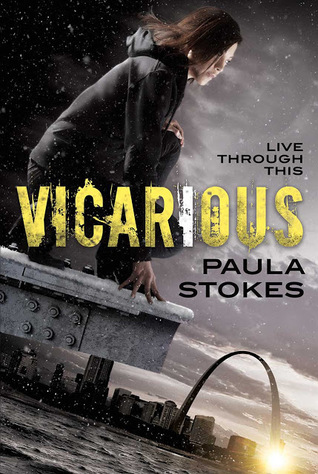
ARC Review: Vicarious by Paula Stokes
Title: Vicarious (Vicarious, #1)
Author: Paula Stokes
Rating: 4 Stars
Release Date: August 16th, 2016
Paula Stokes is full of surprises. When her debut, The Art of Lainey, burst onto the scene, ticking off all the right boxes for Contemporary YA, I thought for sure that I had discovered a new go-to author for the genre. Imagine my surprise when her sophomore novel, Liars, Inc. was full of mystery; a thriller featuring diversity in multiple ways. I knew her next contemporary novel would be stellar, but Girl Against the Universe surpassed my wildest expectations. So, when Vicarious fell into my lap, I knew only one thing: I would not be disappointed. And I was absolutely right.
Stokes's latest is a far cry from any of her previous novels. And, I suspect, to a large degree it's wildly different from most other YA novels out there, even within its genre. Winter, our heroine, owes everything to her older sister, Rose, and foster brother, Gideon, who helped her escape North Korea and, later, trafficking in California. Now, Winter works for Gideon, recording dangerous activities to create ViSEs. With a ViSE, not only can you see from the eyes of the recorder, watching as they bungee jump or escape the cops, but you can feel their neural impulses--the adrenaline, the fear, the excitement. While Rose spends her time in clubs, dealing with her past the only way she knows, Winter trains, making herself impenetrable and working her body to withstand even the most deadly of actions. But when a ViSE of Rose's murder turns up in Gideon's office, Winter is determined to find and avenge her sister's death--no matter the cost.
Winter is a completely bad-ass protagonist. She's focused and no-nonsense, so while some may dislike her serious nature, I appreciated her upfront honesty about her own personality. Her past is a vicious monster--and not just the fact that she escaped from North Korea. There's also the immense debt she feels she owes to both Rose and Gideon for making sure she escaped the trafficking situation they were caught up in in California. The combination of these two make Winter's past a depressing part of the novel. But, Stokes is careful to accompany Winter's darkness alongside plenty of action, not to mention lighter scenes and even humor from other, secondary, characters. Winter's relationship with her sister isn't perfect--after all, Winter doesn't understand why Rose uses her sexuality and is constantly seen with different men--but she adores her older sister as well. Even though Rose dies early in the novel, I still felt as if I knew her character, and most importantly her relationship with Winter, very well.
One of my favorite aspects to this story, though, is the romance. It takes a backseat throughout the novel but it's a slow-burn that utterly won me over and had me swooning from the beginning. Jesse is a friend of Winter's, someone who also works for Gideon and has had a tough past of his own. But he genuinely cares for Winter and watching as he breaks down her barriers and convinces her of his affection, despite her past and the demons she carries, is a highlight of the story. Their friendship is rock-solid, the trust between them a pillar for Winter to find support upon in the face of her sister's death. I also love that their relationship isn't always easy--not for Winter and certainly not for Jesse. But it's so rewarding and I'm really looking forward to seeing how it develops in the sequel.
Vicarious is a thriller from start to finish. I found myself flipping these pages, wondering at who could have killed Rose, where she was at the time of her death, and the people she spoke to. As Winter interrogates those in her life, she uncovers secrets about her sister that she never even suspected and the influx of clues and leads, not to mention dead-ends, makes for an exciting read. Add in the complex personalities of Winter--and Jesse's utter charm--and I'd have been sold. But Stokes also has another trick up her sleeve--the ViSEs. And, damn, they are cool. I love how the ViSEs were an integral aspect to Rose's death but, also, we get to see them filmed and in action later in the novel. Clearly, they're going to be playing an even bigger role in the sequel and I loved the futuristic tint that the ViSEs provided to this world, which is otherwise identical to ours.
The best part about Vicarious are all the twists and turns that you won't see coming. I was shocked and reeling by the end of this novel and though it is a part of a duology, with this portion of the story wrapped up, I want the sequel--now. Yet, for all its seeming perfection, I will say that I had a few sliiight issues with Vicarious. Namely, that I found it to drag a little in the middle. There are a lot of back-to-back sequences with lots of action, whether it be Winter tracking down her sister's body or haunting the places she frequented or visiting people that only Rose knew. There are also a lot of really intriguing ViSEs that we get to see--ViSEs that Winter finds of Rose and her adventures. But then, somewhere in the middle, I found myself flipping the pages and wondering when the action would pick up again. I think that with so many fast-paced scenes, the slower moments feel a little too slow. Thankfully, it doesn't seem that way for too long and Stokes regains her momentum, stunning readers with more action-shots, ViSEs, and plot twists.
Thus, all-in-all, I'm totally impressed and utterly in love with this book. It is clear that Stokes's research is impeccable and her incorporation of diverse characters, their heritage and their struggles, is admirable. Even if you're not looking for more diversity in YA, the mystery, the plot twists, and the thrills will keep you glued to your seat. And for fans of deeper connections, complex personalities, and tough relationships--Stokes delivers on that as well. Vicarious has something in it for everyone--read it, at least so that I'm not counting down the days to its sequel by myself. ;)
If you're interested in my GIF-ridden pre-review of the novel, you can find it here.
Sunday, June 14, 2015
Recent Reads: Diversity Edition
I've been lazy when it comes to blogging, lately. I know it, you know it, publishers know it.
It's embarrassing.
In my defense, I spend every waking minute either sleeping, studying, eating, or de-stressing with friends. I squeeze in a few minutes every day to read, even if it's just one chapter, but actually sitting down to write a review--or even jot down a few thoughts--is simply too much. (I know, I know, it's SUMMER, but I'm at an internship, people! I'm supposedly conducting Very Important Math Research! I get paychecks! I have to buy my own groceries! I'M BECOMING AN ADULT!)
I've published a few reviews, here and there, that weren't written over Winter Break. I've assembled a handful of guest posts, commented on a couple of blogs a week--I've been present but, unfortunately, the books that I've wanted to discuss have slipped under the radar.
Hence, this post; Recent Reads: Diversity Edition.
One of the most notable--and pleasant surprises--of 2015 has been discovering diversity in the fiction I've been reading. YA and NA are notorious for ignoring minority races, sexes, and personalities so I'm truly so proud of the strides that the publishing industry and authors are making to lessen this gap.
First and foremost, I want to talk about Trade Me, Courtney Milan's latest novel and her debut New Adult endeavor. Courtney Milan is known for writing unusual historical romance novels--the kind that make you swoon but also make you think. I love her historical fiction primarily because she writes about the types of female heroines no other author really feels comfortable discussing, whether it be the feminists, the scientists, the overly large, or those of different races. What's more, her male characters range from the classic duke to the a-typical male virgin to the self-proclaimed male suffragist. Thus, I knew Trade Me was going to be a treat even before I cracked open its spine because--Courtney Milan.
But Trade Me surpassed even my wildest expectations. Built upon the foundation of a relatively flimsy plot line--wealthy young man volunteers to switch lives with a poor immigrant woman--Trade Me does a brilliant job of pointing out not only the privileges of the wealthy, but also of the non-immigrant. It features an Asian protagonist and is one of the first times that I have been able to sympathize completely with a character due to her life circumstances--immigrant parents who don't fit into the American culture, a series of different traditional values, struggling to make ends meet, missing family members who live oversees. And, honestly, I found the entire experience shocking and eye-opening. How was Trade Me, published in January of 2015, the first time I had been able to relate to the immigrant experience in a YA or NA novel? It made me angry but, most of all, it made me grateful to Courtney Milan for doing her research and being brave enough to write about a culture of people different from her own.
Beyond the in-your-face diversity of an Asian protagonist, though, Milan weaves this love story through many complex issues. Unfortunately, I cannot reveal much more due to fear of spoilers, but none of these characters are what they seem on the surface--and I love that. Admittedly, the whole "the rich have problems, too!" trope seems cliche but, I promise you, Milan writes it in such a way that you never find yourself thinking that way. If you're looking for a couple to swoon over, but one that will destroy your every pre-conceived notion about them, Trade Me is the book for you.
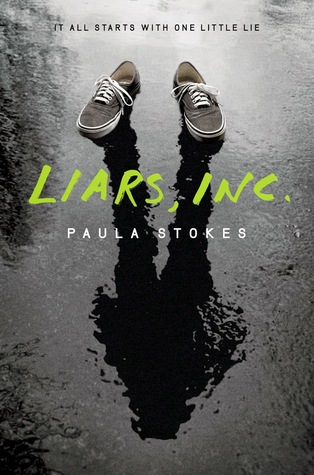
Next: Liars, Inc. by Paula Stokes. I had Stokes stop by on the blog a few weeks ago to talk about the diversity in her latest novel, a thriller, and was incredibly moved by her discussion of not only racial diversity--with Parvati, the female love-interest of the novel--but also of Max, the protagonist. From the surface, there doesn't seem to be a lot of diversity to offer with Max--after all, he is a Causasion, heterosexual male. But, Max isn't your typical male protagonist. Not only does he struggle academically, but he also isn't the classic bad boy or the shy nerd or the cute guy-next-door. And, by breaking that mold, Stokes introduces a new form of diversity: diversity of personality. It's okay not to fit into a pre-labeled, pre-stamped, and pre-approved box.
I also really appreciated the fact that the female protagonist of this novel, Parvati, wasn't the perfect love interest. I adore a sharp-tongued, nasty female lead, if only because they defy the stereotype that women must be perfect and dainty and polite. Moreover, I rarely see it done with a woman of color because--let's be honest--I think authors are worried to include PoC who aren't cast in the role of "good guy." PoC are just as flawed and real as non-PoC so, authors, don't worry about offending us by creating angry and bitterly caustic PoC. Not that Parvati is just oozing badness, but she certainly is far from perfect and I appreciate the unapologetic ambiguity in her characterization.
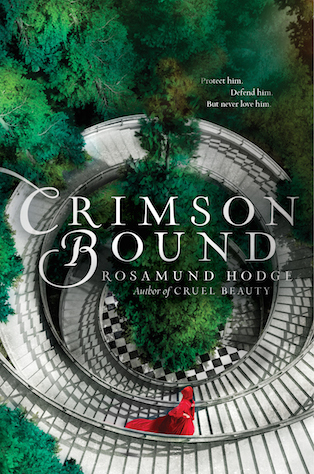
And speaking of imperfect female heroines, that brings me to Rosamund Hodge's Crimson Bound, one of my favorite novels published this year. Hodge's debut, Cruel Beauty, already struck the perfect cord with me. After all, we had an angry 'Beauty' and an evil 'Beast'--can you really even beat that? But Hodge did one better in Crimson Bound, making her protagonist a killer. Can you redeem an individual like that? Do you?
One of the strongest aspects of this novel, for me, is the fact that Hodge enables us, the reader, to sympathize with and root for a heroine who is selfish, who murders others, and in general is not the paragon of perfection we've come to associate with an ideal female lead. Now that, right there, that's diversity. Rachelle isn't all-out evil--not even close--but she also does bad, horrible things. Yet, this story comes together so perfectly, weaving together a fairy tale re-telling with the background of a host of characters who stand by their flawed personalities and still manage to come out stronger; to grow and change. Moreover, Hodge is a genius at building re-tellings that can be recognized but that also veer off the beaten track and incorporate innovate magic combined with unseen plot twists so that you're on the edge of your seat till the very end. I love them, dearly, and am waiting with bated breath for her next novel. I know she will deliver.
Of course, these aren't all the diverse reads I've read recently but they are some of the most meaningful ones I've come across this year. Others, like The Summer of Chasing Mermaids by Sarah Ockler (literally my new favorite book EVER!) and The Wrath and the Dawn will be getting their own, full-fledged reviews soon. And yet others, like Trish Doller's The Devil You Know, while well-appreciated for their feminism, simply didn't do it for me storyline-wise. (And, further, others, like Simon and the Homo Sapien Agenda were just so good I couldn't find the words to write about them!) Nevertheless, I think the awareness of characters that break the mold and defy traditional racial, sexual, and gender norms is rising and I'm excited to read more novels tackling these barriers to diversity.
If you know of any other diverse reads, please let me know in the comments below! I'm always on the prowl for a new read and, in particular, authors brave enough to write stories that may not sell, but will definitely make a statement and take a stand.
It's embarrassing.
In my defense, I spend every waking minute either sleeping, studying, eating, or de-stressing with friends. I squeeze in a few minutes every day to read, even if it's just one chapter, but actually sitting down to write a review--or even jot down a few thoughts--is simply too much. (I know, I know, it's SUMMER, but I'm at an internship, people! I'm supposedly conducting Very Important Math Research! I get paychecks! I have to buy my own groceries! I'M BECOMING AN ADULT!)
I've published a few reviews, here and there, that weren't written over Winter Break. I've assembled a handful of guest posts, commented on a couple of blogs a week--I've been present but, unfortunately, the books that I've wanted to discuss have slipped under the radar.
Hence, this post; Recent Reads: Diversity Edition.
One of the most notable--and pleasant surprises--of 2015 has been discovering diversity in the fiction I've been reading. YA and NA are notorious for ignoring minority races, sexes, and personalities so I'm truly so proud of the strides that the publishing industry and authors are making to lessen this gap.
First and foremost, I want to talk about Trade Me, Courtney Milan's latest novel and her debut New Adult endeavor. Courtney Milan is known for writing unusual historical romance novels--the kind that make you swoon but also make you think. I love her historical fiction primarily because she writes about the types of female heroines no other author really feels comfortable discussing, whether it be the feminists, the scientists, the overly large, or those of different races. What's more, her male characters range from the classic duke to the a-typical male virgin to the self-proclaimed male suffragist. Thus, I knew Trade Me was going to be a treat even before I cracked open its spine because--Courtney Milan.
But Trade Me surpassed even my wildest expectations. Built upon the foundation of a relatively flimsy plot line--wealthy young man volunteers to switch lives with a poor immigrant woman--Trade Me does a brilliant job of pointing out not only the privileges of the wealthy, but also of the non-immigrant. It features an Asian protagonist and is one of the first times that I have been able to sympathize completely with a character due to her life circumstances--immigrant parents who don't fit into the American culture, a series of different traditional values, struggling to make ends meet, missing family members who live oversees. And, honestly, I found the entire experience shocking and eye-opening. How was Trade Me, published in January of 2015, the first time I had been able to relate to the immigrant experience in a YA or NA novel? It made me angry but, most of all, it made me grateful to Courtney Milan for doing her research and being brave enough to write about a culture of people different from her own.
Beyond the in-your-face diversity of an Asian protagonist, though, Milan weaves this love story through many complex issues. Unfortunately, I cannot reveal much more due to fear of spoilers, but none of these characters are what they seem on the surface--and I love that. Admittedly, the whole "the rich have problems, too!" trope seems cliche but, I promise you, Milan writes it in such a way that you never find yourself thinking that way. If you're looking for a couple to swoon over, but one that will destroy your every pre-conceived notion about them, Trade Me is the book for you.
Next: Liars, Inc. by Paula Stokes. I had Stokes stop by on the blog a few weeks ago to talk about the diversity in her latest novel, a thriller, and was incredibly moved by her discussion of not only racial diversity--with Parvati, the female love-interest of the novel--but also of Max, the protagonist. From the surface, there doesn't seem to be a lot of diversity to offer with Max--after all, he is a Causasion, heterosexual male. But, Max isn't your typical male protagonist. Not only does he struggle academically, but he also isn't the classic bad boy or the shy nerd or the cute guy-next-door. And, by breaking that mold, Stokes introduces a new form of diversity: diversity of personality. It's okay not to fit into a pre-labeled, pre-stamped, and pre-approved box.
I also really appreciated the fact that the female protagonist of this novel, Parvati, wasn't the perfect love interest. I adore a sharp-tongued, nasty female lead, if only because they defy the stereotype that women must be perfect and dainty and polite. Moreover, I rarely see it done with a woman of color because--let's be honest--I think authors are worried to include PoC who aren't cast in the role of "good guy." PoC are just as flawed and real as non-PoC so, authors, don't worry about offending us by creating angry and bitterly caustic PoC. Not that Parvati is just oozing badness, but she certainly is far from perfect and I appreciate the unapologetic ambiguity in her characterization.
And speaking of imperfect female heroines, that brings me to Rosamund Hodge's Crimson Bound, one of my favorite novels published this year. Hodge's debut, Cruel Beauty, already struck the perfect cord with me. After all, we had an angry 'Beauty' and an evil 'Beast'--can you really even beat that? But Hodge did one better in Crimson Bound, making her protagonist a killer. Can you redeem an individual like that? Do you?
One of the strongest aspects of this novel, for me, is the fact that Hodge enables us, the reader, to sympathize with and root for a heroine who is selfish, who murders others, and in general is not the paragon of perfection we've come to associate with an ideal female lead. Now that, right there, that's diversity. Rachelle isn't all-out evil--not even close--but she also does bad, horrible things. Yet, this story comes together so perfectly, weaving together a fairy tale re-telling with the background of a host of characters who stand by their flawed personalities and still manage to come out stronger; to grow and change. Moreover, Hodge is a genius at building re-tellings that can be recognized but that also veer off the beaten track and incorporate innovate magic combined with unseen plot twists so that you're on the edge of your seat till the very end. I love them, dearly, and am waiting with bated breath for her next novel. I know she will deliver.
Of course, these aren't all the diverse reads I've read recently but they are some of the most meaningful ones I've come across this year. Others, like The Summer of Chasing Mermaids by Sarah Ockler (literally my new favorite book EVER!) and The Wrath and the Dawn will be getting their own, full-fledged reviews soon. And yet others, like Trish Doller's The Devil You Know, while well-appreciated for their feminism, simply didn't do it for me storyline-wise. (And, further, others, like Simon and the Homo Sapien Agenda were just so good I couldn't find the words to write about them!) Nevertheless, I think the awareness of characters that break the mold and defy traditional racial, sexual, and gender norms is rising and I'm excited to read more novels tackling these barriers to diversity.
If you know of any other diverse reads, please let me know in the comments below! I'm always on the prowl for a new read and, in particular, authors brave enough to write stories that may not sell, but will definitely make a statement and take a stand.
Friday, May 22, 2015
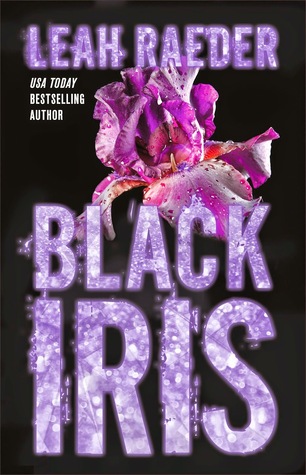
Review: Black Iris by Leah Raeder
Title: Black Iris
Author: Leah Raeder
Rating: 4 Stars
I don’t think I can adequately begin to express just how important of a book Black Iris is. I attend an extremely liberal, accepting college but, even then, this novel made me feel less alone and more comfortable in my own skin—and that’s no small feat.
Black Iris is a revenge story, one that I often found difficult to read, but Raeder’s prose is pure magic and it is impossible to stay away from this book for long. While Unteachable was a clear-cut forbidden romance, filled with emotion and romance, Black Iris is its darker, more mysterious cousin. Raeder crafts this novel in such a way that timelines converge, split apart, and shift dramatically. It’s easy to think you know what’s happening or what the end result is or who the victim and perpetrator really are—but, truly, you’ve simply been kept in the dark until the final, all-too-unpredictable reveal. It’s a brilliant feat of writing, this combination of prose and plot, and when you add Raeder’s cutthroat emotion—the kind that seeps into your skin and deep into the pits of your stomach—it is evident that Black Iris is different. It is special.
In all honesty, I do not love this book. I don’t think I could ever read it again—a strange combination of hitting too close to home and not too close at all—but that does not negate the fact that I thoroughly enjoyed the experience of it. More than anything else, I am grateful to Raeder for writing about sexual fluidity; for creating characters who do not fit in any boxes but still manage to find happiness. It is important for readers to be able to pick up a book and find characters they identify with—sexually, and personality-wise. With Unteachable Raeder already made strides in writing an unlikable heroine who, somehow, we manage to root for. With Black Iris, the lines are even more blurred. I do not know if I always rooted for this heroine, but I always respected and supported her decision; I always accepted who she was and her bravery in reaching that place of self-confidence.
Black Iris is best read blind. I hesitate to discuss the plot or the characters or anything, really, with the exception of my feelings. And, oh my, did I feel. I fell for the wrong characters, I rooted for the morally corrupt, I switched sides. There is nothing I love more than a novel that inspires such a wide range of emotion and with Black Iris, that is precisely what you are guaranteed. Leah Raeder, thank you for having the courage to write such an important, meaningful novel. I appreciate your guts and, in particular, you sharing your story in the acknowledgements section. It means more than you can know, perhaps.
Tuesday, February 17, 2015
Review: Going Rogue by Robin Benway
Title: Going Rogue (Also Known As, #2)
Author: Robin Benway
Rating: 4 Stars
Note: This review contains no spoilers for Also Known As, the first book in this series, but it does hint at events from Also Known As during the brief synopsis to provide context for this novel. You can read my review of Also Known As here.
I honestly didn't expect to fall in love with this series as much as I did. I tend to gravitate towards darker contemporary fiction featuring teens on the cusp of adulthood and yet, Benway's entertaining spy thrillers have managed to establish their own niche in my heart. In Going Rogue, Maggie, a safecracker whose life has been spent working for a spy agency known as the Collective, has finally settled down for the first time in her life. She's been in New York City for nearly a year now, spending her days alongside her best friend, Roux, and boyfriend, Jesse. Though Maggie longed for the chance to be just another normal teenage girl, now that the highlight of her days are SAT prep classes, she is forced to admit that she's bored. As much as she thought she could suppress being a spy, the fact of the matter remains that deep down, being a spy is more than just a profession; it's who she is.
When the Collective turns against Maggie's parents, however--a retaliation after Maggie exposed the chink in their armor in Also Known As,--Maggie takes it upon herself to find the evidence that will prove her parents' innocence. With the help of Angelo, the man who is practically an uncle to her, Maggie swears to save her family, all while maintaining the new relationships she's formed since arriving to NYC. While Also Known As charmed me with its down-to-earth narration and genuine honesty, Going Rogue stole my heart with its all-too-believable hurdles and heart-warming difficulties. As easy as it may be, physically, for Maggie to return to former skills in order to save her parents, it's a mental strain as it means she must distance herself from her best friend and boyfriend. After getting Roux and Jesse involved in her life a year ago, Maggie has no desire to put them in harm's way again and though she has their best interests at heart, it isn't easy to navigate those relationships.
Both Roux and Jesse understand and support Maggie, but they also want her time and presence in their lives. For Roux, who is used to being left behind by her absentee parents, the thought of Maggie going undercover instantly equates to Maggie leaving. I love the friendship between Maggie and Roux but it undergoes its rough patches in this novel, though it certainly emerges stronger for it. Similarly, Jesse and Maggie face their own struggles in their relationship but, what I love about these two is how perfectly they balance one another out, especially in times of turmoil. Despite any hurdles in their path, they face them down together and Benway writes their romance with plenty of swoon, despite the lack of steam. In fact, that's what makes their love story all the more adorable and swoon-worthy; the little things.
Going Rogue introduces a handful of new characters, all of whom I loved, and it continues to feature a stellar example of faithfully realistic parent-child conversations. Angelo, who I grew to like very much in Also Known As, has swiftly become one of my favorite characters and his wisdom, intelligence, and presence in the lives of all these teens, not just Maggie, is reassuring. It adds a touch of realism to what would have otherwise been a wildly unbelievable novel, I think, as Maggie isn't solely responsible or wise enough to take on international spy tasks without Angelo's intel and guidance. Benway's prose, as always, is compulsively readable and the narration, full of easy sarcasm, clever wit, and laugh-out-loud humor only adds to the pleasure of the reading experience. These novels prove to be the perfect light-hearted contemporary read, all with the much-needed character-depth I constantly crave. Quick, fun, and with no shortage of swoon, Benway's novels are a must-read.
Friday, February 13, 2015
Review: Also Known As by Robin Benway
Title: Also Known As (Also Known As, #1)
Author: Robin Benway
Rating: 4 Stars
Also Known As is a brilliant, fresh, and innovative take on the classic teenage spy idea. While I've enjoyed Ally Carter's Gallagher Girls and Heist Society books, I find that Benway's concept manages doesn't take itself quite so seriously and the end result is not only compulsively readable and instantly relate-able, it's also downright adorable and incredibly humorous. Maggie, the protagonist of our novel, is a genius lock-breaker and safe-cracker. Born to a set of spies who work for an organization known as The Collective which brings down the bad guys of the world, Maggie has spent her life traveling the globe, saving the world one assignment at a time. When Maggie and her parents are sent to New York City, however, this is the first time Maggie has a mission all of her own--one in which her parents can't aid her in the least. And her mission? Befriend local high school student, Jesse, and steal the files his father possess which could expose the members of The Collective, Maggie and her parents included. For Maggie, this meant that she actually had to step into the dreaded institution immortalized by every film, novel, and magazine for its cutthroat citizens, ruthless exams, and downright miserable atmosphere: high school.
Seriously, who doesn't want to read a novel about a kick-ass teenage spy whose greatest challenge is high school? Maggie's voice is so honest and likable from the beginning itself that it's impossible not to fall in love with her sarcasm, wit, and all-round general awesome-ness. Seriously, this not only the girl I'd want guarding my back in a gunfire, she's also the chick I'd love to call my best friend. Maggie and her parents, despite their unconventional lifestyle, share an incredible relationship which is truly put to the test as Maggie becomes a normal high school student, for the first time in her life, and her parents find themselves having to dole out curfews, check up on homework assignments, and attend parent-teacher conferences. For a family who has operated on private jet planes and breaking-and-entering missions, it's a whole new world. I really enjoyed, however, how Maggie's parents played such a large role in her life and their conversations and arguments were completely realistic and all-too-believable.
Another aspect of this novel that I love is Roux, the loner Maggie befriends. As a spy, Maggie isn't supposed to make friends or become attached to the people on her mission, but she slowly begins to realize that normality is what she craves after a far too exciting childhood. Roux, who slept with her best friend's boyfriend the year before, is your classically unlikable and downtrodden high school student. She's the one they all label "slut", she avoids every high school party imaginable, and until she can graduate, the high school population will never let her forget what she's done. Yet, there is absolutely zero slut-shaming in this novel and it is Roux who becomes Maggie's best friend and confidant. Roux has a prickly exterior--one she's been forced to accumulate due to the acerbic quality of her fellow classmates--but inside, she's just a big softie craving love and attention. Her parents, outrageously wealthy, are constantly traveling and rarely check up on Roux who lives alone in the Upper East Side for weeks on end. She's not your classic secondary character in the least but that's what I love about her and her character is simultaneously lovable, loyal, and unforgettable.
Perhaps the aspect of this novel most integral to the plot, however, is Jesse. Though Jessie is Maggie's mark, she finds herself falling for him--hard. At first glance, Jesse seems like a typical bad-boy, good-for-nothing student. Not only is he failing calculus, but he was caught shoplifting a copy of Catcher in the Rye as well. But as Maggie gets to know Jesse more and more, she realizes that there is far more to him than what her initial research revealed. And she likes him. Their romance is utterly adorable and, though you wouldn't expect it, drama-free which I appreciated. I love how level-headed these two are and they manage to balance one another perfectly. Everything about them, from their first kiss to their first date, just made me smile so much; my cheeks hurt. It's the perfect example of a YA romance that really enriches Maggie's life and adds to it instead of causing drama or hurt instead.
Angelo is yet another secondary character who really stands out in this series. He's a close friend of Maggie's parents and basically an adoptive uncle to her. Not only is he a skilled forger and a guide to her in her spying endeavors, but he's an adult--who isn't her parents--who Maggie trusts and relies on. His wisdom is aptly given and delivered in such a way that Maggie is more likely to listen to his advice instead of those same words from the mouth of her parents. I just really appreciate that Maggie has another adult in her life who serves as her inspiration beyond just her parents. Also Known As is such a strong novel precisely because of the strength of its characters. Maggie maintains such strong relationships with all of those closest to her, from her parents to Angelo, and slowly her family starts to grow and expand to include Roux and Jesse as well. Moreover, the crux of this novel lies not in assignments and spying, but rather in Maggie comes to terms with what she wants from her life and defining that not only for herself, but for her parents too. Maggie begins to question whether a life dedicated to The Collective is really for her when she sees the advantages that normalcy can bring and the fact that the core of this novel is a classic coming-of-age tale is what makes me love it most. Robin Benway is quickly on her way to becoming one of my most favorite authors ever and if you read Also Known As, you'll definitely see why.
Thursday, January 29, 2015
Review: When by Victoria Laurie
Title: When
Author: Victoria Laurie
Rating: 4.5 Stars
Imagine being able to look at a person and see, always, the day of their death looming above them. It may be an extraordinary gift, sure, but it's also a curse. One that Maddie Fynn knows all too well. Ever since she was young, Maddie has been able to see the deathdays of those around her. It first happened when she drew a family portrait and wrote the etched the date of her father's death on paper and, ever since, her talent has singled Maddie out as a loner. With only one friend, Stubs, whose friendliness is matched only by his kindness, Maddie's life is a small, but fulfilling one. Her alcoholic mother, unable to drive after two DUIs, exploits Maddie's skill and forces her to read deathdates for money--money which Maddie uses to pay off bills; money her mother uses to purchase more alcohol. It isn't the healthiest situation and it's far more than any typical high school junior should manage, but Maddie takes care of herself, her mother, and her grades in a juggling act that has become routine.
She doesn't think there's much room in her life for things to get any worse until the FBI name her a suspect to the murder of a young thirteen-year-old boy. Earlier that week, Maddie had looked at an imagine of a young girl with cancer and told her mother that she would live. Inside that wallet, however, were pictures of two other children--one who was fated to die a week from that day. When Maddie tries to warn the mother, however, she is labeled a fraud and the angry customer leaves Maddie's house. A week later, when the boy is found missing, Maddie is questioned by the FBI. With the help of her Uncle Donny, a lawyer in Brooklyn, and her best friend, Maddie must try to clear her name and prove to the FBI that she's innocent. Because, after all, the real killer is still on the loose...
When is a brilliantly written YA debut from Victoria Laurie. Maddie's narration is raw, honest, and down-to-earth. She's a heroine who makes the best of her circumstances and even as life constantly tries to put her down, she gets back up every time, stronger than ever. I admire her will and determination and throughout the novel, all I wanted to do was shield Maddie from the false accusations and difficult situations she was forced to face as a result of the FBI's interference in her life. The FBI are ruthless and they are desperate enough to put an end to these string of murders--each gruesome, targeting minors, and filled with torture--that they're willing to put the blame on an innocent girl like Maddie.
Despite the fact that Maddie's mother is an alcoholic, I was glad to see that Maddie had other adults in her life whom she could turn to for support. The relationship between Maddie and her Uncle Donny, a bachelor who keeps insisting that Maddie can leave her mother and move in with him, is akin to that of a father and daughter. Maddie's father was Uncle Donny's brother and though it has been years since his death, neither of them can forget him. Moreover, Donny makes Maddie proud to be her father's daughter and though the two face their own set of relationship woes--namely the fact that Maddie is loyal to her mother when Donny can see that it isn't a healthy, or normal, relationship--they work well together as a team and Donny goes above and beyond to make sure that Maddie is safe and protected, despite the mayhem around her.
Maddie's friendship with Stubs is also at the forefront of this novel and their relationship goes through some truly difficult circumstances. Laurie isn't afraid to go to extreme measures when it comes to reinforcing the seriousness of this situation and though, at its core, When is an impeccably written and neatly planned murder mystery, that doesn't decrease the strength of the character relationships throughout the novel. Speaking of the mystery, however, I have to admit that I did not, at all, under any circumstances, predict the final reveal. Laurie threw in plenty of red herrings and clues but the true identity of the murderer is one that I am confident no reader will be able to guess beforehand. It's sneaky, it's shocking, and it all makes too much sense in retrospect--just as an excellent mystery should do.
Maddie deals with so much in this novel--FBI questioning, an alcoholic mother, a murderer on the loose, bullying as a result of the FBI's suspicions--that she has little time to be a normal teenager. Yet, despite the fact that there is little to no romance in this novel, we do receive a final, all-too-perfect glimpse of it at the end. And, let me tell you, it is cute beyond measure. I really enjoyed the fact that When remained focused on Maddie, the mystery at hand, and her consequent growth and change as a result of the investigation. Maddie learns a lot about her abilities over the course of this novel and, what's more, she learns a lot about herself. While she begins this story as a teen trying to fit in and hide her abilities, she grows to embrace them by the end and the confidence she accumulates over the course of this difficult murder is heart-warming to see. Thus, I appreciate that Laurie didn't make, say, Stubs, the romantic interest nor were the trickles of the love story involved, in any way, with the murder at hand. Both are separate storylines, one obviously the main plot, but they converge beautifully in an ending that is completely satisfying.
I'm not sure if I'll go back to read through Laurie's backlog--there's only so much thriller/mystery I can take at a time--but I will, without a doubt, be on the lookout for her next YA novel. If there's one author you should be looking out for in the YA genre, it's Victoria Laurie.
Thursday, August 21, 2014
Review: Into the Darkest Corner by Elizabeth Haynes
Title: Into the Darkest Corner
Author: Elizabeth Haynes
Rating: 4 Stars
I remember looking up from this novel, expecting it to be around 11:30 in the night and finding it was pushing past 1 AM. Like the bibliophile I am, though, I told myself I'd just finish the chapter I was reading but it was 2:40 when my traitorous eyes, struggling to stay awake, forced me to close the book and drag myself to bed, only barely remembering to shut the lights off.
I don't read too many thriller/horror novels. I relish the creeping sense of suspense, the hint of dramatic flair, and the embroiled emotions involved with such stories but, seeing as horror movies keep me anxiously awake late into the night, I often convince myself such books will do the same.
Into the Darkest Corner, however, is the perfect blend of thriller, horror, and contemporary fiction--all just with a hint of romance. Make no mistake, Haynes's novel is a dark one. Within these pages you will find graphic and gruesome detailing of an abusive relationship, domestic violence, and rape. Yet, it is an impeccably written and thought-provoking account of the type of day-to-day horrors people experience--and we often want to forget. Into the Darkest Corner is told in alternating timelines of 2004 and 2008. In 2004 Catherine Bailey went to a bar in a red silk dress and began an intense relationship with a man she met there, Lee. In 2008 Cathy Bailey lives alone in an apartment, aloof from her co-workers and neighbors, frantically checking and re-checking her locks for fear of her ex-boyfriend, currently in jail.
With every chapter alternating between Catherine and Cathy, it is impossible not to become utterly sucked into this tale. Catherine is young, friendly, flirtatious, and sexy; she drinks into the night, she finds different men to take home every week, and she discards her loneliness in a sea of friends. When she meets Lee--handsome, intelligent, caring--at first neither she nor her friends can believe her luck. While Lee keeps odd work hours and often dodges career-related questions, their relationship is stellar in every other regard--particularly in bed. Yet, week by week, month by month, Catherine begins to realize that her perfect relationship is not quite as it seems. Lee isn't so much besotted with her as he is obsessed with her, eager to control every aspect of her life from who she meets to when and where she meets them.
Reading Catherine's experience, side-by-side with Cathy's present-day problems as a result of her abusive relationship with Lee, is jarring. Catherine and Cathy hardly seem like the same person but, gradually, we can see how Lee's influence has Catherine become the cautious, timid, and often scared heroine that Cathy has become. Cathy suffers from both OCD and PTSD and the vivid descriptions of her symptoms--their direct influence in inhibiting her day-to-day lifestyle--are depressing. I found it difficult to read, particularly as my mother suffers from mild anxiety attacks on occasion and reading of a much more severe version of a similar illness was truly upsetting. Haynes captures Cathy's life so realistically, though, her facts spot-on as Cathy abhors any slight change to her schedule. Including her new neighbor, Stuart. Stuart is a therapist and recognizes Cathy's symptoms upon meeting her but their relationship isn't easy. In fact, juxtaposed with the ease in which Catherine fell into a relationship with Lee it's downright difficult.
But I really, really loved Stuart. First and foremost, he never "saves" or "heals" Cathy. If anything, he gives her the encouragement and support that she needs to seek help and follow her treatment. Moreover, their relationship isn't centered around Cathy's illness but rather around her. Reading Catherine and Lee's volatile relationship is like seeing a painting; the end result without knowing the work that went into it. Even when Catherine likes Lee, before he begins to hurt her, Lee hardly takes the time to get to know the real her, the one beneath the party-going and fun exterior. By the time he should, it's already too late and Catherine is terrified, desperately seeking a way to escape. Suddenly, their entire relationship becomes about Catherine's fear; the desperation she feels as Lee isolates her from her remaining friends and alienates her, alone and hurting. In contrast, Stuart seeks to know Cathy as an individual and as they fall in love, despite the stumbles and mistakes in their courtship, we know it's real; it's genuine and it's here to stay.
Into the Darkest Corner, however, thrives off of suspense. First, it's the suspense in Lee and Catherine's relationship--the unanswered questions. How did Catherine get away? When did they catch Lee? What mistake did he finally make that allowed Catherine to escape? Due to the short, alternating chapters it is never possible to forget Lee. Even when Cathy is moving on and having a good day, we remember Catherine from four years ago and the trauma she suffered--pain that still lives on in the form of scars on Cathy's body or simply the mental torture she's had to live with day-after-day. One of the strongest aspects of this novel was the fact that Lee charmed his way into Catherine's life and systematically turned her friends against her. None of them, let alone her best friend Sylvia, could understand how Catherine could be unhappy with Lee. So what if he was intense? So what if he wanted to know where she was and what she was doing all the time? Didn't she know how lucky she was to have a man whose world revolved around her? Wasn't that the type of man every girl was trying to find? It's a real slap into a reality, both because Catherine's long-time friends choose to believe her short-term boyfriend instead of her and, moreover, because Lee is the kind of man girls are told to find--and that's terrifying. Not the abusive traits, of course, but the bare-bones structure of him is built from the perfect man of our dreams.
All of this only serves to make Lee so much more scarier than he could be otherwise, particularly as he doesn't look or act like an abuser; he just is one. Haynes builds a growing crescendo of suspense, here, as present-day Cathy must cope with the fact that Lee is about to be released from prison--and she's confident he's going to come after her. She doesn't know when he'll find her or how long it'll take him, but she knows that one day she'll wake up, check her apartment, and find Lee there in some form or the other. And that's absolutely terrifying.
Into the Darkest Corner was a novel I couldn't disentangle myself from. I became so worried and protective over Cathy, wanting her to find her own footing in life while simultaneously wanting to whisk her away to Mars so she could escape Lee once and for all. I haven't felt so emotionally attached to a character in awhile and it felt good, frankly, to care so much for this fictional woman and want everything to go right in her world, just for once. I love these stories; the ones that make you forget you're reading and transport you into another reality altogether. Cathy, Stuart, Sylvia, Lee...they're characters I may forget, admittedly, but the overwhelming amount of information shared in this novel about these types of abusive relationships and the suffering they can cause--that I won't forget.
I'd never read or heard of Elizabeth Haynes prior to this novel but, if her writing and command over characters are anything to go by, Into the Darkest Corner certainly won't be my last read by her.
Friday, November 1, 2013
Mini-Reviews: Hawksong, Nine Coaches Waiting, and Crossing Stones
If you're seeing this post, it means I have fallen on hard times. Over the past summer, there was a time when I had a wealthy backlog of reviews (oh, how I miss those days!), which meant that I crusaded around GoodReads, writing brief, short sentence "reviews" conveying my thoughts on a handful of novels I was too lazy to review in their entirety. I've gone back through those "mini-reviews" and compiled a small list of the better ones to entertain you, dear readers, with until I can get around to writing and posting a proper review. Either way, I hope you enjoy. :)
Title: Hawksong (The Kiesha'ra, #1)*
Author: Amelia Atwater-Rhodes
Rating: 4 Stars
Hawksong is possibly one of the most under-rated fantasy novels I've come across. In fact, this book simply seems to fall under everyone's radar - much to their own loss, I must say. Atwater-Rhodes is a brilliant writer, creating a world rich in lore, myth, and tradition. Danica, the queen of her hawk people, and Zane, the king of the cobras, are shapeshifters who marry to end the centuries-old feud between their people. Both Danica and Zane are tired of war, but their marriage will prove more difficult than either can imagine. Both the hawks and cobras share different traditions and as Zane and Danica grow to fall in love with one another, they also learn to assimilate their cultures and their people. Atwater-Rhodes writes world-building as a mere extension of her story, not as an overwhelming portion of info-dumping. With subtle legends and traditions, she manages to create and encompass the depth of these two races. Although I felt as if Hawksong ended a little too early, with both Danica and Zane falling in love slightly faster than I wished, I cannot deny that this is solid fantasy, full of the characters and type of complex world I love. Atwater-Rhodes, my friends, is not to be missed.
Title: Nine Coaches Waiting
Author: Mary Stewart
Rating: 4 Stars
Title: Crossing Stones
Author: Helen Frost
Rating: 3.5 Stars
I've been on a bit of a verse novel binge lately, not to mention one of WWI (especially since I finished all three seasons of Downton Abbey in a record three and a half days!). Thus, it's almost not a surprise that I enjoyed this; it's merely a surprise that I enjoyed this as much as I did. Frost writes beautifully, choosing three separate styles to bring us the story of Muriel, a headstrong girl who isn't afraid to speak her mind; Ollie, her older brother who enlists for war despite being underage; and Emma, the sweet girl next door. With this short novel composed of poems, Frost is able to relate the horrors of war, the struggles of women, and the tension of those who remain home in such a way that it is bearable to us as readers. Not only is Frost's tale historically accurate, but it is also unexpectedly heartfelt.
Muriel, a young Alice Paul if you will, was my favorite narrator in the novel. I loved her outrageous opinions, her inability to accept the reality of her time, and her courage in standing up for her beliefs. Muriel is easily the most flawed of our three narrators which makes her, for me, the most realistic. Ollie provides us with the sole male perspective in this novel, one filled with the harsh realities of war and the peer pressure that men face to enlist. Emma, on the other hand, is possibly the dullest character. Although her poems had substantial depth, she herself is a relatively simplistic character, representing the average American women who was comfortable with her role in the house. With this novel, what Frost excels at is building the era both with war and politics. Granted, the characters aren't as fully fleshed as they could be, but as a piece of historic fiction this is one of the better - and more creative - ones.
Friday, October 18, 2013
Review: Another Little Piece by Kate Karyus Quinn
Title: Another Little Piece
Author: Kate Karyus Quinn
Rating: 4 Stars
I’ve been struggling to put together exactly what did – and didn’t – work for me with this novel. Another Little Piece is a strange story, there is no denying that. Annaliese, our protagonist, is found walking in her hometown with no recollection of who she is or even that she has been missing for nearly a year. As pieces of her past slowly begin to come back to her, however, Annaliese realizes that she isn’t, in fact, Annaliese; she is another girl in Annaliese’s body. And, even more hauntingly, Annaliese isn’t the first girl to lose her soul – she is only one of many.
What I Liked:
Bold: Another Little Piece is a bold debut, unflinching in its honesty and not hesitant, in the least, to portray gruesome, often horrific, imagery. Quinn, with her first novel itself, tackles on a variety of “taboo” topics in YA, which I loved. Not only does this novel talk about sex, but it discusses homosexuality, suicide, and death explicitly as well. If you’re not comfortable with these topics, then I’d suggest you seek out a different read.
On the other hand, what this enables Quinn to do is to approach her novel without any barriers, which is refreshing. Annaliese is subject to a variety of dreams, memories, and fleeting glimpses into the past lives she has lead, which makes for an interesting case study into the teenage girl. Why is it, after all, that so many of these girls are willing to sell their souls? Although Quinn portrays adolescent girls in a light that isn’t always positive, it is most definitely realistic, which I appreciate. Everything, from friendships to relationships to the obsessive tendencies which girls possess comes to light in a brutal, no-nonsense manner which really works. Although this novel is very much a mystery, dispersed with paranormal thriller and horror sub-genres, it remains a very intriguing look at the lives of teenage girls, in all their psychological glory. I’m all for authors who can expose hidden realities in our society, so I appreciate that instead of reverting to tropes such as slut-shaming or sexism, Quinn takes a different approach at looking at girls in YA.
Family: When Annaliese – or anyone, for that matter – goes missing, her family is devastated. Thus, when she unexpectedly returns, the bond she forms with the mom and the dad, as she calls them (for they aren’t her real parents), is realistic and beautifully written. I love the depth of the relationship between these three, both their messy flaws and the strength and acceptance they have for one another as well. Quinn perfectly captures the feelings of hopelessness and guilt that Annaliese’s parents feel in having let down their daughter. After all, with a missing child, they have only themselves to blame. Thus, Annaliese’s return is both a joy and a worry for they can immediately tell that the child who has returned to them isn’t the same one who left. Yet, finding a way to remain a family after such a tragic incident is a heart-warming journey to watch unfold.
Romance: Admittedly, the romantic arc of this novel isn’t very well developed – it kind of just…appears – but it works for the tone of the storyline. Dex, the neighbor of Annaliese, is perfect for her precisely because he is so very messed up himself. We begin to see a greater manifestation of paranormal abilities in him and their effect on his life is startling. What I truly love about Dex, though, is that he isn’t defined by his relationship to Annaliese. Instead, he’s very much a character in his own right with his own personality, his own problems, and his own plot lines as well. Thus, their convergence with those of Annaliese’s work strangely well, creating a love story that only enriches the individual personalities of these two complicated protagonists.
Choice: Annaliese, as a character, is strong and easy to get behind. Not only is she one of those no-bullshit type of protagonists, but she does her best to make her transition back into the world as seamless as it can be for her parents and friends. Yet, I particularly love that as Annaliese uncovers more and more about her past, she feels as if she has no choice in her future. Quinn handles the arc of Annaliese’s inner battle between taking a decision and not taking that leap of faith really well, portraying it in a believable manner. Moreover, Annaliese faces these choices all the time: to tell the truth about who she is or not; to salvage the friendship with her former best friend or remain alone; to trust her family or keep them in the dark. In addition to the reoccurring theme of choice, there is also an equally important counter-effect of dealing with those choices and following through on them, which is both chilling in context of the novel and surprisingly real as well. Ultimately, these themes come through really well throughout the novel and only add to the essence of the story.
What I Didn’t Like:
Paranormal: Honestly, I wasn’t a fan of the paranormal elements to this tale. I didn’t mind them in the least, mainly because they made for such horrific and gory reading, but I wish these aspects of the novel had been explained. Although we finally come to put together what happened to Annaliese and uncover the mystery of her past, we never figure out how – or why, really – it even began. Additionally, the ending of this novel wraps up a little too quickly and a lot too neatly precisely because of the presence of these paranormal elements. It was a satisfying ending in every way possible, but I wish I hadn’t felt so confused while reading it. Quinn offers no explanation, which almost makes her already creepy story even creepier, but it also grates, just a little.
Obviously, the good outweighs the bad with this piece. Quinn’s writing is beautiful, atmospheric, and utterly gripping, just as her story and characters are. It’s always jarring, though, to reach the end of a novel and remain nearly as confused as you were at its beginning, which is perhaps why I cannot bring myself to rate this book any higher. Yet, you can bet I’ll be watching eagerly for Quinn’s sophomore novel; the bolder the better.
Labels:
4 Stars,
Mystery,
Romance,
Thriller,
Young Adult
Tuesday, September 24, 2013
ARC Review: All the Truth That's In Me by Julie Berry
Title: All the Truth That's In Me
Author: Julie Berry
Rating: 5 Stars
Release Date: September 26th, 2013
In life, there are always those books you just know you're going to read, no matter what; maybe it's written by your favorite author or it came highly recommended by a trusted reviewer or maybe the cover is just too pretty to resist. And then there are the books you read because you're curious; because a certain review sparked your interest or the author said something remarkable in an interview or the cover flashed by your vision and you couldn't stop thinking about it. For me,All the Truth That's In Me falls into the latter category. Needless to say, this novel took me by surprise, but in all the best ways. While I began this novel with trepidation - after all, it is full of Things That Shouldn't Work - I closed it with the awed expression of a reader whose expectations have been blown sky high.
Things That Shouldn't Work (But Did!)
1. Second Person Narration
Only three years ago, a friend and I wrote a short story together. It was an intense, psychological piece about two friends - one German and one Jewish - whose friendship was ripped apart by WWII. Nothing unique, except for the fact that it was written in second person. (A decision our teacher didn't condone at all, so we were forced to revert to third person, though I believe our second person version is still lying around somewhere in the depths of my e-mail folder.)
Quite simply put, second person narration doesn't work for a lot of people, both readers and writers. It's tricky, it's frustrating, and at times unnecessarily complicated. Thus, to see Berry execute it with such ease, poise, and sheer talent is nothing short of brilliant. All the Truth That's In Me works as a letter, of sorts, from Judith to her childhood lover, Lucas. Judith, at fourteen, was kept captive in the woods, but is sent back, years later, with her tongue cut off. Unable to talk and thought to be cursed by her small Puritan town - including her own mother - Judith learns to live in silence. Her second person narration works seamlessly with her story line, conveying the horror of her cruel past, the isolation of her present, and the bleakness of her future. Moreover, it is strangely intimate, allowing us to see Judith in both her strongest and weakest lights. Ever since she was a young girl, Judith has been in love with Lucas, and with her directly speaking to him, so much of her nature seeps through these pages - her loyalty, fierce love, and even obsessiveness. It's a truly wise decision that enables us, the reader, to understand Judith on a much deeper level, practically crawling into her thoughts.
2. Puritans
I feel as if it's an unspoken rule that only Nathaniel Hawthorne can pull off the Puritans. (And, let me make it very clear, I love The Scarlett Letter like I love The Great Gatsby, so believe me when I say I'd kill to have written that book.) While the precise setting of All the Truth That's In Me is not given, it is clear that the novel takes place in a historical era, one where pilgrims have only recently escaped religious persecution, are required to attend church every Sunday, and live by rigid moral laws. If that doesn't practically spell "Puritan" then I don't know what does.
While I really enjoyed this setting while reading the novel, I thought - extensively - about how the story would have been different in modern-day society. Why does an author make the decision to anchor a novel in a certain time period after all, especially when the events in this book - kidnapping, estrangement, societal mistreatment - could have happened today too? I think the beauty of this novel lies in the answer to that question. From the surface, the cruel punishments Judith bears upon her return - the blame for her father's death, a stigma as a whore, complete estrangement by former friends - can be attributed to the rigidity of the morals the Puritans lived by. After all, in a society with much looser morals, mightn't have Judith's homecoming have been a different experience? Maybe, but maybe not. What this Puritan setting does so well is emphasize the inherent evils visible in humans, and that faint line drawn between black and white becomes all the more hard to see set against this time period. Berry paints depicts this morality question beautifully, creating complicated relationships that can claim no simple label. I love that Judith shares so many different types of relationships - with her mother, with her brother, with her friends - but they all contain aspects of this time period and are deliciously ambiguous when it comes to the question of morality. Moreover, I love my historical fiction, so details of Judith's struggle in this century only made her story more authentic.
3. Childhood Romance
I know I struggle with love stories - namely, their believability - but childhood romances practically never work for me. I find that authors seem to take it for granted that the duration of time these characters have known each other should equate love. It doesn't, but thankfully Berry doesn't fall into that trap. Very carefully, she builds a contrast between Judith's love for Lucas as a child, and then as an adult. I particularly love how true to age Berry remains, showing us the naivety of a girl's dreams and then the truth of a woman's reality. Now, after her ordeal, Judith returns to see Lucas gearing up to marry the town belle and, as such, her love changes. It remains, constant and true, no matter what, but it also slowly acknowledges that Lucas is not the paragon of perfection that she's built him up to be. One of my favorite aspects of this novel is that Judith's growth and maturity is so closely tied with the romance; that the most important lesson she learns is to fall in love with the truth - of her past, of her deformity, and of love. Just the fact that Judith is able to eventually come to love Lucas despite - and maybe for - his flaws makes their love story all the more realistic and durable. It isn't an easy journey, but it is certainly a rewarding one.
4. Maiming & Disabilities
I recently read this incredibly detailed post about diversity - or the lack of it - in YA. And while All the Truth That's In Me doesn't necessarily involve non-white characters, it does feature a protagonist who is maimed. Judith's speechlessness is derived from her own physical barriers, unlike most heroines, which makes this novel fall into 2.9% of novels in 2013 with disabled characters. Normally, this fact would probably remain rather unremarkable. After all, many novels feature secondary character with disabilities and, either way, Judith's inability to speak is an enormous plot device. And yet, Berry truly give this issue so much more depth. Not only does Judith work at regaining her ability to speak fluently, but she feels - constantly - the unfairness of her circumstances.
"Will I help him make something of his life? Who will help me? Why does everyone presume that I, as damaged merchandise, forfeit any claim to happiness? That I expect nothing, have no ambitions or longings of my own? When was it agreed that my lot would be to gladly serve as a prop and a crutch for others who are whole?" (Berry, 53%)*
Instead of her disability making her the center of attention, Judith is pushed into the very corners of thought, her silence taken for granted as acquiescence. Essentially, her speechlessness makes her come across as a woman with no thoughts or opinions of her own. I love that Berry touched upon these ideals, only because they weren't ever ones I would have considered and this is precisely why I read: to be introduced to new ways of thinking.
5. A "Pinhole" Plot
I've heard this novel being described as a "pinhole" one, or one in which the entirety of the story is revealed as the book wears on. Well, let me tell you now, these "pinhole" methods never work for me. Never. I have no patience for authors who tantalizingly dangle answers just out of my grasp, so color me surprised to find myself flipping through the pages of this novel gleefully - "pinhole" storytelling and all. What Berry does, that most authors don't, however, is reveal pieces of information in a timely fashion. It is evident, from early in the story, who Judith's kidnapper is. And yet, the full details of her ordeal are never revealed until the end. Instead, small flashbacks litter the narration, working beautifully to weave mystery and thrill into this otherwise seemingly romantic tale. While I remain a fan of the slow, languid prose used in this novel, not to mention the character-driven plot focus, I am sure that not all readers will agree. And yet, I felt as if these purposeful decisions only worked to strengthen the plot, making us care for these characters and drown in seas of emotion. I know that by the end of this book, I was gripping the edge of my chair, unsure whether or not to laugh or cry or scream. And I love that build-up of tension, that slow unraveling of mystery, and the eventual - realistic - conclusion of a well-told tale.
All the Truth That's In Me truly hit all the right notes, at least in my book. Not only did it take a myriad of challenging qualities (see above) and make them work, but it also took the essentials I look for in a good story - characters with depth, thriller plot lines, and emotional undertones - and excelled in those areas as well. While I've never read any of Berry's past novels, you can be sure that I will - eagerly - be checking out her future YA works. After I own this beautiful hardcover on my shelves, that is.
Friday, January 18, 2013
Review: Stolen by Lucy Christopher
Title: Stolen
Author: Lucy Christopher
Rating: 5 Stars
I literally just put down Stolen and my brain...it can't think. I just need to let this book sit and saturate into me, every part of me because it can and it will and I will let it.
I do want to say, however, that Stolen was not what I expected. When I went into it, I was almost expecting an eventual romance, but there is none and I'm glad there isn't. Stolen is a novel of abduction, but it is also a novel of hope and faith and beauty. I only really fell in love with Stolen seven pages from the end; until then, I was on the fence. I think, more than anything, I was confused while reading this, which is what you're supposed to feel... You see, this book is such a mind-fuck (excuse my language, but there is really no other better way to put it) because on one hand, you despise Ty for stealing Gemma, for taking her away from her home, for stalking her for so many years, for making her life miserable; but, at the same time, I despised Gemma whenever she destroyed Ty's art, when she hurt him with her words, when she mocked him and his love for his desert, when she failed to even try to understand him the way he so obviously understood her...
Stolen isn't a romance and for 90% of the novel, Gemma is constantly trying to run away from Ty, to escape her predicament. Yet, somewhere, she realizes that some of what Ty says is true; society is terrible and cruel and parents really don'tunderstand their children and sometimes even friends don't and terrible things do happen. But, that gene that tells you in your brain that you have to accept the bad things and move on, that you can't save everyone, that maybe even you can't save yourself...it wasn't in Ty. Yes, Ty steals Gemma, but he steals her because he thinks he's doing the right thing. Unknowingly, Gemma saves him as a child and he wants to return the favor. It's so mind-boggling because Ty isn't a bad person; he's nice to Gemma, he never harms her or takes advantage of her in any way, he clothes her and feeds her and shows her the beauty of the desert; but he's wrong in his own right, too.
"I can't save you like that Ty.
What you did to me wasn't this brilliant thing, like you think it was. You took me away from everything - my parents, my friends, my life. You took me to the sand and the heat, the dirt and isolation. And you expected me to love you. And that's the hardest bit. Because I did, or at least, I loved something out there.
But I hated you too. I can't forget that."
Stolen, I felt, was a social commentary of sorts. It's difficult to understand and comprehend properly and it's painful because of that, because of the confusion we feel and the sudden desperation as we want to escape to a desert, see the sunset, and live alone, but happy, without the burdens of society and expectations of our parents and disappointments of our friends. In life, however, there are always two paths: the right one and the wrong one. From my experience, the wrong one is always the easiest, but leads to eventual downfall, just as the right one is full of hurdles, but ultimately leads to happiness. In Stolen, however, all the lines are blurred; just the way I like it in a truly fantastic novel.
I will warn you, reading this novel is a strange experience. I felt uncomfortable, not knowing where the plot was leading, not knowing what I wanted to happen, but I feel better now that it's over. In some ways, I feel like this novel is better for a re-read than anything else, an opportunity to understand what really happened and where Gemma started to feel something more than hatred for Ty. One of the things that did surprise me, however, was how un-original Ty's story wound up being. Now, I won't say that it isn't terrible and cruel and painful, but the path that Ty took seems so much more strange than most people in his situation. I think, however, that to become a stalker like Ty, to become obsessed with a person, to think that you're saving them...you don't need to go through a unique traumatic experience for that. Anything, even something as small as six-year-old Gemma talking to him, a stranger, can alter the mind in such a way; after all, who are we to know the depths and recesses of our brains and how events can affect you?
"It sounded weird to hear you talk so much; normally you only said a few words at a time. I'd never imagined that you'd have a story, too. Until that moment, you were just the kidnapper. You didn't have reasons for anything. You were stupid and evil and mentally ill. That was all. When you started talking, you started changing."
As for me, I don't know what to think. Yes, I do think Gemma suffered from a form of Stockholm Syndrome, I do think she makes the right decision, I do think Ty is slightly insane, I do think he is a good person, I do think his axis in life is just a little off...but I don't see Ty as a monster and neither do I see Gemma as a tortured abduction victim. If anything, there is too much of a silver lining to this tale. It's sad and depressing and unhappy, but it's also right and true and beautiful.
"And, let's face it, you did steal me. But you saved my life, too. And somewhere in the middle, you showed me a place so different and beautiful, I can never get it out of my mind. And I can't get you out of there, either. You're stuck in my brain like my own blood vessels."
Lucy Christopher, I will read anything you write. Anything. Especially if it's a sequel to Stolen that I hope you will eventually write onto paper instead of keeping locked up in your head. I do have to admit, however, that the ending to this is perfect and it doesn't need a sequel at all. I wouldn't mind if a sequel was written, but I don't need one either. Just this gem of a novel is enough...
I realize this is long, but it's also not much of a review, for which I apologize. It doesn't even begin to touch upon the complexity of Ty's character; his passion for the stark Australian desert, his talent with animals, his love of art, his intelligence and resourcefulness... It barely even grazes the vastness of the backdrop this book is set against, a landscape so harsh, yet lovely, that it was a deeply enigmatic character in its own right. But, all this isn't something I can just write about or explain or even begin to understand; it's something you just have to experience on your own.
Without a doubt, I am in love with this book. It is thoughtful, compelling, and mind-numbingly provocative. It is written in a beautiful and creeping manner, molding its way around your heart all while growing thorns. Best of all, however, it makes you think and question your own life and long for something inexplicable...and, really, isn't that the most we can ask of a book? For it to impart some of itself in us, for it to make us see an author's passion, and for it to make us attempt to define that which is undefinable?
I do want to say, however, that Stolen was not what I expected. When I went into it, I was almost expecting an eventual romance, but there is none and I'm glad there isn't. Stolen is a novel of abduction, but it is also a novel of hope and faith and beauty. I only really fell in love with Stolen seven pages from the end; until then, I was on the fence. I think, more than anything, I was confused while reading this, which is what you're supposed to feel... You see, this book is such a mind-fuck (excuse my language, but there is really no other better way to put it) because on one hand, you despise Ty for stealing Gemma, for taking her away from her home, for stalking her for so many years, for making her life miserable; but, at the same time, I despised Gemma whenever she destroyed Ty's art, when she hurt him with her words, when she mocked him and his love for his desert, when she failed to even try to understand him the way he so obviously understood her...
Stolen isn't a romance and for 90% of the novel, Gemma is constantly trying to run away from Ty, to escape her predicament. Yet, somewhere, she realizes that some of what Ty says is true; society is terrible and cruel and parents really don'tunderstand their children and sometimes even friends don't and terrible things do happen. But, that gene that tells you in your brain that you have to accept the bad things and move on, that you can't save everyone, that maybe even you can't save yourself...it wasn't in Ty. Yes, Ty steals Gemma, but he steals her because he thinks he's doing the right thing. Unknowingly, Gemma saves him as a child and he wants to return the favor. It's so mind-boggling because Ty isn't a bad person; he's nice to Gemma, he never harms her or takes advantage of her in any way, he clothes her and feeds her and shows her the beauty of the desert; but he's wrong in his own right, too.
"I can't save you like that Ty.
What you did to me wasn't this brilliant thing, like you think it was. You took me away from everything - my parents, my friends, my life. You took me to the sand and the heat, the dirt and isolation. And you expected me to love you. And that's the hardest bit. Because I did, or at least, I loved something out there.
But I hated you too. I can't forget that."
Stolen, I felt, was a social commentary of sorts. It's difficult to understand and comprehend properly and it's painful because of that, because of the confusion we feel and the sudden desperation as we want to escape to a desert, see the sunset, and live alone, but happy, without the burdens of society and expectations of our parents and disappointments of our friends. In life, however, there are always two paths: the right one and the wrong one. From my experience, the wrong one is always the easiest, but leads to eventual downfall, just as the right one is full of hurdles, but ultimately leads to happiness. In Stolen, however, all the lines are blurred; just the way I like it in a truly fantastic novel.
I will warn you, reading this novel is a strange experience. I felt uncomfortable, not knowing where the plot was leading, not knowing what I wanted to happen, but I feel better now that it's over. In some ways, I feel like this novel is better for a re-read than anything else, an opportunity to understand what really happened and where Gemma started to feel something more than hatred for Ty. One of the things that did surprise me, however, was how un-original Ty's story wound up being. Now, I won't say that it isn't terrible and cruel and painful, but the path that Ty took seems so much more strange than most people in his situation. I think, however, that to become a stalker like Ty, to become obsessed with a person, to think that you're saving them...you don't need to go through a unique traumatic experience for that. Anything, even something as small as six-year-old Gemma talking to him, a stranger, can alter the mind in such a way; after all, who are we to know the depths and recesses of our brains and how events can affect you?
"It sounded weird to hear you talk so much; normally you only said a few words at a time. I'd never imagined that you'd have a story, too. Until that moment, you were just the kidnapper. You didn't have reasons for anything. You were stupid and evil and mentally ill. That was all. When you started talking, you started changing."
As for me, I don't know what to think. Yes, I do think Gemma suffered from a form of Stockholm Syndrome, I do think she makes the right decision, I do think Ty is slightly insane, I do think he is a good person, I do think his axis in life is just a little off...but I don't see Ty as a monster and neither do I see Gemma as a tortured abduction victim. If anything, there is too much of a silver lining to this tale. It's sad and depressing and unhappy, but it's also right and true and beautiful.
"And, let's face it, you did steal me. But you saved my life, too. And somewhere in the middle, you showed me a place so different and beautiful, I can never get it out of my mind. And I can't get you out of there, either. You're stuck in my brain like my own blood vessels."
Lucy Christopher, I will read anything you write. Anything. Especially if it's a sequel to Stolen that I hope you will eventually write onto paper instead of keeping locked up in your head. I do have to admit, however, that the ending to this is perfect and it doesn't need a sequel at all. I wouldn't mind if a sequel was written, but I don't need one either. Just this gem of a novel is enough...
I realize this is long, but it's also not much of a review, for which I apologize. It doesn't even begin to touch upon the complexity of Ty's character; his passion for the stark Australian desert, his talent with animals, his love of art, his intelligence and resourcefulness... It barely even grazes the vastness of the backdrop this book is set against, a landscape so harsh, yet lovely, that it was a deeply enigmatic character in its own right. But, all this isn't something I can just write about or explain or even begin to understand; it's something you just have to experience on your own.
Without a doubt, I am in love with this book. It is thoughtful, compelling, and mind-numbingly provocative. It is written in a beautiful and creeping manner, molding its way around your heart all while growing thorns. Best of all, however, it makes you think and question your own life and long for something inexplicable...and, really, isn't that the most we can ask of a book? For it to impart some of itself in us, for it to make us see an author's passion, and for it to make us attempt to define that which is undefinable?
Saturday, December 8, 2012
Review: The Hallowed Ones by Laura Bickle
Title: The Hallowed Ones
Author: Laura Bickle
Rating: 4 Stars
The Hallowed Ones was one of those novels I remained skeptical about until I was a good half-way through the book. It had come recommended to me by all my most trust bloggers, so of course, I knew it had to be good, but I was still skeptical. You see, my mom went through a phase where she was enamored with the Amish culture and lifestyle and as such, we'd have novels with Amish women on the front cover and I'd often find her watching movies featuring men with long beards making butter. As her daughter, it was my responsibility to rebel against her strange new obsession - which I did quite obstinately, mind you - so when Amish people cropped up in YA Literature, I knew I'd be a tough cookie to convert. I respect the Amish and their culture immensely, but I've simply found it very boring. I didn't see it as something interesting, new, or fascinating in the least - although now I certainly do. The Hallowed Ones opened my eyes and gave me a new appreciation of the Amish lifestyle, all with a healthy dose of good 'ole vampiric fear.
Imagine this: You live in an isolated establishment, without any electricity or means of obtaining information when suddenly, out of nowhere, people are panicking. Everywhere. You don't know how, you don't even know why, but they just are. Now, a mysterious stranger enters your settlement, wounded, injured, and potentially dangerous. Outside, the world is in chaos. Inside, your world is ignorant. A stranger is unwelcome at this time; you know nothing about him after all. It is in this scary, terrifying realm that debut author, Laura Bickle, has placed us. Katie, our protagonist, has been eagerly anticipating Rumspringa, the time when Amish teens leave their homes to experience the normal lifestyle of other American teens, when a sudden epidemic - one that converts humans into vampire-like creatures - hits. With the crash landing of plane, bringing with it the arrival of a stranger, Alex, who Katie saves, Katie's biggest problem is no longer what dress to wear to church, but how to prevent vampires from breaking into her Amish establishment.
The Hallowed Ones is, evidently, a novel that took me by surprise. Katie is a strong, fierce, and independent protagonist. Far from the obedient and submissive heroine I assumed she'd be, Katie proves to have a mind of her own and follow her own heart. What I loved most about this novel was the fact that it exposed corruption, even in the heart of a religious establishment. The Elders don't always do what's in the best interests of the community and seeing Katie stand up to that, all while simultaneously going against her parent's wishes and all those she holds dear, was truly awe-inspiring. It takes a special type of courage to be able to stand up for oneself and for ones beliefs, and Katie has certainly earned my respect as an incredible woman. Furthermore, her inner vulnerabilities despite her outer strength made me instantly connect with her. Although Kate is Amish, she yearns for some of the simple luxuries those Outside have and that, combined with her complexity and depth, made her a protagonist to root for.
In addition to Katie, Alex completely stole my heart. Completely. I loved the slow burn of his romance with Katie and while not wholly unexpected, it still came as a surprise how well-suited these two were for each other. Perhaps best of all is the fact that it never detracted from the creepy - and utterly twisty - plot and only added to my enjoyment of the tale. Theirs is a romance I am excited to see play out in the sequel and simply thinking about it brings a silly grin to my face. Elijah, contrary to what we may think when we first begin the novel, isn't the primary romantic interest after all. Instead, he plays a rather different role in this novel, one which was unexpected and remarkably tied the plot together, making this tale all the more scintillating as I was unable to predict nearly anything.
Yet, what makes The Hallowed Ones stand out, for me at least, is Katie's inner musings of God. Bickle brings to life the Amish settlement that is the backdrop of her debut and while she has utterly changed my view of their simplistic - but satisfying - lifestyle, I enjoyed thinking through the tougher questions she probed about religion. Now, this isn't a religious book in the least. In fact, despite taking place in a religious setting, it never becomes preachy and never even touches upon religious aspects or undertones. Yet, we know, innately, that each member of this establishment believes in God and this belief, which comes to be tested with the arrival of a mysterious stranger and a deadly disease, is subtly alluded to and made the novel all the more interesting for me, simply because it made me think about my own faith. It is all very subtle, but Katie's own questioning of why, or how really, God could come to let this be only further made me connect with her. I think everyone at some point in their lives has thought this and to see it present in this novel, albeit extremely subtly and never detracting from the terrifying plot line focused on vampires, was satisfying to say the least.
All in all, The Hallowed Ones is a novel I can't believe I hesitated to read. It's a debut that it simply spectacular and I am already eagerly counting down the days till the sequel. Bickle writes with a skill that would surprise some for a debut author and her in-depth characters, well-constructed plot, and overall originality makes this a story any vampire or paranormal fan can't miss!
Monday, November 19, 2012
Series Review: FBI/US Attorney Romance Series by Julie James
I've been on a small huge contemporary binge lately. I usually steer away from this genre, but when I'm in the mood for it, I devour it like no tomorrow. Thus, as you can see, you're getting a flood of romance/contemporary novels in the upcoming weeks even though Valentine's Day is FAR away. I really don't know how to review romances, so any/all feedback would be great! :)
Title: Someone Like You (FBI/US Attorney, #1)
Author: Julie James
Rating: 4.5 Stars
Of all the hotel rooms rented by all the adulterous politicians in Chicago, female Assistant U.S. Attorney Cameron Lynde had to choose the one next to 1308, where some hot-and-heavy lovemaking ends in bloodshed. And of all the FBI agents in Illinois, it had to be Special Agent Jack Pallas who gets assigned to this high-profile homicide. The same Jack Pallas who still blames Cameron for a botched crackdown three years ago—and nearly ruining his career. Work with Cameron Lynde? Are they kidding? Maybe, Jack thinks, this is some kind of welcome-back prank after his stint away from Chicago. But it’s no joke: the pair is going to have to put their rocky past behind them and focus on the case at hand. That is, if they can cut back on the razor-sharp jibes—and smother the flame of their sizzling-hot sexual tension…
Julie James is easily one of the most well-known authors of chick-flick/contemporary novels, so when I went into Something About You, I was expecting a ton of laughs, a good romance, and had just a tiny seed of doubt in my mind, wondering whether the novel would live up to all the hype. Well, it did. Goodness, did Something About You deliver!
I think what makes this novel such a hit, at least with me, is the joint collaboration of a steamy, sweet, and compelling romance along with an intriguing murder mystery. When we are first introduced to Cameron, the lawyer who is the protagonist of our tale, it's impossible not to fall in love with her endearing voice. Not only is she hilarious, snarky, and full of sass, but her close friendships define her and she truly came alive as the novel progressed.
Yet, while Cameron was a heroine I loved, I couldn't help but fall for Jack - hard. I don't know why, but there's something about a rugged guy with just the perfect amount of stubble that is irresistable. Now, not all guys can pull it off, but the Jack in my mind definitely can! ;) Jack is an interested character, one whose past has been tough and molded him into a solitary individual, yet one who is deeply caring beneath that taciturn exterior. Jack and Cameron have a past that neither of them is particularly fond of, but the undercurrent of chemistry and tension between them is undeniable. I adored their witty banter and their slow road to romance was excellently written. For something that starts out as a purely physical attraction, it definitely turns into something infinitely deeper which I loved. Nevertheless, Something Like You isn't a perfect novel. It has its cliche moments, but most disappointingly, the murderer is revealed to us at around 25%. While this method worked perfectly in Libba Bray's The Diviners, I would have liked a little more of "the guessing game" before the reader found out about the murderer. Overall though, this tactic definitely worked well into the plot and the collaboration of the mystery and romance was seamlessly woven. With just one novel, Julie James has definitely earned a fan in me and if her other books are anything like this one, I can admit that the hype surrounding her novels is truly well-deserved.
Title: A Lot Like Love (FBI/US Attorney, #2)
Author: Julie James
Rating: 2 Stars
The FBI wants her cooperation. As the daughter of a billionaire and the owner of the city's top wine store, Jordan Rhodes is invited to the most exclusive parties in Chicago. But there's only one party the FBI wants to crash: the charity fundraiser of a famous restaurateur, who also happens to launder money for the mob. In exchange for her brother's release from prison, Jordan is going to be there—with a date supplied by the Bureau. Agent McCall just wants her. As the top undercover agent in Chicago, Nick McCall has one rule: never get personal. This "date" with Jordan Rhodes is merely an assignment— one they're both determined to pull off even if they can't be together for five minutes before the sarcasm and sparks begin to fly. But when Nick's investigation is compromised, he and Jordan have no choice but to pretend they're a couple, and what starts out as a simple assignment begins to feel a lot like something more.You’d think that after reading and loving one Julie James novel, I’d enjoy the other just as much, but unfortunately, that simply wasn’t the case. A Lot Like Love follows a different storyline from Someone Like You, one just as intriguing, mysterious, and crime-filled, but unfortunately, its characters fell flat for me.
It is evident, even from my second Julie James novel, that the woman follows a formulaic plan – one that evidently works. We have Nick, our standard rugged, handsome, and utterly sexy FBI agent who is both dangerous and appealing at the same time. We have Jordan, a rich, beautiful, and utterly captivating woman who is sassy and becomes easily riled by Nick. Thus, we have our basic set-up for any Julie James love story. Yet, somehow, I wasn’t won over by this magical formula this time. With Someone Like You, not only was the romance a slow-burner, but it was one where the personalities of the characters were so easily distinguishable. I felt as if I knew Cameron and Jack intimately as people before I knew them as a couple but somehow, that simply wasn’t the case in this scenario. I felt as if I barely knew Nick or Jordan, let alone why they were constantly at each other throats. Furthermore, the chemistry in this one seemed to sizzle and fade away for me.
Ultimately, I think I may be a black sheep for this novel. Julie James is still an author I am pining to read more of as I adored Someone Like You, but it seems as if my enjoyment of her novels is dependant on her character development – as it is with most books I read. Thus, I will hopefully have more success with her romantic novels outside of the FBI Series. Nevertheless, A Lot Like Love, was certainly fun and had the perfect series of elements to make a romantic novel sure to make women swoon everywhere – I just wasn’t one of them.
Title: About That Night (FBI/US Attorney, #3)
Author: Julie James
Rating: 3.5 Stars
Though Rylann Pierce tried to fight the sparks she felt for billionaire heir Kyle Rhodes the night they met, their sizzling chemistry was undeniable. But after being stood up on their first date, Rylann never expected to see him again. So when she finds herself face to face with Kyle in a courthouse nine years later, she’s stunned. More troubling to the beautiful Assistant U.S. Attorney is that she’s still wildly attracted to him. Just released from prison, Kyle Rhodes isn’t thrilled to be the star witness in a high-profile criminal case — but when Rylann comes knocking at his door, he finds she may be the one lawyer he can’t say no to. Still as gorgeous and sharp-tongued as ever, she lays down the law: she doesn’t mix business with pleasure. But Kyle won’t give up on something he wants — and what he wants is the one woman he’s never forgotten...
After my disappointments with A Lot Like Love, I took a break from James’ FBI/Attorney Series and tackled both of Julie James’ stand-alone romances. In all honesty, I feel really bad for this book and its characters – it isn’t easy to follow-up a couple like J.D. and Payton from Practice Makes Perfect, my previous Julie James read, so really, I would have probably enjoyed this book a lot more if I hadn’t read it after what is, in my opinion at least, James’ best work. Yet, About The Night reminded me again of why I love the steamy lawyer/criminal/FBI agent pairings that James usually writes about, at least in this particular series, and in my eyes, it was a definite improvement from the last installment.
About That Night is really, at the core of it, the most cliché of all James’ romances. Or second-most cliché after The Sexiest Man Alive. Either way, it has a fairly predictable plot and after the initial court meetings in the beginning of the novel, our protagonists, Kyle and Rylann, have little to do with law. If anything, About That Night focuses more on their own journey, both in trying to convince themselves that they don’t want to have an emotional relationship with one another as they wind up having just that. Sound familiar? It is, but yet, it’s a formula that never fails to work.
Subscribe to:
Posts (Atom)