Showing posts with label Just Another...Book Crush. Show all posts

Monday, October 26, 2015

Just Another...Book Crush (#20): These Shallow Graves by Jennifer Donnelly

Just Another...Book Crush! is a monthly feature where I invite an author whose book I've recently reviewed and loved to write a guest post and share their three latest book crushes. It's a feature I'm starting mostly because I'm often very shy to approach authors, especially ones I admire, and also because I love reading guest posts since, more often than not, they convince me to pick up a book even when the reviewer cannot. 

I am so incredibly excited to be welcoming Jennifer Donnelly to the blog today. I read her sophomore novel, Revolution, when I was in high school and quickly followed it with her debut novel, A Northern Light, and loved them both. Revolution is one of the first books to have made me cry and A Northern Light is still among one of my favorite novels. Donnelly writes rich, realistic, and headstrong female protagonists who fight tooth-and-nail to fulfill their dreams. They're the type of heroines I look up to and emulate and I am so grateful that her books are out there to inspire young women. Her latest, These Shallow Graves, is just as feminist, romantic, and suspenseful as I hoped so I'm thrilled to be promoting it on the blog today. Welcome, Jennifer! :)
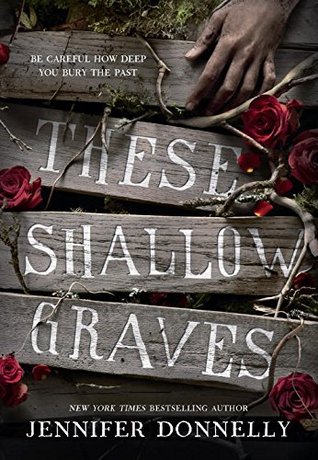
Set in gilded age New York, These Shallow Graves follows the story of Josephine Montfort, an American aristocrat. Jo lives a life of old-money ease. Not much is expected of her other than to look good and marry well. But when her father dies due to an accidental gunshot, the gilding on Jo’s world starts to tarnish. With the help of a handsome and brash reporter, and a young medical student who moonlights in the city morgue, Jo uncovers the truth behind her father’s death and learns that if you’re going to bury the past, you’d better bury it deep.

Ghosts from the past haunt the characters from THESE SHALLOW GRAVES, and they also haunt me. But I'm not afraid of them. In fact, I love ghosts. They help me do my work. Researching for THESE SHALLOW GRAVES, or any historical novel, is all about digging up ghosts. 

I tend to start my research by reading, broad, historic surveys of the time period I'm writing about. Then I go deeper, into primary sources -- autobiographies, diaries, memoirs, cookbooks, guides to etiquette or housekeeping, advertisements, newspapers and magazines that were published during the time my characters lived. In these sources, you can hear the voices of the past, and how they spoke, both formally and informally. You can get a sense for social proprieties, social roles, and how people were expected to conform to them. 


I also go to museums to look to look at jewelry, paintings, clothing, toys, dishes, furniture, and carriages. The Victorians were fond of hair jewelry -- lockets, rings or necklaces in which a lock of hair from a deceased loved one was kept. Holding a pendant in my hand that contains a twist of hair from a child reminds me how closely the Victorians walked with death. 

I also spend a lot of time in the place I’m writing about trying to absorb what remains. Old buildings speak volumes about the people who lived or worked in them. They can tell us what those people thought was beautiful and inspiring, how they worked, and how they lived. 


My chief duty as a novelist is to get the souls of my characters down on paper. Accuracy with names, dates, and places is crucial -- and good research provides it -- but letting the ghosts in, as well as the facts, is also important. It's what brings the dead back to life.    


Just Another...Book Crush! 

Winger by Andrew Smith
Because it's hilarious and real and the voice is true.

Lila by Marilynne Robinson
Because Robinson speaks to the soul like no one else.

Plenty More, a cookbook by Yotam Ottolenghi
Because his food is so good, and the pictures are so gorgeous, that I drool just looking at them. 

Thank you so much for stopping by the blog, Jennifer! The attention to detail that Jennifer describes during her research process truly pays off in the historical fiction she writes as they always feel incredibly authentic and well-researched. I am extremely picky about the world-building of my novels, even non-fantasy novels, which is why I enjoy Jennifer's novels so much. I haven't read any of her latest book crushes, though--have you? If you haven't read my review of These Shallow Graves you can do so right here. I want to know what you all think of this post, this novel, Jennifer's books, and just historical fiction in general. Any good recommendations to tide me over until Jennifer's next book releases? Let me know in the comments! :)

Wednesday, September 16, 2015

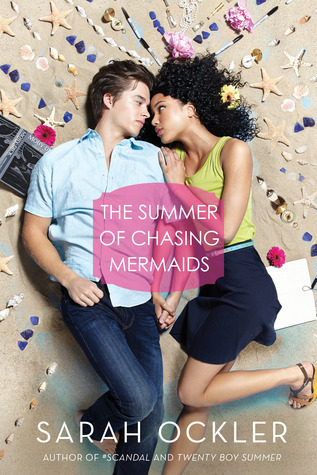
Just Another...Book Crush (#19): The Summer of Chasing Mermaids by Sarah Ockler (Guest Post & Giveaway!)

Just Another...Book Crush! is a monthly feature where I invite an author whose book I've recently reviewed and loved to write a guest post and share their three latest book crushes. It's a feature I'm starting mostly because I'm often very shy to approach authors, especially ones I admire, and also because I love reading guest posts since, more often than not, they convince me to pick up a book even when the reviewer cannot. 

I am over the moon to be welcoming Sarah Ockler to the blog today. I've been in contact with Sarah for awhile--almost ever since I read The Summer of Chasing Mermaids in late January--and have been dreaming about having her write a post for this meme. And, it finally happened! The Summer of Chasing Mermaids is one of the most powerful, diverse, sex-positive, and romantic novels I've read--ever--and it's so, so important to me. If you haven't already picked it up, just do it.

The youngest of six talented sisters, Elyse d’Abreau was destined for stardom—until a boating accident took everything from her. Now, the most beautiful singer in Tobago can’t sing. She can’t even speak.
Seeking quiet solitude, Elyse accepts a friend’s invitation to Atargatis Cove. Named for the mythical first mermaid, the Oregon seaside town is everything Elyse’s home in the Caribbean isn’t: An ocean too cold for swimming, parties too tame for singing, and people too polite to pry—except for one.
Christian Kane is a notorious playboy—insolent, arrogant, and completely charming. He’s also the only person in Atargatis Cove who doesn’t treat Elyse like a glass statue. He challenges her to express herself, and he admires the way she treats his younger brother Sebastian, who believes Elyse is the legendary mermaid come to life. 
When Christian needs a first mate for the Cove’s high-stakes Pirate Regatta, Elyse reluctantly stows her fear of the sea and climbs aboard. The ocean isn’t the only thing making waves, though—swept up in Christian’s seductive tide and entranced by the Cove’s charms, Elyse begins to wonder if a life of solitude isn’t what she needs. But changing course again means facing her past. It means finding her inner voice. And scariest of all, it means opening her heart to a boy who’s best known for breaking them...

Denial of Voice: The Sound of Silence

When I’m inspired to write a novel, it’s usually because something happening in my own life or in the lives of people close to me makes such a powerful, emotional impact that I’ve got no choice but to write about it. Through my characters and their story, I can explore the themes I’m interested in and—most importantly—give my characters the hopeful ending they deserve, despite the many obstacles they’ll face along the way.

Unfortunately, I don’t have the power to grant those same hopeful endings to the people I care about in real life, especially the teen girls who read my novels. I can only hope to let them know, through my characters and their challenges, that they are not alone.

Through Elyse’s story in The Summer of Chasing Mermaids, I wanted to explore denial of voice, something I see so many young people—particularly girls and women—struggling with. Elyse is a former singer from Tobago whose lifelong dreams were dashed a few months earlier when a boating accident left her with irreversible vocal loss. Now mute, she’s spending her summer with a family friend in Oregon, feeling stuck and uncertain about how to move forward. Without her voice, she doesn’t even know who she is anymore.

Through Elyse, I was able to write about broader silencing and denial of voice issues symbolized by a character who literally has no physical voice and has to learn new ways of expressing herself, embracing her new life, and standing up for herself when others either speak for her or shut her out.

Sometimes the suppression of a person’s voice is brutal and obvious—being told to shut up, or being threatened with violence for speaking out, or even being killed for doing so. But often denial of voice is much more insidious and even difficult to recognize. It’s made possible by subtle and oft-repeated messages telling us that certain people are not worthy of having or sharing a voice. These messages become so deeply ingrained in our culture, our social norms, or very beings, that not only do we learn to believe them, but we learn to keep contributing to and perpetuating them.

Sorry Not Sorry

From a young age, girls are taught—explicitly or implicitly—to be nice, accommodating, and selfless. To this end, we’re conditioned to automatically apologize for anything that may contradict someone else’s idea of what being nice, accommodating, or selfless means.

We learn to apologize for asking questions, as though our curiosity or need for clarification is disruptive or offensive. We learn to apologize for taking up space, or for asking someone to move out of the way so that we can get by, as though our physical presence is a crime. We learn to apologize for stating our needs, and for expecting to have those needs met, because sometimes meeting our own needs means someone else doesn’t get what he or she wants, and that’s not very accommodating. Sometimes the “Sorry!” response is so automatic, we don’t even realize we’re doing it.

Sound crazy? Ask yourself: in a given day or week, how many times do you apologize for something for which you’re not (or shouldn’t be) truly sorry? For something that doesn’t even require an apology? For saying no to a request or demand with which you can’t or don’t want to comply? For not understanding something and needing more information?

Every time we apologize for something like this—or expect others to do so—we’re silencing. We’re saying that our voices, opinions, and needs don’t matter. We’re perpetuating the belief that it’s more important to make the people around us feel comfortable than it is to take care of or speak up for ourselves.

Just Be Yourself!* (*Instructions Not Included)

Relatedly, girls are often told to “be ourselves,” and that we can do anything we put our minds to. It sounds lovely, but we’re not given a lot of direction on what that really means, or how to deal with the challenges that inevitably arise when we truly, authentically put ourselves out there. What happens when being ourselves conflicts with being nice, accommodating, and selfless?

We have to accept the fact that not everyone will welcome our authentic selves—even (and sometimes especially) the people who claim to love us most. And so often I see—in my own life as well as in the lives of girls and women around me—denial of voice in action, where we’re shut down and shut up simply because we don’t fit into whatever box society has built for us. We’re confronted by things like sexism, gender roles and expectations, privilege, double standards, lack of opportunity, aggression, poverty, racism, fear, power dynamics, institutionalized misogyny… just to name a few, and then told to just “be ourselves” or “we can do anything we put our minds to” as if these obstacles don’t exist.

So how do we overcome our internalized and externalized silencing and related fears, and help other girls and women do the same? 

By Being A Voice Advocate

I don’t write my books with the intention of sending messages, but I always hope that readers walk away from my stories feeling less alone, or thinking about something in a new way, or maybe even considering an issue or situation they’ve never given much thought before.

With The Summer of Chasing Mermaids, my hope is that readers might be inspired to find ways to connect with and express their own true voices, and also to consider how we might encourage and support other girls and women in doing the same.

Each of us has the power to be an advocate for voice. If you don’t have a supportive, encouraging person in your life, you can be your own advocate! It doesn’t mean that you won’t face challenges and obstacles—perhaps even dangerous ones. You won’t always have the safe space in which to express yourself. But you can start with knowing your own personal truth, and trusting the voice inside you. Once you do that, you can practice expressing yourself in small ways. For example, if you find yourself constantly apologizing, practice withholding that “I’m sorry” for situations where you truly need to apologize for a wrongdoing. If you have trouble saying no, or you’re constantly putting energy into others while neglecting yourself, practice caring for yourself. Practice saying no, or even offering a compromise. Self-love is not selfish!

Being a voice advocate also means thinking about ways in which we might be unintentionally silencing someone through our own words or behaviors. Are we criticizing instead of encouraging? Do we scoff or easily dismiss someone because we don’t agree with her views, or because we think her ideas are stupid? Do we assume that someone younger than us can’t possibly understand, or that her experiences and feelings are invalid or immature? Similarly, do we assume someone older is out of touch? Do we ignore the voices of those who are different from us in any way because we assume we have nothing to learn from them? These are important questions to ask ourselves if we truly believe in freedom of expression and truly want to foster an environment in which all girls and women can safely express their authentic voices.

If you’re comfortable with self-expression, you can advocate for someone who isn’t. Help that person by being a good listener, by giving them safe space in which to explore their own inner voice and practice expressing it. Sometimes, all it takes is one supportive person or one moment of encouragement to truly change someone’s life. Let the girls and women in your life know that you want to hear what they have to say—that they are important and worthy, and that their voice matters.

And most importantly, know that your voice matters, too. Trust yourself. Believe in yourself. And that inner light will shine out of you and illuminate everything you do. 

Just Another...Book Crush! 


1. The Diary of Anais Nin by Anais Nin. This is a regular re-read for me, though I haven't yet made my way through all the volumes yet. I just love opening the book and slipping into her vibrant world, getting lost in and inspired by her beautiful writing.
2. He's Gone by Deb Caletti. I adore Deb's YA books, and this one--her first novel for adults--is just as lovely. Deb has a way of capturing everyday moments, heartaches, and joys so simply and perfectly; reading her books is like hanging out with a dear old friend.
3. The Complete Gods and Goddesses of Ancient Egypt by Richard H. Wilkinson. I'm obsessed with Ancient Egypt, and I can't help but be carried away to another time and place when I flip through this one. It's truly awe-inspiring!

Giveaway!

Sarah was so, so sweet and offered to host a giveaway for one lucky winner to win a signed copy of The Summer of Chasing Mermaids. This giveaway is US ONLY, but I'll be hosting more international giveaways extremely soon, no worries! All my usual rules and regulations apply and keep in mind that the giveaway ends September 30th. Good Luck!
What did you think of Sarah's guest post? Have you read any of her Book Crushes? Let me know in the comments below and if you haven't read my (gushing!) review of The Summer of Chasing Mermaids, you can do so right here. :)

Monday, May 4, 2015

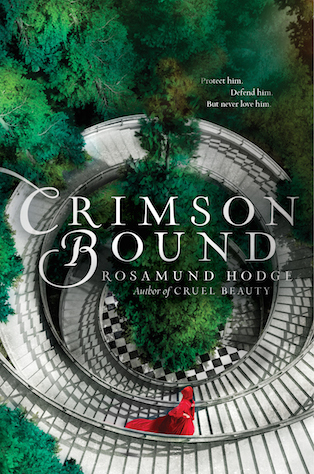
Just Another... Book Crush (#18): Crimson Bound by Rosamund Hodge

Just Another...Book Crush! is a monthly feature where I invite an author whose book I've recently reviewed and loved to write a guest post and share their three latest book crushes. It's a feature I'm starting mostly because I'm often very shy to approach authors, especially ones I admire, and also because I love reading guest posts since, more often than not, they convince me to pick up a book even when the reviewer cannot. 

Today on the blog I am thrilled to be re-welcoming Rosamund Hodge back to discuss her sophomore novel, Crimson Bound, which I actually found to be even better than her debut, Cruel Beauty, which I loved. Hodge has a talent--and the courage--to write unlikable female characters, ones who don't always make the moral of decisions. I am head-over-heels in love with her blog post today and I hope you all will be too! 
When Rachelle was fifteen she was good—apprenticed to her aunt and in training to protect her village from dark magic. But she was also reckless— straying from the forest path in search of a way to free her world from the threat of eternal darkness. After an illicit meeting goes dreadfully wrong, Rachelle is forced to make a terrible choice that binds her to the very evil she had hoped to defeat. Three years later, Rachelle has given her life to serving the realm, fighting deadly creatures in an effort to atone. When the king orders her to guard his son Armand—the man she hates most—Rachelle forces Armand to help her find the legendary sword that might save their world. As the two become unexpected allies, they uncover far-reaching conspiracies, hidden magic, and a love that may be their undoing. In a palace built on unbelievable wealth and dangerous secrets, can Rachelle discover the truth and stop the fall of endless night? Inspired by the classic fairy tale Little Red Riding Hood, Crimson Bound is an exhilarating tale of darkness, love, and redemption.

Misery Loves Company: Why I Wrote Two Guilty, Self-Hating Heroines


When you have a book about to be published, you start thinking of all the reasons that people might not like it. You ponder all the points in the book where a reader might demand, "But why did you do that?" And you try to come up with a few good answers.

At least, I do. So I've been conscious for a long time that there are a lot of similarities between Rachelle, the heroine of Crimson Bound, and Nyx, the heroine of Cruel Beauty. They both struggle with guilt and self-hatred. They both think that they're unworthy of love. And they both use a lot of anger to cope with that.

Why did I write a second angry, guilty, self-hating heroine? 

Because I wasn't done yet.

I like writing about guilt and self-hatred because . . .  well, for one thing, it brings the DRAMA like little else.

But I also like writing about it because it's a way to get at some fundamental human issues. Who am I? Who should I be? How can I be loved? Those are questions that we all face, and those are the questions at stake when you're writing a character who's dealing with guilt.

And I wrote two guilty heroines because I wanted to write two different sets of answers to those  questions.

If I had to summarize Nyx's story, it might be: "You're not as bad as you think you are." Nyx hates herself because she's full of anger and resentment--at her father, for promising her to a demon, at her sister, for escaping that fate, and really at the whole world, for letting her be in such an awful position. Over the course of the novel, she learns to be kinder to the people around her--but she also learns to accept her own anger, to stop hating herself for it, and sometimes to embrace it.

That isn't Rachelle's story.

Because the reason that Rachelle hates herself? The evil, supernatural powers of the Great Forest offered her a choice: kill an innocent, or die. She killed and lived. And there were a whole bunch of mitigating circumstances--she didn't accept that choice without a fight--but at the end of the day, somebody was dead. She did it.

I wrote about Rachelle because I wanted to write a story about the question, "What if you are as bad as you think you are?"

You hear a lot about needing to "forgive yourself"--in novels, TV, and inspirational blog posts.  But when there's an example of  "forgiving yourself," usually it's all about realizing that what you did wasn't so bad.  Or that you were trying your best. Or that you really didn't harm anyone in the end. Or that at least you're different now, hooray, so let's just wave our hands and ignore what happened earlier.

And quite often, that's exactly what you need. I know that a lot of the time when I start wallowing in self-hatred, it's over something absolutely inconsequential, where I did try my best and anyway nobody will ever know the difference. Sometimes you really just need to realize that you're not as bad as you think you are.

But not always. Sometimes you really have done something awful. And I used to struggle a lot during those times, because I felt like forgiving myself would be saying that what I had done was okay. It would be denying my own principles of right and wrong, and I loved my principles far more than I loved myself, so I figured it was just time to board the guilt train.

If you had asked me, of course I would have said that forgiveness didn't mean making excuses; I would have told you that in fact, forgiveness can only exist when somebody has really done wrong. I would have sworn that anything could be forgiven.

I would have said that, and thought that, and defended that to the death. But I often had hard time believing it.

So I wrote Rachelle. At the start of Crimson Bound, she's in a similar position. She's done something wrong, and she hates herself, and she clings to that self-hatred because it is the only thing she has left. The Great Forest took away her dreams of courage and heroism; it took her family and friends; it took away her innocence and her sense of self.  As long as she hates herself for being what the Forest made her, she's still a little bit free of it.

Then I gave her one last chance to save the world from the power of the Great Forest. I gave her a few people who were willing to believe in her. And I made myself a promise: no matter what happened on her journey, she would get to keep her principles. I would never, ever make her say, "That wasn't so bad," as the price for finding peace.

I think it ended up making a pretty interesting story. 

Just Another... Book Crush! 
1. The Winner's Crime by Marie Rutkoski
2. Prairie Fire by E. K. Johnston
3. The Goblin Emperor by Katherine Addison

Thanks for stopping by, Rosamund! I love, love, love this post--it exemplifies so many of the ideals I want to see in more YA heroines, which is why Rosamund Hodge is one of my favorite authors, even after just two books! What did you think?

Tuesday, March 10, 2015

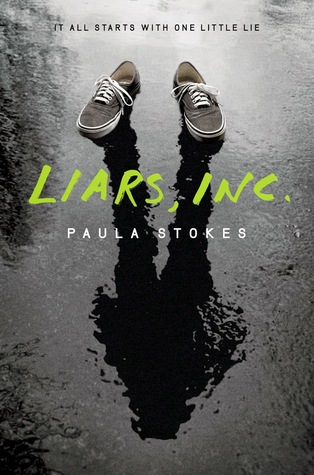
Just Another...Book Crush (#17): Liars, Inc. by Paula Stokes

Just Another...Book Crush! is a monthly feature where I invite an author whose book I've recently reviewed and loved to write a guest post and share their three latest book crushes. It's a feature I'm starting mostly because I'm often very shy to approach authors, especially ones I admire, and also because I love reading guest posts since, more often than not, they convince me to pick up a book even when the reviewer cannot. 

Can you believe this is the first "Just Another...Book Crush!" post since August? You probably can. Ever since entering college I have begun posting far less frequently than I typically do and, sadly, that meant reducing the amount of time I had to send out e-mails and hunt down authors who would be willing to write a guest post for the blog. I am incredibly excited, however, to have Paula Stokes back on the blog today. Paula wrote The Art of Lainey which debuted last year and--if you re-call--I loved it. She was gracious enough to return to the blog this year to talk about her sophomore novel, Liars, Inc. which is both incredibly compelling and vastly unique. I cannot recommend this book enough and I guarantee that you're going to want to run into the stores to buy it after reading Paula's incredible post. It discusses all the topics I feel most passionately about and crave in the YA genre so it's an absolutely perfect fit for the blog. Enjoy!
Max Cantrell has never been a big fan of the truth, so when the opportunity arises to sell forged permission slips and cover stories to his classmates, it sounds like a good way to make a little money and liven up a boring senior year. With the help of his friends Preston and Parvati, Max starts Liars, Inc. Suddenly everybody needs something and the cash starts pouring in. Who knew lying could be so lucrative? When Preston wants his own cover story to go visit a girl he met online, Max doesn’t think twice about hooking him up. Until Preston never comes home. Then the evidence starts to pile up—terrifying clues that lead the cops to Preston’s body. Terrifying clues that point to Max as the murderer. Can Max find the real killer before he goes to prison for a crime he didn’t commit? In a story that Kirkus Reviews called "Captivating to the very end," Paula Stokes starts with one single white lie and weaves a twisted tale that will have readers guessing until the explosive final chapters.

MAX AND PARVATI--BEYOND RACIAL DIVERSITY

Let me start by saying I’m thrilled to be back on Ivy Book Bindings, a blog that has a diverse, intellectual readership and brings out my analytical side. I write commercial fiction—unapologetically—but that doesn’t mean I can’t think deeply about it, right? ;-)

I am a huge fan of racial and cultural diversity in literature. THE ART OF LAINEY could have had more, but the manuscript did have more until some of the elements were challenged by people higher up than I am (the average author is not very high on the power hierarchy) who felt some of Bianca’s original portrayal was stereotypical. Was it? Maybe? But definitely not in a negative way. I won’t bore you with the details, but I modeled her and her family off the Mexican friends I had when I lived in St. Louis.

In hindsight, do I wish I had fought harder for some things? Sure, but it’s important to strike a balance between advocating for your book/characters and being humble enough to recognize that the people who have been doing this a lot longer than you might be right. What mattered most to me was that Bianca wasn’t reinforcing negative stereotypes about Mexican people. I feel I accomplished that and I’m proud that my future books include a whole slew of racially diverse characters—both main and supporting—that will hopefully feel authentic to most.

But this post isn’t supposed to be about racial diversity; this is supposed to be about going beyond that. So: here’s a question. Why is it important to have YA books with diverse characters? The two reasons I see proposed the most are so that different groups of people can see themselves represented [realistically, positively] on the page, and so that people outside of those groups can become more educated. I think these are both noble goals, and I think we should be striving to achieve them not just for readers of different ethnicities and sexual orientations, but also for readers who are differently-abled, mentally ill, physically ill, different religions, different socioeconomic classes, and even for readers of different personality types and so on. [Thanks to Keertana for providing the framework for this post when we were discussing topics. She mentioned how a lot of YA main characters seem to have the same basic personality types and I realized I feel similarly.]

Obviously, not all writers will feel comfortable writing for all those possibilities, but we’re probably all comfortable writing for at least a couple of them. I wrote Max and Parvati, the main character and the love interest (book-girlfriend?) of LIARS, INC. with several of those groups in mind.

MAX: Max Cantrell is an 18-year-old white male living in Southern California. On the surface, he’s one of the least diverse characters of all. But I’m going to challenge that idea. For one, in YA novels, there are more female protagonists than males, especially males who feel like actual guys. [So far reader response of Max’s portrayal is very positive, so I hope Max feels authentic to you too.] He’s also the adopted child of two parents who love him, which isn’t something you see in books every day. Prior to being adopted at age ten, Max was a foster kid and then homeless for almost a year. Because of all that he’s got some mild PTSD that affects his willingness to form deep connections with people. Finally, he’s lower-middle-class—poor enough for it to show in his thoughts and actions, but not so much that it’s a major plot point. Foster kids, the homeless, people with PTSD, lower-income families—all of these populations are sometimes marginalized. But the thing I find most fascinating about Max, for lack of a better term, is that he’s Factionless. And I am not talking ALLEGIANT “violent uprising” Factionless.” I’m talking DIVERGENT “if anyone needs me I’ll be sleeping under this br—oh wait, no one will ever need me” Factionless. Think about it—don’t most book boys slot neatly into the Dauntless, Erudite, or Abnegation camps? Don’t most protagonists of both genders fall into those groups?

Max is none of those things. Sure, he shows smarts occasionally and a bit of bravery or selflessness, but probably the most special thing about Max is that on the surface he’s utterly unspecial. He’s a loner with only a couple of friends. He has no idea what he wants to do after high school. He’s that guy in the back of the classroom who falls asleep while the teacher is lecturing. I was a Type A overachiever in high school and kids like Max were invisible to me. (And I know that’s a sad thing to admit, but I also know I’m not the only one.) It wasn’t until I student-taught high school that I started wondering what was going on inside those “slacker kids’” heads.

 It’s funny--the proofreader sent a query that read: “You have Max in Algebra as a senior and both his best friends are in Calculus. Did you want to make this Algebra II?” No, I didn’t, because Max is the kind of guy who is only going to take the required amount of boring classes he needs to graduate (which doesn’t make him a bad person or “inferior” to us), and for a California diploma all he needs is Algebra.

So why write about this guy? Because of those reasons mentioned above about why we need diverse characters.  There are plenty of kids like Max and they don’t usually get to have stories—especially not ones that end well. [I’m not going to say LIARS has a happy ending per se, but Max does get to grow and change and become better throughout the book.] I want those kids to see themselves in LIARS, INC. and think “Hey, I can have the affections of this ambitious, pretty girl and this awesome adopted family. I can come out a winner. I am worth reading about.”

And then for the people like me, who all but ignored the Max-types during high school because we couldn’t be bothered with them, there’s the second reason. I want to show there’s more to Max than what you see on the surface—that it could be a huge mistake to write off a human being because superficially they don’t impress you. Since I got [a lot] older and [a little] wiser, I have dated some Max-types and found them to be all kinds of amazing. Max is far from perfect even at the end of LIARS, INC., but throughout the book he’s loyal, honorable, and trying to be a decent person. He takes responsibility for his screw-ups. He feels bad when he does the wrong thing. Even if you read LIARS, INC. and find him hard to love, I think these traits will make it easy to respect him.

PARVATI: I don’t give characters different ethnicities to fill some sort of moral quota. Props to authors who can “insert diversity” in that manner and have it feel organic, but my first loyalty is always to the story. And for me, just as the wand chooses the wizard, the story often chooses the characters.

Sometimes they show up with their races, personality types, and basic traits already apparent and I will only force changes in them if the storyline demands it. Max’s girlfriend was Indian from the very beginning. [Note: throughout the book she is described as half-Indian because that is how Max knows her and her father is white, but she looks 100% Indian and there might be more to that story.] She didn’t come fully-formed, though. I made her Indian because I knew she wanted desperately to work for the CIA and the CIA heavily recruits people of color because they are easier to place in overseas posts. I chose Indian specifically because I have close family friends who are Indian and they served as resources for some of my cultural questions. [That’s not to say you can’t write any type of character you want. You might just have to work a little harder to get it right.]

But there’s more to Parvati that her ethnic heritage. She has a personality disorder that causes her to make some destructive choices, but it doesn’t keep her from having big dreams. She possesses a really cool makeup of “traditionally feminine” and “tomboy” traits that I don’t see a lot of in YA. She’s similar to Lainey in that she likes pretty clothes and eye makeup, but she’s also really athletic and fierce, including having a brown belt in karate. [Note: the seeding of her brown belt was left out of the ARC on accident. There are more mentions of this in the finished book.] She’s a mix of ambitious/intellectual and wild/irresponsible. She’s very Western in the way she dresses and thinks and acts, but she embraces parts of her Indian heritage too.

For me, Parvati is a study in contradictions—a message to people that you don’t have to put yourself in a box. You can be many different things. You can screw up massively and still consider yourself responsible and hard-working. You can like some things about where you came from and dislike others. Putting on makeup doesn’t make you less of an athlete. Having emotional problems doesn’t mean you can’t achieve great things. I know there are plenty of readers who don’t need these messages, but some do, and I consciously strive to create characters who encourage acceptance—both of other people and ourselves.

So as you can see, a lot of thought went into the creation of Max and Parvati, and I’m proud of both of them, even when they’re making bad choices and doing things they probably shouldn’t do. However, nothing in this post is meant to downplay the need for racial diversity in books, or to say one type of diversity is more important than another. For too long, literature and film relegated characters of color to the roles of second-rate superheroes and sassy friends. It’s exciting to see such an influx of diverse lit in the past couple of years and the future looks bright. But not all authors will feel comfortable writing main characters outside of their gender or culture or sexual orientation, and that’s okay. Knowing your limitations doesn’t make you prejudiced. Just remember that there are lots of readers out there who are underrepresented in fiction. Reach out to the ones you can.

And finally, if you’re a writer, never let anyone tell you a certain type of character is off-limits. I went to a diversity panel discussion recently and one of the speakers was asked:

“So what are the key points to remember when trying to craft a POC who is believable but doesn’t fall into the trap of being a stereotype?”

The speaker’s entire answer was that if we want these types of stories we need to support authors of color. And as much as I agree we need to support authors of color, the subtext there—that white people can’t do it right and shouldn’t even try—really bothered me. For one, it puts the entire responsibility of creating diverse lit onto authors of color, which is unfair. And second, if you do your research, get feedback from beta-readers, and try your best to write POC characters in a way that is authentic and respectful, then it shouldn’t matter what color you are, should it? You tell me.

Just Another...Book Crush! 

These aren’t the newest, but I decided to stick with the diversity theme and highlight some of my past favorites:

ALL YOU NEED IS KILL by Hiroshi Sakurazaka 
This is the book the movie THE EDGE OF TOMORROW is based on, and the translator managed to maintain the lyrical cadence of Japanese language. Keiji Kiriya dies and comes back to life again and again on the battlefield as he faces an army of alien invaders. What’s so special about him that he’s getting so many chances, and can he use his gift to figure out a way to beat his unbeatable foes before he dies for good?

FIVE FLAVORS OF DUMB by Antony John 
Piper bets the school’s rock band she can become their manager and land them a gig. The problem: Piper is severely hearing-impaired. This book is a fun and heartfelt musical odyssey featuring a girl who refuses to be owned or defined by her disability. A prime example of a non-hearing-impaired author who did his research and crafted a superb book. Winner of the Schneider Family Award.

GOING BOVINE by Libba Bray 
In addition to being another MC I would label as Factionless, Cameron just happens to have Bovine Spongiform Encephalopathy—the human form of mad cow disease. Sure, there probably aren’t a ton of BSE-afflicted readers out there, but I’m sure there are some chronically ill readers tired of reading depressing cancer books. In GB, Cam sets off on a quixotic quest in search of a mysterious time traveling doctor who might have a cure for BSE. Friendship, love, music, and snow globes collide in a book that made me laugh, cheer, and weep simultaneously.

Thanks for stopping by and sharing such a thought-provoking post, Paula! What do you think about diversity in YA Fiction? Be sure to look out for Liars, Inc. in bookstores on March 24th! (If all goes as planned, I'll be reviewing this book before it hits the shelves in case you need any more motivation to put it on the top of your TBR!)

Wednesday, August 27, 2014

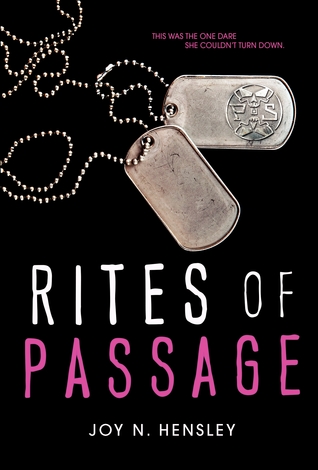
Just Another...Book Crush (#16): Rites of Passage by Joy N. Hensley (Interview & Giveaway!)

Just Another...Book Crush! is a monthly feature where I invite an author whose book I've recently reviewed and loved to write a guest post and share their three latest book crushes. It's a feature I'm starting mostly because I'm often very shy to approach authors, especially ones I admire, and also because I love reading guest posts since, more often than not, they convince me to pick up a book even when the reviewer cannot. 

I'M ALIVE! I moved into college on Monday and ever since I've been busy, busy, busy. You'd think I'd have a bit of time to just breathe and figure out all this college stuff, but NO. I've been thrown into Orientation and running around campus, finding buildings, and in general plastering a smile on my face in case I run into my future Best Friend For Life has been exhausting. So forgive my minimal online presence and, instead, welcome Joy N. Hensley to the blog! I looooved Joy's debut novel, Rites of Passage which I'll hopefully be reviewing soon (hopefully!). When I approached her to write a guest post for the blog she mentioned that she'd prefer an interview instead so, forgive my lack of creative questions, but I hope you enjoy reading this as much as I did. 

Also, Joy was sweet enough to send me amazing swag for her upcoming novel along with extras which I will be giving away below. Since it's my birthday today I suppose you can treat this as a bit of a birthday giveaway! ;)
Sam McKenna’s never turned down a dare. And she's not going to start with the last one her brother gave her before he died. So Sam joins the first-ever class of girls at the prestigious Denmark Military Academy. She’s expecting push-ups and long runs, rope climbing and mud-crawling. As a military brat, she can handle an obstacle course just as well as the boys. She's even expecting the hostility she gets from some of the cadets who don’t think girls belong there. What she’s not expecting is her fiery attraction to her drill sergeant. But dating is strictly forbidden and Sam won't risk her future, or the dare, on something so petty...no matter how much she wants him. As Sam struggles to prove herself, she discovers that some of the boys don’t just want her gone—they will stop at nothing to drive her out. When their petty threats turn to brutal hazing, bleeding into every corner of her life, she realizes they are not acting alone. A decades-old secret society is alive and active… and determined to force her out.At any cost. Now time's running short. Sam must decide who she can trust...and choosing the wrong person could have deadly consequences.
1. First and foremost, thank you for agreeing to participate, Joy! I'm so glad you were able to make it onto the blog today. I knew next-to-nothing about you prior to your debut but after reading Rites of Passage I found out that you yourself had been to military school before. It is evident throughout your novel as the story and experiences feel so authentic. Were any of the scenes from Rites of Passage similar to your own life? Could you explain the process of fictionalizing a real experience and molding facts from your life into this tale? 

Thanks for having me, Keertana! I looked over your questions and realized I was going to have to take a little bit of time to think about them and actually craft some answers. It was actually a learning experience for me. I had to think past the basics of Rites of Passage and dig for the answers. I did go to military school, on a dare, in fact. There are a lot of scenes in Rites of Passage that could every easily have taken place. Near the beginning there's a day-long event called Dedication Day where the recruits have to show what they've learned in their "boot camp" week. I took a lot of that from the school I went to. I'm sure other military schools do something similar, but I'm not sure when in the training it happens. There's another scene in the book later on where the drill sergeant is doing some physical training with the recruits in the hallway. He turns the lights out and plays a song--the song I chose for that scene was very specific and that type of training was done by my cadre.

It's important to note, as you did in your question, though, that this book is definitely fiction. I survived my military school dare, however I didn't thrive. Basically, when I started to write Rites of Passage, I wanted to tell the story of how I *wish* I had done, and Sam is the character that embodies that. Were there nice upperclassmen? Yes. Attractive ones? Definitely. There were also cadets who didn't live up to the uniform and ones who still (after forty years of being co-ed) believed that females didn't belong on campus. Were there secret societies at my school? I don't know. There were whispers of them, as there are at many old, traditional universities. Would I call them out? Heck no! :-) But all of these facets went into creating this book, Denmark Military Academy, and the cadets who inhabit the novel. Is any one character true to life? I don't think so, not 100%, probably not even 50%. But, as with any book written by any writer, there were people that I drew on for inspiration and character building.

2. What stood out to me the most about Rites of Passage was the overwhelming feminist manifesto throughout. Sam, as a woman, is discriminated against for attempting to enter a predominantly male society and career. Was it your intent to write Rites of Passage with such a strong feminist focus or did you rely on experiences of female soldiers who have also undergone similar forms of discrimination in their field? More importantly, do you feel as if Sam's determination to push through the dire circumstances she finds herself in is due to her own sheer will or was it an intentional shout-out to women's rights? 

Wow, you're using some strong language in this question! I'm not sure I'd say feminist manifesto so much as feminist undertones , maybe? My intent was just to write a kick-ass female character, you know?

I didn't want Sam to have to depend on boys to get her through. I wanted to write a character who was okay with herself, who didn't need a boyfriend to feel important. I wanted to show how friendships in teen years are so much more important that relationships and how it's okay to not be dating all the time. Life can take us so many different places and while I love a good romance just as much as the next girl, it's important to see that we can love ourselves and be okay with ourselves. 

It's nice to be loved and held and kissed and swept off my feet, but I want someone who believes in me, too. Someone who understands that I need to accomplish things on my own and I don't necessarily need to be rescued.  As a teacher, I see so many girls who think they aren't worth anything because they don't have boyfriends. 

But that's not what life is, you know? 

Life is about finding out who you are and who you want to become. If it takes putting relationships on the back burner for awhile, that's okay.  Every single girl deserves to know that she is capable of whatever she dreams. She might need help, she might need friends along the way, but she can do anything!

3. Over the course of Rites of Passage Sam grows and changes, both mentally and physically as she finds herself training both harder and longer. Could you explain the process of creating Sam's growth arc--as it pertained to her military household, her blooming romance, and the brutal hazing she suffers? 

Sam's a pretty strong main character with pretty strong convictions about the way life should be. Throughout the book, I needed to make sure she questioned what she believed in. It's not enough to say "This is what I believe." You have to be able to answer the inevitable "Why?" that comes next. So for a character like Sam, I had to shake her to her core, which meant putting her through some pretty horrible things regarding her family and the hazing. She had to realize on her own that not everything is black and white, good and bad. There are gray areas to everything, but it's where you stand in the gray that makes you who you are. At the end of the novel, I hope it's clear that Sam understands the why--not only of her beliefs--but of the other characters' beliefs as well. 

4.  Lastly, I cannot help but ask: is there any possibility of a companion novel or sequel? What else can you tell us about your current projects? 

Right now Rites is a stand alone, but that doesn't mean there won't ever be a sequel or companion novel. How's that for a non-answer? :-)  Right now I'm working on my second book for Harper Teen called The Harder You Fall. I can't say much yet, but it takes place in the world of mixed martial arts.  

Thanks again for having me and for the great questions! Did I pass the test? :-) I hope everyone enjoys Rites of Passage.

Thank you so much, Joy! I don't doubt for a second that everyone is truly going to enjoy Rites of Passage--seriously, what a treat! :)

Giveaway! 


a Rafflecopter giveaway

Thursday, May 15, 2014

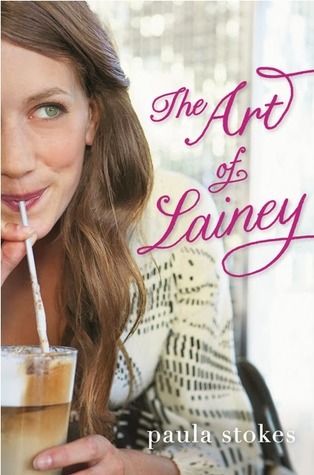
Just Another...Book Crush (#15): The Art of Lainey by Paula Stokes

Just Another...Book Crush! is a monthly feature where I invite an author whose book I've recently reviewed and loved to write a guest post and share their three latest book crushes. It's a feature I'm starting mostly because I'm often very shy to approach authors, especially ones I admire, and also because I love reading guest posts since, more often than not, they convince me to pick up a book even when the reviewer cannot. 

I got in touch with Paula a couple of months prior to the release of The Art of Lainey as I'd picked up my ARC almost immediately after receiving it and was thoroughly impressed with the story within. Of most importance to me, however, was the depiction of a strong female protagonist in Lainey and, in particular, Paula's journey to publication with a heroine who doesn't quite fit all the usual boxes. Needless to say, I had to have Paula on the blog to share her story with you all! :)
Soccer star Lainey Mitchell is gearing up to spend an epic summer with her amazing boyfriend, Jason, when he suddenly breaks up with her—no reasons, no warning, and in public no less! Lainey is more than crushed, but with help from her friend Bianca, she resolves to do whatever it takes to get Jason back. And that’s when the girls stumble across a copy of The Art of War. With just one glance, they're sure they can use the book to lure Jason back into Lainey’s arms. So Lainey channels her inner warlord, recruiting spies to gather intel and persuading her coworker Micah to pose as her new boyfriend to make Jason jealous. After a few "dates", it looks like her plan is going to work! But now her relationship with Micah is starting to feel like more than just a game. What's a girl to do when what she wants is totally different from what she needs? How do you figure out the person you're meant to be with, if you're still figuring out the person you're meant to be?
Hi! I’m Paula. Keertana invited me on the blog to talk about the creation and evolution of Lainey, the main character from my first YA contemp The Art of Lainey. Like Keertana, I see Lainey as a strong and engaging female character, but she’s also very flawed. At the beginning of the book, she’s got a lot going for her—looks, athletics, friends, loving middle-class family, hot boyfriend, use of her brother’s car for the summer, etc. Because of this, she starts out as someone who might get hashtagged with #FirstWorldProblems, if you know what I mean.

So why would I want to write about this kind of girl? The first answer to that question is “I don’t know.” I don’t design my characters like some mad scientist in a lab, tweaking the height lever up a bit and the snark lever down until I achieve the perfect girl. They usually just appear out of the ether and start talking. Sometimes there are tons of them all fighting each other in a big mental street fight until eventually one or two win out. Lainey Mitchell came to me, with her likes, dislikes, strengths, and weaknesses  mostly in place, based on the idea of “what happens to the girl who has everything when her world falls apart?”

The second answer is because I like flawed characters. There are plenty of books with inoffensive and seemingly perfect main characters for readers to insert themselves into, but everyone I know in real life has flaws. So what if Lainey is a little shallow and snarky and emotional? So what if she starts out a tad desperate in the romantic arena? These things make her real.  Plus, there’s more opportunity for growth and character arc if your MC isn’t perfect to start with.

The third answer is because I wanted to bust the myth of the popular girl. You know—the one whose life looks perfect? Well guess what? She has all the same insecurities as everybody else. She’s insecure about her looks. She worries about her future. She’s afraid of being hurt. She’s afraid of hurting people. She wants to be loved. When we put people in boxes, we run the risk of forgetting the common threads we all share.

Although I try to let my characters be themselves as much as possible, there is one thing I demand from my MCs—strength. They don’t have to be physically strong (although Lainey is) or even mentally strong, but they need to have strength of spirit. I think it’s clear from the first chapter that Lainey is going to be okay, no matter what. She’s a fighter. My female characters manifest their strength in different ways and occasionally do weak things (no one’s perfect) but in general they’re  tough chicks. I wouldn’t have it any other way.

In summer of 2011, I took the first chapter of The Art of Lainey  (which was still a WIP) to a conference where an editor told me she liked the voice but that Lainey couldn’t think of herself as pretty or popular because all high school girls were insecure and considered themselves dorky. I’m paraphrasing her words, but basically I walked away thinking my book didn’t have a chance unless I made Lainey just like the quiet, quirky, intellectual, outsider girls that were prevalent in a lot of YA contemps published a few years ago.

But that wasn’t the story I wanted to tell, so I finished the book my way and queried four agents in fall of 2011. Three of them requested the full manuscript immediately, from the first ten pages where Lainey is kind of at her worst. Yay, vindication! Sort of. The agent I signed with also loved Lainey, though she pointed out a few places where Lainey was snarky for snarky’s sake that I ended up revising.

My agent felt really positive about my revisions and sent the book on submission in winter of 2011 using Stephanie Perkins’s books as comparison titles. I hadn’t read ANNA or LOLA at the time, but I knew how popular they were so I was feeling confident too. But unfortunately…EDITORS. HATED. LAINEY. “I just didn’t care about her.” “I didn’t feel a connection.” “I thought this book was full of horrible people.”

I cried. If you think it sucks to get a string of mysterious “not for me” agent rejections, wait until you get a whole slew of NYC editors being completely honest about why they didn’t like your book. I cried some more. Then I went for a run. Then I called some friends and discussed the uncomfortable reality of just how much of my inner self I had put into Lainey. “OMG.  Editors hate me,” I said. “I’m apparently a horrible person.” But my friends didn’t think so. And my agent didn’t think so either. We put our heads together. She thought the current draft of the MS was fine and that we should go out for another submission round. But since multiple editors had remarked on Lainey’s lack of appeal, I wanted to revise.  [Sidenote: Paula Writing Rule #3: Never pass up a chance to revise.]

That was the tricky part, because as Lainey’s creator, I knew every part of her. I knew her history. I knew her thoughts. I knew that underneath her “popular girl façade” she was awesome. But how could I bring that to the page?

Because I wasn’t willing to sacrifice Lainey’s popularity, feistiness, or her deeply felt emotions (she basically goes through the stages of grief after her boyfriend dumps her, so she is very angry in places and despondent in others), I decided to revise by addition instead of subtraction. I started by layering in self-awareness to make her more sympathetic and relatable. Finished book-Lainey realizes she’s being bitchy to Micah in the first chapter and wants to apologize even though she can’t quite spit it out. She knows when she’s being melodramatic. At one point, she makes a really bad decision and she questions herself the whole time. I also worked to emphasize Lainey’s positive traits. She’s funny, fiercely loyal, and hates to see people in pain. I developed scenes to show all of these elements throughout the book. Finally, I deepened her relationship with Bianca and her interest in soccer to make her feel more multi-faceted.

My agent loved the changes and the manuscript was eventually acquired in May of 2012 by an editor at HarperTeen. When I told her the story of “Everyone Hates Lainey” she was like “Nah. Maybe she needs a little tweaking, but I thought she was fun.” VICTORY! :-) My Harper editor pushed me to make the book even stronger by requesting I give Lainey and Bianca’s friendship additional backstory and develop the soccer aspect of the story even more. I also finessed Lainey’s intellectual arc with respect to The Art of War and her overall emotional arc with respect to her best friend and possible new boyfriend.

Lainey Mitchell doesn’t become a whole new person in one summer, because that would be unrealistic, but by the end of the book she has changed in subtle but important ways. She knows more about who she is and what she wants. She more thoughtful; she’s less afraid; she has new things in her life that matter. I’m proud of the person Lainey becomes. If you read The Art of Lainey, I think you will be too.

Just Another...Book Crush!
My book crush picks [Disclaimer: authors don’t get time to read 200 books a year like we wish we could, so these aren’t brand new releases, but they’re three of the last books I really loved.]

  1. VICIOUS by V.E. Schwab: Truth--I don’t like books that are written so just when something good is happening I have to flash to a different time period or POV and wait to find out what’s going on in the present. The fact that VICIOUS does this, a lot, and I still love it speaks to how absolutely phenomenal it is. What made this one for me is Victor, his relationships with the other characters, and the PERFECT ENDING.
  2. THE DUFF by Kody Keplinger: Sometimes a book speaks to you on a personal level—no, on several personal levels. I did not go into the book expecting that Bianca and Wesley would make me cry, but they did. If you like YA contemps and can handle some sex/swearing, this one should not be missed.
  3. A TALE OF TWO CENTURIES by Rachel Harris: I’m re-reading this one in preparation for the third book and it is such a delight. Austin is deliciously swoony in that bad boy/slacker/surfer who knows his classic literature kind of way. Less’s adventures in modern day California are hilarious. Reading this book reminded me of why I wrote The Art of Lainey—to make people laugh and feel good.
Thanks for stopping by, Paula! I seriously loved this post and The DUFF is a favorite of mine. I'm definitely bumping both Vicious and A Tale of Two Centuries up my list after your glowing recommendation, so I cannot wait to pick those up soon as well! :)

Monday, April 28, 2014

Just Another...Book Crush (#14): What I Thought Was True by Huntley Fitzpatrick

Just Another...Book Crush! is a monthly feature where I invite an author whose book I've recently reviewed and loved to write a guest post and share their three latest book crushes. It's a feature I'm starting mostly because I'm often very shy to approach authors, especially ones I admire, and also because I love reading guest posts since, more often than not, they convince me to pick up a book even when the reviewer cannot. 

Reader, I've been dying to share this post with you since I first read it in February, believe it or not. Huntley Fitzpatrick's sophomore novel, What I Thought Was True, remains my absolute favorite contemporary read of the year and I couldn't resist the urge to invite her on the blog after it nestled its way into my heart. I only hope you all love her novel - and this post! - as much as I do.

Gwen Castle's Biggest Mistake Ever, Cassidy Somers, is slumming it as a yard boy on her Nantucket-esque island this summer. He's a rich kid from across the bridge in Stony Bay, and she hails from a family of fishermen and housecleaners who keep the island's summer people happy. Gwen worries a life of cleaning houses will be her fate too, but just when it looks like she'll never escape her past—or the island—Gwen's dad gives her some shocking advice. Sparks fly and secret histories unspool as Gwen spends a gorgeous, restless summer struggling to resolve what she thought was true—about the place she lives, the people she loves, and even herself—with what really is.
As a teenager, I felt like all I did was make mistakes. I fell in love too hard, too easily and way too permanently. I talked (babbled) at the wrong times and was completely lost for words at other crucial times. I could not for the life of me love the guy who gave me his heart but handed over mine without question to the one who couldn’t. And I looked all around in books to find someone like me. 

There are a lot of heroines out there whom everyone seems to love. Rose in the Eight Cousins book was the first one I encountered. Louisa May Alcott’s heroine had seven boy cousins and they ALL loved her. Bella Swan is another—she moves into Forks and the entire male population of the high school succumbs to her charms. 

I just always liked the rougher, tougher, less charming girls. Jo, from Little Women. Laura Ingalls, from the Little House books, with her stubbornness and her anger, her honest jealousy. Scarlett O’Hara, no one’s good girl. Janie Crawford from Their Eyes were watching God, t ough and true enough to do all she could to save her own life. Meg, from A Wrinkle in Time, whose faults turned out to be her salvation. None of them waited around to be saved. When the hero fell for them, it felt earned…real, in a way the perfect boy falling for the perfect girl never can.


So, that’s where Gwen Castle, from WHAT I THOUGHT WAS TRUE, came from. I wanted a heroine who was far from perfect, and a hero who loved exactly that about her, who recognized that about her. I wanted to write someone who made mistakes, hurtful ones, and learned from them. Who loved her imperfect family for its imperfections, the seemingly perfect boy because she saw his flaws and understood that he struggled with them, and tried to do better, and who finally could love herself, faults and all.


Just Another...Book Crush!

Aristotle and Dante Explore the Secrets of the Universe by Benjamin Alire Saenz
I read the summary of this and thought,” Well okay, I’ll read it, even though I know exactly what will happen.” But nothing, NOTHING, about this book happened the way I expected. It is that rare heartfelt, real book where there’s not a single cliché. The characters love one another because they are genuinely there for one another, time after time, difficult circumstance after more trouble. They show up, turn from confused fifteen year olds to seventeen year olds who know what they want (even if it takes the very last chapter for one of them to figure it out) They don’t have distant, absent, lost parents…both are from families who love them for exactly who they are. The lost brother doesn’t get redeemed, but the distant father unexpectedly, the world disapproves but they find their way through…it’s all so perfect, in the imperfect way that is the best of books…and life. 

How To Love by Katie Cotugno
Sawyer LeGrande is a mess, and Reena Montero loves him anyway. And this could be the basis for a lot of cheesy love songs and bad books with abusive heroes and passive codependent heroines. But How to Love is nothing like that at all. It’s a brilliantly written story of two people who share an honest love, with so many issues of timing and circumstance getting in between that, how they find their way across the gulf. Told in time past, and time present, this book will make you ache and cry and laugh and rage. Intelligent but lost hero, smart but derailed heroine. The way they find one another. So so good. 

Like No Other by Una LaMarche.
“Romeo and Juliet” –like story gets tossed around a lot. And I majored in English Lit and Shakespeare, so I don’t toss this around lightly. But this is the real deal. Bittersweet, original, incredible. About a pair of teenagers from completely, diametrically opposed backgrounds, backgrounds they genuinely believe in, who fall into an improbable but genuine love. This book is ‘bittersweet’ in every good way. I couldn’t stop thinking about it, and about the good hearts and thoughtful minds of the hero and heroine.


I absolutely loved Gwen, precisely because of her flaws. Thanks for sharing, Huntley, and I'm off to add these recs to my TBR at once! (Aristotle and Dante is a favorite of mine, so if you haven't already read it, READ IT!)

P.S. -- You can read my gushing review of What I Thought Was True HERE in case you missed it last month!