Showing posts with label Dystopian. Show all posts

Wednesday, November 23, 2016

Review: The Forgetting by Sharon Cameron


Title: The Forgetting

Author: Sharon Cameron

Rating: 4.5 Stars

I didn't expect The Forgetting to become by favorite of Sharon Cameron's works when I picked it up. It's a complete 180 from her typical brand of historical fiction, for one, and for another, this novel is much more mature and dark from the beginning. I loved it. I haven't read a sci-fi/dystopian thriller in what seems like years, but is almost definitely a few months. Cameron's launch back into the genre, with a fresh new twist, surprised me--after all, I was quite sure we, as YA consumers, had exhausted everything this genre had to offer. I'm glad the era of Hunger Games look-a-likes and love-triangle infused tropes are over, though, so that a novel like The Forgetting can hopefully set the tone for future sci-fi/dystopian reads.

Nadia's world revolves around The Forgetting, an event that happens every twelve years and wipes away the memories of every human in her village. As such, her society is protected by walls--because who knows what's outside when no one can remember?--and no one ever leaves the house without their books, where they have written everything they can remember about each day. Their books are their truth and without them, they are no one. It's a shocking, dark realm but Nadia is seemingly the only one who can remember. As threats of food shortages emerge from the Council who governs Canaan, Nadia begins to use her memories and her knowledge of the world outside Canaan to solve the mysteries behind her town--and hopefully save her family, too.

Nadia is the heart and soul of this story and I loved her narration. It's unflinching and honest, in a world where no one remembers and lives could very well be built on lies. I was with her every step of the way as she uncovered the layers to Canaan and the plot twists were not ones I saw coming in the least. Nadia's relationship with her family--her mother, on the brink of craziness, her older sister, who believes she's an imposter, and her younger sister, who loves her dearly--were impeccably written. Many of the secondary characters truly came alive and I loved the romance with Gray, the glassblower's son, who becomes central to both the plot and to Nadia's growth. It's the perfect slow-burn with plenty of development but it takes a back-seat when needed to the action and plot at the core of this story.

My only complaint with this novel is that the ending felt a little too Disney-like for me. Just one villain, just one hero, etc. There are so many gray layers to the secondary characters in this story that I was disappointed by the black-and-white treatment of the villain. I love this world, though, and am so curious to learn more about Nadia's future exploits that I hope Cameron writes a companion novel, or the very least a few novellas to satisfy my curiosity. For fans of Cameron, or even those who haven't been charmed by her historical fiction/steampunk works in the past, The Forgetting is a completely new venture from her and one I think older readers, in particular, will appreciate. Cameron's previous works definitely read on the side of naivety, when it came to her heroines, so I love that she holds back no punches with Nadia's fierce personality. Believe me, you won't be forgetting this story very easily; not even in twelve years.

Friday, February 5, 2016

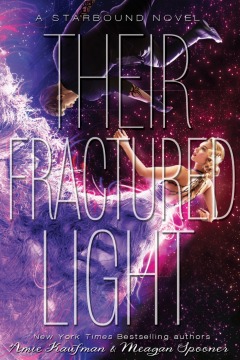
Review: Their Fractured Light by Amie Kaufman and Meagan Spooner


Title: Their Fractured Light (Starbound, #3) 

Author(s): Amie Kaufman and Meagan Spooner 

Rating: 4 Stars

Note: This review is SPOILER-FREE but does mention characters from the previous books. If you would like to read my spoiler-free reviews of the prequels, click the link to read my review of These Broken Stars and This Shattered World.

3 Things I Loved About Their Fractured Light:

1. Gideon and Sofia's Doomed Romance

Oh, my. Gideon and Sofia. In their efforts to take down LaRoux Industries they wind up bumping into one another and reluctantly working together, despite the fact that they don't trust one another at all. What's more, Gideon is the famed internet hacker, the Knave of Hearts, and Sofia just happens to hate the Knave. After all, the Knave has been chasing her across planets relentlessly and won't seem to let her breathe. Only, Sofia and Gideon don't know who each other really are--they don't trust anyone, remember?--and as they slowly fall in love, the inevitable looms ever closer.

I really enjoyed Sofia and Gideon as a couple. I'll admit that their romantic angst got to be a liiiitle much by the end of the novel, only because it had dragged on for a full novel, but theirs is my favorite couple swiftly following Tarver and Lilac. You're going to be rooting for these two, both as individuals and as a couple which is always a common component in my favorite couples--if I can't love you both as strong, independent heroes then I can't fall for the dynamic duo you make together. With Gideon and Sofia, though, they tick off all the right boxes. I especially love that they are not always likable; they do not always do the right thing. Yet, they still find it in themselves to be forgiving, to love each other, and to recognize the truest parts of both themselves and the other person. It's so, so special and beautifully written... I adore it.

2. Cameo Appearances

Roughly half of this novel is all Gideon and Sofia but then the second half introduces our old favorites--Lilac, Tarver, Flynn, and Jubilee. I thought that the manner in which these three threads intertwined was brilliant and I loved seeing the three couples we've come to love and support individually join forces to take down LaRoux Industries. Their combined brain power, knowledge, and strength is immensely satisfying to behold and while the showdown isn't easy, simple, or even remotely predictable, it's enjoyable and an absolute page-turner. It's so hard to write a finale because it needs to be as grand and epic and plot twist-y as readers are hoping it's going to be and, let me tell you, this writing pair knows how to deliver. I already cannot wait for whatever they plan to write next because I'm sure it's going to be just as well-scripted and clever as this, their debut trilogy.

3. World Building

There are so many small pieces of world building that come together in this novel and, for me, this series is really DEFINED by great world building. It's evident in each novel on its own as the world building plays a huge role in the politics of every planet, shaping its conditions and its people in bold, rich hues. It's even more evident in this final installment, though, as we begin to zoom out to see the big picture. I won't say much more for fear of spoilers, but I will say that we get to know a certain group of creatures much better than we may think going into this novel and the insight that they brought, both to the world-building and the plot twists, were phenomenal.

Their Fractured Light did not disappoint in the least and I am so thrilled to not be disappointed with a series end, for once in a long time. This series has been consistently fantastic throughout, delivering believable, hard-won romances in a war-torn world with unique world-building and, what's more, it delivers on diversity in a way that few other fantasy/dystopian/sci-fi novels do. Like I said before, this writing duo is one to watch out for and I can only prepare myself for whatever they next throw as us readers.

Thursday, October 1, 2015

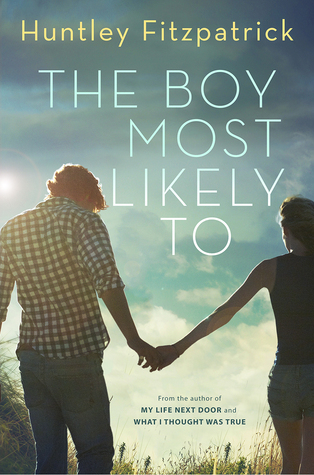
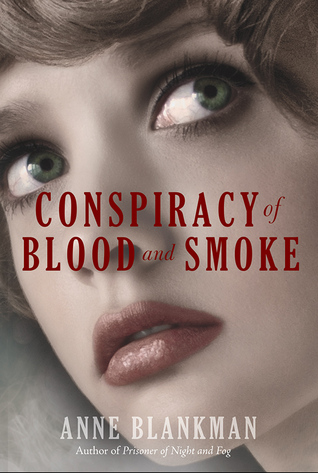
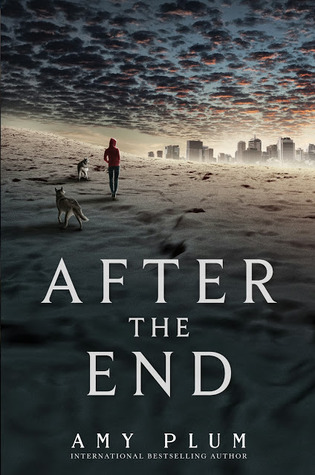
Mini-Reviews: The Boy Most Likely To by Huntley Fitzpatrick, Conspiracy of Blood and Smoke by Anne Blankman, and After the End by Amy Plum


Title: The Boy Most Likely To 

Author: Huntley Fitzpatrick 

Rating: 3 Stars

The Boy Most Likely To was not at all the book I expected it to be. Despite not loving Fitzpatrick's debut, I picked up this companion on the sole belief that I adored Tim Mason and Alice Garrett--and I do. Yet, their love story, the trials and tribulations they face throughout this volume, are not what I expected upon cracking open the spine of this novel. Tim is the Boy Most Likely to Fail and this is a burden he carries heavily upon his shoulders. Everyone in his family, from his father to his sister, expects the worst from him so when Tim is given an ultimatum to get his act together by December--staying sober, finding a place to live, supporting himself, figuring out his future--he is determined to prove them all wrong. But mistakes just follow Tim and his biggest mistake yet has just turned up on his front door.

I absolutely love the growth in this novel. Tim's perseverance to be a better person, despite being put down by those around him time and time again, is admirable and my heart went out to him. He hides his insecurities and pain behind his laid-back demeanor and flirtatious comments with Alice but the real Tim is a strong and capable man. Alice, too, grows immensely over the course of this story as she grows to accept and love Tim for who he really is, not to mention love herself. Alice has always hidden behind her figure and beautiful face, taking up responsibilities above her age to support her family and sacrificing her dreams to help them. But sometimes the hardest thing is learning to love yourself and actually be selfish, once in awhile, and Alice's tough journey to that acceptance was so beautifully written. Fitzpatrick does this with each and every one of her novels; she identifies journeys and stories that are powerful and painful and messy but ones that need to be told and she does it with such aplomb. I read her books for her rich characterization that is sustained throughout and never falters.

Despite the fact that I loved the ultimate take-home messages of this novel, I will admit that I found it tough to read because of the unexpected events that occur within it. I wasn't a fan of those paths and wished that these journeys could have been explored in a slightly different manner. With these two books I've always wished for this--for these same characters to achieve their growth through slightly different plot circumstances. I suspect it's an issue only I truly have for, either than that, I cannot recommend this book enough. Don't expect a light and breezy romantic comedy because this book is far heavier than it seems but, if you go in with the right mindset, you'll fall in love.

Title: Conspiracy of Blood and Smoke (Prisoner of Night & Fog, #2)

Author: Anne Blankman

Rating: 4 Stars

I found this sequel to be even more rewarding than its predecessor. Gretchen's voice is far more developed and mature, though just as vulnerable, which enabled me to instantly connect with her in a way I hadn't in Blankman's debut. What's more, the romantic tribulations that she and Daniel must face alongside the thrill of the historical time period they are thrown into made for a truly enlightening and exhilarating read. Extremely well-written and sure to satisfy fans of the first novel, this is not a sequel--or author--to be overlooked.

Title: After the End (After the End, #1)

Author: Amy Plum

Rating: 3.5 Stars

I really, really enjoyed After the End. It isn't a dystopian novel--though the protagonist believes she's living in a post-apocalyptic world--and that premises is so wholly unique that it was enough to drag me through the alternating chapters in the beginning (which didn't do much for the plot) and into the rest of the enticing novel. Plum's latest series is written impeccably, putting into the confused mindset of our protagonist and introducing us to the culture shock of the modern world. In the midst of all this, though, the real plot lies in a chase, an adventure, and an uncovering of the secrets we're all dying to figure out.

One of the strongest aspects of this novel is the relationship between Juneau and Mike, the main characters. For one, neither Juneau nor Mike see eye-to-eye on anything. Mike believes that Juneau has been brainwashed and struggles to believe the truth about her existence--that she was brought up in the wilderness of Alaska, living as a nomad for all her life. Similarly, Juneau cannot believe that her family and mentor lied to her and that, in truth, WWIII never occurred and that the modern world is safe and well. While Juneau is on a mission to find her family, who have been captured and moved across the country, Mike is there to bring Juneau to his father, the CEO of a major pharmaceutical company who believes that Juneau knows the ingredients to a secret drug being brewed in Alaska. Their rocky start and eventual friendship is an adventure to behold and I loved the slow and careful characterization of these two.

I did struggle, though, with the actual genrefication of this novel. It started out dystopian, proceeded to be contemporary fiction, but truly ended with traces of paranormal and/or fantasy elements which, for a reader who likes to know what she's getting into, inspired a great deal of confusion. And that, sadly, dampened my enjoyment of this story. I really didn't know what to make of it and, to a large extent, still don't know what to make of the multiple genres this novel can fit into at different stages in its storyline. It was jarring and unexpected, to say the least, but I suspect I'll enjoy the sequel much more having this solid foundation going in. All in all, After the End was an unexpected surprise and I'm eager to devour its sequel soon!

Monday, April 6, 2015

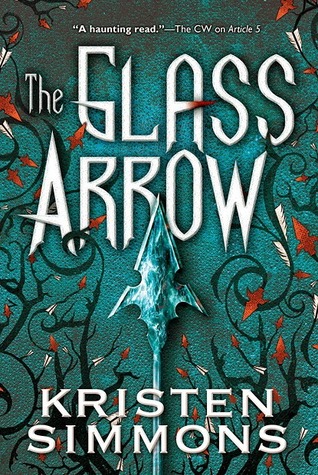
Mini-Review: The Glass Arrow by Kristen Simmons


Title: The Glass Arrow

Author: Kristen Simmons

Rating: 3.5 Stars
The Handmaid’s Tale meets Blood Red Road in Glass Arrow, the story of Aya, who lives with a small group of women on the run from the men who hunt them, men who want to auction off breeding rights to the highest bidder. In a world where females are scarce and are hunted, then bought and sold at market for their breeding rights, 15-year old Aya has learned how to hide. With a ragtag bunch of other women and girls, she has successfully avoided capture and eked out a nomadic but free existence in the mountains. But when Aya’s luck runs out and she’s caught by a group of businessmen on a hunting expedition, fighting to survive takes on a whole new meaning.
The Glass Arrow is being lauded as a breath of fresh air in the dystopian genre--and, to some extent, I suppose it is. Yet, while Simmons latest is a vast improvement from her debut trilogy (in my opinion, at any rate), I found myself left wanting at the end. Simmons throws us into a futuristic world where the freedoms women have fought so hard to win are, once again, stripped away. In the world of The Glass Arrow, women are auctioned off for their beauty and virginity, the combination proving to be deadly as wealthy merchants, landowners, and politicians seek females in order to extend their line. Aya, our protagonist who has grown up in the wild, free from civilization's constraints, finds herself captured and awaiting to be auctioned. Determined to escape and return to her family, still somewhere in the wilderness, Aya rebels and finds herself thrown time and time again into solitary confinement.

In solitary confinement, Aya befriends Brax, a wolf pup, and Kiran, a Driver. The Drivers are a separate caste, almost, of people who are said to be born mute. Though Kiran doesn't speak, Aya finds herself slowly growing to trust him. As a heroine, Aya is an inspiration. Not only does she shut down, fight against, and correct the notions of the girls around her--beliefs that they hold about their worth as seen through a man's eyes--but she can hold her own both physically and mentally as well. While she's remarkably similar to kick-ass protagonists like Tris or Katniss who care for their family and freedom above all else, the originality of the realm she survives in sets her apart. Aya isn't a difficult character to like and neither is Kiran. Though the Drivers can be dangerous, and Aya suspects Kiran during their initial meetings, the friendship and trust that build between them extend to the reader as well. While Aya is an open book from the first page to the last, Simmons uncovers the layers to Kiran's character slowly, using his mute-ness to create a dynamic between himself and Aya that is wholly unique. Aya and Kiran's romance is subtle--a true back-burner--and though I yearned for more of it, it is nevertheless utterly satisfying.

The Glass Arrow possesses a scintillating plot line, one that shifts from different settings and introduces a fascinating host of secondary characters at every turn. I couldn't predict the outcome of many of the situations Aya was placed in but I found myself emotionally involved and rooting for her throughout. Yet--and perhaps this is because I attend an all-women's college--I wanted The Glass Arrow to take a stronger feminist stance. Aya is seemingly the only female in this world who wants her own rights and freedoms. Moreover, there is little to no political scheme throughout this story though I would love to see this set-up of this future explored in a manner that isn't traditionally dystopian. While Simmons has created a world full of strife, inequality, and injustice, she doesn't use this as a platform to remark on modern-day issues. Or, at any rate, not enough. I expected this to be a larger-than-life tale and though Aya and Kiran's journey is remarkable and touching, it also stays a little too safe, in my eyes. Simmons doesn't challenge her readers to think or question society--it's all quite black-and-white--and I find myself wondering why she chose such a potentially conflicting backdrop if she didn't intend to spark conversation.

Nevertheless, The Glass Arrow is a fast-paced, entertaining dystopia which is guaranteed to garner emotional attachment. While it didn't reach the full potential I hoped for, I'm keeping my fingers crossed that Simmons returns to this world--much like the authors of These Broken Stars--to more carefully remark on other aspects of this universe. For those who believe the dystopian genre has run dry of ideas, The Glass Arrow will prove you wrong.

Friday, January 16, 2015

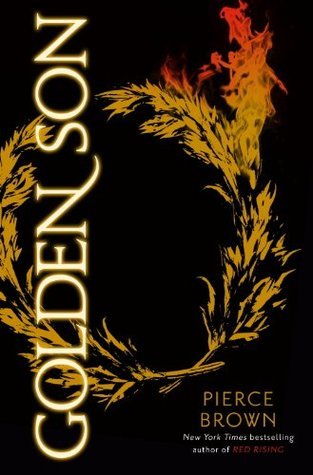
Review: Golden Son by Pierce Brown


Title: Golden Son (Red Rising, #2) 

Author: Pierce Brown 

Rating: 4.5 Stars

Note: This review is spoiler-free for Red Rising and Golden Son. However, if you are new to this series I recommend reading my review of Red Rising first as it sets up the scope of this world and provides background information about the general plot which this review does not. (You can read my review of Red Rising here.)

I have a LOT to say about Golden Son,--it's just one of those books--but to start with...

1. I experienced HIGH levels of stress while reading Golden Son. Making me care that much for your characters is not cool, Pierce Brown.
&
2. Um, what was that ending? A joke? Because I'm not laughing... I'M CRYING.

Now that that's off my chest I can honestly admit that Golden Son is a sequel that rivals the brilliance of Red Rising and transcends it. While it is still prone to bouts of dramatism, Golden Son amps up the political stakes in this intergalactic world and spares no qualms about destroying, torturing, and killing off every one of your favorite characters. If you thought this was Young Adult, think again. Golden Son begins two years after the events of Red Rising and Darrow, our protagonist, is no mere boy. At twenty-years-old he has come a long way from the sixteen-year-old Red he started out as. Moreover, his time in Gold society has altered his perceptions of the world he lives in. Even in Red Rising, Darrow resisted seeing the world in gray. He wanted to hate Golds and their power; he wanted to fight for Reds and nothing else. By the end of Red Rising, Darrow was forced to grudgingly admit that the world was not quite as black-and-white as he had hoped. In Golden Son, though, he finally understands that this war he's fighting isn't about Red vs. Gold; it's so much more.

In comparison to its predecessor, Golden Son feels more volatile. Darrow is no longer confined and with the entire universe at his disposal, his task seems far more impossible than it ever did before. Brown weaves political power plays alongside epic war battle a la Game of Thrones and every time I think I've got it all figured out, he throws in a curve ball and changes up the game yet again. There isn't a moment to breathe in Golden Son. If Darrow isn't plotting war, engaging in war, or dreaming about war then he's himself; a Red, stripped away of the facade he displays to the world. Although some may argue that the strength of these novels lie in the quickly-paced plot lines which move forward with purpose, I would argue that Brown's true talent shines through in the more quiet, introspective scenes. It isn't often that readers are given a chance to look into the mind of a male narrator but Darrow is a flawed hero that, had I lived in Brown's fictional universe, I'd give my life for.

What I find most remarkable about this series is the fact that Brown has seamlessly created a world of great political divide, strife with violence, yet the humanizing moments are what ultimately linger. Golden Son expands on its cast from Red Rising and though I struggled to remember who was whose son or daughter, the larger host of characters only amplify Darrow's struggles. Whether it be an increasing host of enemies or just the friends Darrow is forced to alienate as he hides the truth of his lineage, Darrow battles his loneliness time and time again. Eo remains a constant in his thoughts; both an inspiration and a guiding compass. Nevertheless, it is her memory which ultimately forces his isolation too. Although Darrow is widely known in the Gold community for his brute strength and battle skill, the Sons of Ares have had little contact with him and the burden of what he has agreed to do is now felt, two long years later. Throughout Golden Son Darrow comes to the realization that, cheesy as it may sound, the truth will set him free. Unless he trusts those around him, they will not linger long enough for him to rely on later.

Golden Son is interspersed with chapters that consist solely of conversation between Darrow and a close friend of his. Those chapters, squeezed between the politics and battles, utterly charmed me. Just as Darrow won over allies, he won me over too. Golden Son emphasizes just how difficult friendships can be: how fickle and fleeting; how we don't realize their worth until they're gone. In his war against Gold, Darrow needs as much back-up and support as he can find. Moreover, if Darrow can convince those around him that lower colors deserve the equality that Gold enjoy, then Darrow is that much closer to changing the world. Slowly, but steadily, Golden Son transforms Darrow's purpose to an even greater one. While Darrow may have started out wanting revenge against Gold, now he recognizes that it isn't Gold who must burn but their society.

Brown writes three-dimensional, flawed characters. No one within these pages is perfect and their imperfections are what make them downright human. I was already attached a decent number of characters from Red Rising but I fell for even more of them in Golden Son. As an author who uses death as a purposeful stab to the heart, I bled while reading Golden Son. Ultimately, it's one big stress fest; wondering who will be the next to die, anticipating who will betray Darrow, trying to figure out the political machinations ahead of time. And yet, that's what makes Golden Son such a thrill to read. Flipping each page more and more quickly in an effort to discover what happens is part of the experience.

One of the most stressful aspects to this novel, though, was the romance. Darrow and Mustang share hints of a love story in Red Rising but in Golden Son, with Mustang in such a pivotal role, their push-and-pull dynamic comes to a head. I know I said it in my review of Red Rising, but Darrow is a feminist male narrator. He respects Mustang, trusts her to make her own decisions, and understands that her strengths are different from his and, as such, she just may be one step ahead of where he is in the game of Gold politics. Mustang is one of my favorite characters precisely because she understands the political situation, seizes the upper hand, and does whatever is necessary to gain it. Unlike so many strong female characters whose purpose molds them into villains, however, she maintains a strong moral compass and winds up bettering everyone at their own game. When it comes to Darrow, though, she refuses to be with someone who continues to hold part of himself back and, despite the fact that their friendship is grounded in equality and their partnership balances out, the possibility of a true relationship remains in question. Mustang and Eo are such strong forces in Darrow's life; women who propel him to be better and convince him that he doesn't need to resort to the depravity of his enemies. Thus, despite the fact that the romance in these novels is so minimal, the romantic interests themselves are integral to creating Darrow.

At one point in the novel, Darrow acknowledges that it is all women who have molded and shaped him to become the person he is. Whether it be his mother who made him the man Eo fell in love with, or Eo who gave him the power to transcend and become the man Mustang fell for, or Mustang who pushed him to be the man others followed. In a world of war and mayhem, dominated by men, the influence of femininity is not forgotten which I, as a female reader, appreciate. What's more, there's a scene in Golden Son where Darrow simply starts crying and the fact that it simultaneously breaks down gender stereotypes while humanizing our protagonist deserves praise, indeed. With Golden Son, Brown has created a rich, heart-felt novel, more science fiction than dystopian, with characters who both maim and inspire. Not only compulsively readable, but also brimming endlessly with themes, messages, and underlying nuances I won't even pretend to be smart enough to pick up, this is not a trilogy to be missed. Knock down The Hunger Games from your shelves if you have to make room for this; it's worth it ten-fold.

Saturday, July 19, 2014

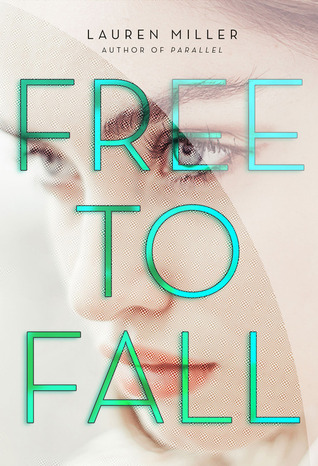
Review: Free to Fall by Lauren Miller


Title: Free to Fall

Author: Lauren Miller

Rating: 4 Stars

I flew through Free to Fall in the space of an afternoon. Its beginning may take awhile to find its footing, but once Miller hits her stride this sophomore novel is a chore to set down. I've always believed that the best dystopians were the ones whose worlds were eerily similar to our own--and that's exactly what Free to Fall is: familiar. Unlike the societies of The Hunger Games or Divergent, Miller has molded a futuristic world much like our own, complete with large technological corporations which dominate the market and apps which dominate our minds. In Rory's present--our future--Lux is the "it" app to own. Using a complex algorithm, it manages to keep users up-to-date on appointments, take control of their time management skills, and help them make decisions such as what to eat, wear, and buy. In other words, Rory's world is devoid of much thought.

But, in a world so similar to our own, it's impossible not to imagine an app like Lux taking hold of citizens and working. We're constantly searching for ways to complete our tasks faster, become more efficient, and rely on technological advances to get our jobs done. Lux, with just a tap of our fingers, gets all that done--and more. It thinks for us. It isn't until Rory joins Theden Academy, an elite two-year "Ivy League"-esque school that her deceased mother attended, that she begins to question her dependency on Lux. North, the cute coffee-shop guy who works just outside the academy boundaries, forces Rory to leave her comfort zone of Lux and figure out for herself what she truly enjoys. Just as North reveals to Rory the marketing scheme that Lux truly is--intentionally showcasing popular brands, not all brands, and using the placebo effect to make users think they like what Lux recommends--Rory herself begins to uncover the truth about her mother's past. Rory's mother left Theden Academy shortly before she could complete her graduation and immediately following Rory's birth, she passed away. Rory and her father have always wondered what led her mother to abandon the school she seemed to love and now, creeping closer to the truth, Rory just may have stumbled upon a conspiracy bigger than anything she could have imagined...

Much like a classic dystopian, Free to Fall presents us with the veneer of a seemingly utopian society, only to reveal a dark underbelly of evil leaders whose control extends over the entire population. Yet, the manner in which Miller narrates her tale is extremely effective. Rory is an endearing heroine, one whose naivety can be slightly eye-roll inducing but whose growth is immediate and believable. What's more, as she uncovers layer after layer of the secrets shrouding her mother's strange dismissal from Theden Academy, she makes, breaks, and sustains a variety of different relationships along the way. What I appreciate most about this novel is not its originality in daring to publish a dystopian so different from the ones we've come to know, but rather in tackling contemporary issues alongside futuristic problems. Despite the grand scheme of issues Rory is up against, she's still just a sixteen-year-old girl and her friendships, relationships with teachers and other students, ties to her family, and bond with North are all still very much a part of her life. In fact, as a normal sixteen-year-old may grow and change from their relationships, Rory does as well only her growth comes alongside a revelation of secrets.

Free to Fall is the type of tale that builds; its momentum gets larger, its issues seem practically impossible, and the secrets seem to finally have come to an end. Only, the ending is still a pleasant shock, surprising readers out of the norm they may have imagined. Its well-paced plot aside, though, the aspect of Free to Fall which surprised me the most was the romance. In the beginning of the novel, shortly after Rory firsts meets North and begins to fall for him, the two have a slight misunderstanding. Yet, once it's solved their relationship is rock solid, one of utter support as Rory grows to trust and count on North's presence by her side. Moreover, his--rather secret--skills only aid Rory in her quest for the truth and the happiness these two find in one another is flawlessly written. I can actually believe that these two, despite being teens, love each other and that in and of itself is nothing short of miraculous.

Nevertheless, I must admit that I expected Free to Fall to be ever-so-slightly more. I'd heard so much about this novel before launching into it and though I fell completely for the corporate mystery this tale wound up becoming, aspects of its felt a little too unreal. Somehow, aspects of this novel rang untrue as the complete control these corporations held over individuals and data felt like a violation of too many of our laws such as freedom of speech and, what's more, Free to Fall is based on the assumption that a monopoly would be ruling our future, which I just can't see being allowed to happen. Thus, there is a certain suspension of belief required throughout this novel and while it's no different from the majority of other tales within the genre, I was unprepared for it. Nonetheless, that being said, Free to Fall is precisely the direction I hope to see dystopias heading in: realistic, standalone, utterly devoid of a love triangle, and able to formulate a meaningful message not only about a fictional futuristic society but today's society as well. If Miller's sophomore novel spells the future for this genre then I am certainly going to be free to fall right back in love with it.

Wednesday, March 26, 2014

ARC Review: Plus One by Elizabeth Fama


Title: Plus One

Author: Elizabeth Fama

Rating: 4 Stars

Release Date: April 8th, 2014

From the moment I cracked open the spine of Plus One, it felt as if Elizabeth Fama had written her sophomore novel just for me.

For the past year and a half, practically, I've been dutifully rejecting every dystopian novel that has come my way, from the older Maze Runner to the newer The 5th Wave and the unreleased Salvage. In other words, I have been mentally and not-so-mentally raging about the dystopian genre; at its lack of originality, its failure to draw forth complex characters, and at its blatant efforts to tone down political and sexual themes for a teenage audience. Needless to say, when Plus One fell into my lap, I had reached the end of my patience, determined to give up on the genre as a whole if Fama's sophomore novel - which had already received wide acclaim - failed me as well. Plus One, however, proved to be not only the novel I needed to read, but the novel I didn't even realize I wanted to read. If you've ever experienced a similar emotion - of becoming immersed inside a novel your imagination couldn't even have conjured up - then you'll know that that isn't an experience you're likely to forget. Ever.

In 1918, when the flu pandemic destroyed much of human life, our government decided to segregate humans into two groups: Night and Day. With strict curfews put in place, alongside rules, regulations, and a different type of lifestyle entirely, our society worked tirelessly to prevent the spread of the pandemic, believing that this method of split civilization would work to contain the disease. Following its success, however, the segregation remained, Smudges and Rays staying apart, yet another twisted form of the classic "separate but equal" which, as history sadly informs us, is only separate, not equal. Plus One begins with Sol, our protagonist, planning to break into a hospital in broad daylight with the intention of showing her dying grandfather the face of his great-granddaughter before he passes away. For Sol and Poppu, her grandfather, going outside during the day is a criminal offense. Ever since Sol's brother, Ciel, was switched to a Day schedule, however, Sol has seen little of her brother and even less of his family. It is Poppu's dying wish, though, that forces Sol to break the rigid rules of her society, daring into the sunlight and into the hospital where her newborn niece lies sleeping. Only, D'Arcy, a Ray apprentice whose perceptive nature immediately finds Sol suspicious, quickly derails her best-laid plans. But there are plans in motion that neither Sol nor D'Arcy can anticipate and before either of them quite know it, their lives become about so much more than a dying wish, societal rules, or even a sleeping baby.

From the beginning itself, Fama's sophomore novel stand out due to its impeccable world-building. Fama unveils the details of this world slowly, gradually, and timely. It's an extremely detailed set-up and I appreciated that Fama never skipped over the political repercussions of her world. If anything, the political motivations, gains, and corruption of Fama's society are just as palpable and integral in her world as they are in ours. While this isn't a dystopian novel (strictly speaking since it isn't futuristic, merely an alternate type of society), we do come to know of many imperfections within this society - imperfections spurned by both political drive and human nature. As a stand-alone, Plus One avoids the icky set-up of a classic dystopian trilogy in which the "big reveal" behind an imperfect society is hyped up to such an extent that by the time we discover its secrets, we are no longer impressed. Instead, Fama times her clues perfectly, dropping hints but never ruining the ultimate surprise for readers, which proves to be satisfying in a clever manner, drawing together threads from much earlier on in the novel to tie up the story as a whole. Another plus point is that the class inequalities are explored carefully, proving to be multiple shades of gray instead of the black-and-white Sol may originally think it is.

Nevertheless, those technical issues aside, the plot of Plus One is driven by Sol's love for her grandfather, Poppu. In an effort to ensure he holds his great-granddaughter before he dies, she sets out to break the law. While Fama does use sparing flashbacks to build the strength of the bond that Sol feels for her grandfather and older brother, the love within this family is palpable and ever-present, more a feeling than a combination of words, which I loved. Additionally, these flashbacks never took away from the novel, only adding to it due to the fact that they were sparse and concise. All too often it is easy to become embroiled in the past, not the present, but Fama never wanders down that path. Furthermore, Plus One continues to win points from me due to its ending. It is ever-so-slightly open, the way I like it, and I hope Fama writes a companion novel set in this same world because I'd love to know more about the political machinations of this society. (Admittedly, we are given quite a lot, but, as always, I just want MOAR.)

When it comes to the romance, however, (which its cover promises is far more prominent than it really is), Plus One faltered, ever-so-slightly. While I loved D'Arcy, the romantic interest of this novel, and found him to be a million shades of swoon, I wasn't wholly sold on the romance. Granted, there is a hefty amount of development and Sol and D'Arcy, though enticing characters on their own right, are even more explosive together. Yet, their relationship jumps very quickly from like to love once they realize a mini-plot twist. Admittedly, I could understand their excitement at this revelation, but I couldn't emotionally get behind it as I didn't feel as if their relationship exuded that level of affection. Fama writes it on the page flawlessly but as for my heart? It just couldn't take in the magnitude of feeling that Fama claimed lay between them. I also felt as if the word "love" was thrown around a little too casually here. Sol's time is short, from page one itself, because she takes it upon herself to break the law. We know she'll be serving time in jail and I feel as if the relationship between D'Arcy and Sol was rushed into love as a consequence despite the fact that it didn't feel as natural. Moreover, while I am all for sex in YA, the short sex scene in Plus One didn't serve a purpose. Once again, it felt as if D'Arcy and Sol rushed into this because their time was so limited and while I am able to understand that sentiment, I wish that their experience had some meaning. I wish it gave strength or courage or at least comfort. Instead, it felt very much like bucket-list sex. Like "I might die soon so let's just get it on now while we can" kind of sex which I wasn't a fan of.

I was fortunate enough to have Elizabeth Fama reach out to be about my issues with her portrayal of the romance in this novel and I'd like to share with you what she said:

I just wanted to say that I was happy to see you mention the "bucket-list" sex that bothered you. For me, you hit the nail on the head when you said "The relationship between D'Arcy and Sol was rushed into love" and "D'Arcy and Sol rushed into [sex] because their time was so limited." 

Your discomfort is appropriate, in my opinion. The sex scene is in there for a very serious reason, and I think of it as crucial to the more meaningful theme of the book: the loss of liberty and civil rights. I wanted Sol and D'Arcy to bring a human face to the injustice, by making the reader care about them. Here are two young people who should have the simple right to get to know each other and be together, who can't be together for an arbitrary reason imposed on them by the government. And now you--the reader--have gotten to know and love them and you want them to be together, at whatever pace is comfortable for them, and doesn't it stink that this system interferes with that? Doesn't that mean we should all protect our liberties? (This sentiment that I hoped readers would feel is stated explicitly by Grady Hastings, who is quoting Clarence Darrow in his speech when he says "You can only be free if I am free.") Sol's determination to have sex with D'Arcy while she can is symbolically the crux of the book for me. Her urgency is directly related to the loss of control she feels, knowing they'll be torn apart. I think Sol and D'Arcy are the kind of kids who would have had a longer courtship if their world and their circumstance had been different. But given their situation, they didn't feel they had the luxury to choose.

For me, reading Elizabeth's words shed a LOT of light on this story. I chose to first share my original sentiments in this review because I can sense that other readers may feel this way about the love story as well - and that, as Fama has said, is a normal reaction. When forced to think beyond this bubble, though, beyond the scope of just that one sex scene or those few moments when the word "love" slipped out, I love that, in reality, this entire relationship is a statement about Fama's imaginary society. All too often, swoon is added into a novel in order to make it more appealing to audiences. For me, the fact that the romance in Plus One serves a greater purpose and does, in fact, both engage readers and hold a deeper meaning within the plot of this story, truly won me over regarding its growth arc. Often times, it takes stepping back to look beyond mere emotion to understand the magnitude of a scene, both in real-life and in literature, and I hope other readers will appreciate this aspect of Plus One as well. Needless to say, Plus One comes very highly recommended from me. If its cover hasn't already compelled you to pre-order it, then I certainly hope I will.

Once again, a huge thank you to Elizabeth Fama for taking the time to write to be about Plus One. Your words have enhanced my appreciation as a reader, thinker, and analyzer and for that, I cannot thank you enough.

Monday, March 10, 2014

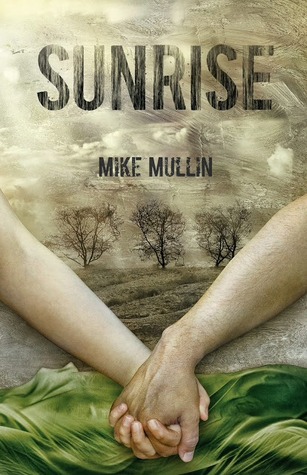
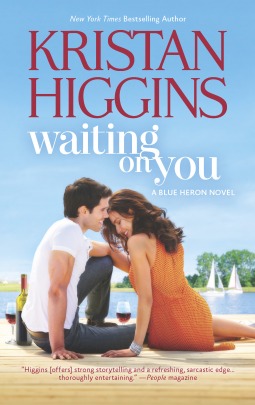
ARC Mini-Reviews: Sunrise by Mike Mullin & Waiting on You by Kristan Higgins


Title: Sunrise (Ashfall, #3)

Author: Mike Mullin

Rating: 3 Stars

Release Date: April 15th, 2014

Unfortunately, these 3 Stars feel generous. I thoroughly enjoyed the previous two installments in this trilogy, but this conclusion seemed to lack...direction. Sunrise begins with a series of intriguing plot points emerging, from Alex's assumption of power to his increasingly volatile relationship with his mother. Yet, these issues are only briefly touched upon, never explored to a deeper potential, rendering the first-half of this novel quite dull. A snooze fest, really, as Sunrise focuses on a community gradually being built in this post-apocalyptic world. Mullin's latest also fails to shine in the secondary character department. While these individuals played important roles in the past novel, their personalities are overshadowed by Darla's presence. It seems this is a recurring theme in most finales, lately, that important characters from Book 1 and Book 2 finally meet and their arcs converge in Book 3, only to have one group or the other eventually overtake the other, sadly.

Sunrise does, thankfully, pick up its pace and gain well-needed focus during its second-half, but not quite enough to make up for its slow start. Where this series continues to shine is in Darla and Alex's romance. It is a subtle, minor aspect to the trilogy but remains a driving force of equality and true love. Sunrise is certainly a satisfactory ending, but I wonder if this novel couldn't be condensed into a novella or, better yet, edited to gain more perspective. Both Ashfall and Ashen Winter made bold, provocative statements about humanity while Sunrise seemed to merely wrap up the loose threads regarding these beloved characters. If you haven't picked up this series yet, I'd suggest reading Ashfall and ending there too. It works brilliantly as a stand-alone (for the most part) and, frankly speaking, Mullin hasn't been able to compare since.

Title: Waiting on You (Blue Heron, #3)

Author: Kristan Higgins

Rating: 3 Stars

Release Date: March 25th, 2014

By now, it's no secret that I adore Kristan Higgins. While her covers scream "chick lit" and her writing is humorously effortless, the depth found within her love stories forced her books to transcend the stigma of mindless, cheesy "chick lit." While her latest, Waiting on You, is nowhere near as amusing, romantic, or steamy as the previous two installments in her Blue Heron Series, it is still perfectly satisfactory for a gloomy day and, as always, is guaranteed to put a smile on even the sternest of faces.

Waiting on You follows Colleen, the bright and sexy bartender we've come to love. You know, the one whose matchmaking skills are legendary, advice is freely given, and friendship is the stuff of legends. While confident, sassy Colleen seems as if she can take on the world, in reality, her heart is a mess. Lucas, her first - and only - true love, left her broken-hearted just years after high school and, somehow, Colleen still hasn't moved on. When Lucas breezes back into town, looking after his uncle, more like an adopted father, whose days are numbered, Colleen is surprised and, most importantly, already falling back in love. But, this time, she is determined that Lucas will not be the one to break her heart, even when that same heart is so traitorously beating just for him...

Higgins impeccably paces a timely reveal of the situation which tore Lucas and Colleen apart so many years ago. It is heartbreaking, naturally, but the sparks between these two have our hearts rooting for them, despite the myriad of obstacles in their way. Yet, while Higgins develops Lucas and Colleen's original relationship, relaying the sense of serenity they feel together, their current emotional compatibility falls slightly flat. I wish Lucas and Colleen had worked through their past issues a little more in depth. While I completely understand the fact that they feel right together, that their bodies demand that they be with one another in order to feel at home, I still yearned for a few more insightful conversations between the two. Nevertheless, this a sweet and swoony romance sure to delight fans of the Blue Heron Series. If you haven't already picked these books up, find yourself a copy of The Best Man at once - Chief Levi Cooper is not a man you want to miss! ;)

Tuesday, January 21, 2014

ARC Review: Red Rising by Pierce Brown


Title: Red Rising (Red Rising Trilogy, #1)

Author: Pierce Brown

Rating: 4.5 Stars

Release Date: January 28th, 2014

From the moment I finished Red Rising I knew I wanted to review it. Unfortunately, I also knew that words could do no justice to the sheer scope of the story contained between the gender neutral covers of Red Rising. And yet, I persisted. I wrote draft after draft, introduction after introduction, trying so desperately to get it right, to articulate what made this novel work when dozens of other dystopian series had failed for me. I wanted to write this review, not because I was required to by a publisher or needed to for a blog tour but rather because I wanted readers to pick up this book and just immerse themselves in the raw, brutal, but intelligent world Brown had created. Just to lose themselves in the onslaught of emotions and finish a post-apocalyptic novel loving not only the characters, but also loving the flood of new thoughts, knowledge, and queries that the book forced.  

Darrow, the protagonist of our tale, is a Red. In other words, he is a slave working beneath the surface of Mars to make the surface habitable for human occupation. For generations his family has lived in brutal, harsh conditions sacrificing their sweat and blood for the sake of humanity. After a series of events, however, Darrow uncovers the startling truth that the surface of Mars has been habitable for generations, ruled by Golds who leave the Reds underground, unable to enjoy the fruition of their labor. With nothing to lose and ruled by the hatred in his heart, Darrow trains to join the Golds, become one of them and infiltrate them from within, seeking the revenge he and his people so desperately deserve. In his plan to join a command school, however, Darrow doesn't realize that the school is a literal battlefield and in order to prove himself, he has to win...

While I hesitate to slap the "Young Adult" label on Red Rising, I do not hesitate to credit Brown with his impeccable writing style and meticulous world-building. Full of creativity and originality, the society Brown has created is deeply political, rooted in corruption but still thriving. It's a nation with imperfections deep within and by starting from the bottom but rising, slowly, to the top from Red to Gold we're able to glean a complete picture of the world at hand. Moreover, Brown paces his reveals gradually, taking time to develop his characters and, most of all, their growth. Darrow's own story is split into stages, realistically molding him from an ignorant Red to a furious Red to a vengeful Gold and then into a true weapon. Brown doesn't hesitate to reveal the ugliness to his society, but he also doesn't hesitate to uncover the positives - positives which throw Darrow off his game and force him to accept that not all Golds are evil, admissions which make his task that much harder.

While Red Rising starts off underground, the bulk of this novel is based on a battlefield. Although Darrow's transformation from a Red to a Gold is fascinating, as is his journey to joining a command school full of Golds, the true genius of this story emerges once Darrow has been accepted and after he is thrown into a war. Granted, there are proctors to watch over the events of this war but, for the most part, it is an all-out strategic affair between the students as they compete for the prized position of Primus. Darrow's growth simply within this "war" is astounding. Where he once held no power as a Red, he is now is possession of a tremendous store of power as a Gold. Moreover, he is handsome, strong, and charismatic - qualities that make him a prime leader - but ruling isn't as easy as he expects. Although he makes loyal friends, he also makes sworn enemies and as he travels from being on the top to once again sinking to the bottom, as he tries different methods of winning over men and keeping his armies, he grows into a deadly tool for he is quick to learn from his mistakes and driven, motivated to achieve his true purpose no matter what. 

Much of Darrow's inspiration comes from his wife, Eo. Darrow is, first and foremost, a feminist male narrator. All that means is that he respects women, takes their advice and opinions into consideration, and never looks down upon them. For him, Eo was a source of wisdom and guidance like no other and even among the Golds, this mentality never changes. Red Rising, with its gender neutral cover and male narration, will appeal to audiences of all ages, regardless of gender. As such, I am thrilled to see that this novel acknowledges women as equal without explicitly drawing attention to that fact. It is merely another part of the story, which I appreciate, though it sends a truly positive message to readers (one rather contrary than the gender stereotypes we are flooded with from the media on a day-to-day basis). Additionally, the romance in this novel is minimal at best. It isn't a focus - not in the least - and although I am curious to see its arc throughout the series, I remain most intrigued by the political shifts yet to come. 

Although the characters of Red Rising are young, Brown never shies away from tackling difficult subjects and, most of all, he forces his readers to think, to truly consider the best ways in which power can be used. Brown's debut may suffer from a bit of a lag in certain areas, but with the exception of those minor pacing flaws, it is a truly enticing novel, one to watch out for, pre-order, and count the days till. With just one book Brown has already made me a life-long fan - experiencing a rush of emotions just as fictional characters do will do that to you - and I am already staring at my calendar anxiously so that my finished copy of Red Rising will arrive and I can read it; again and again and again.

Tuesday, December 10, 2013

ARC Review: Into the Still Blue (Under the Never Sky, #3) by Veronica Rossi


Title: Into the Still Blue (Under the Never Sky, #3)

Author: Veronica Rossi

Rating: 4 Stars

Release Date: January 28th, 2014

Into the Still Blue has been a novel I have anticipated ever since I closed the covers of Under the Never Sky. Even before Through the Ever Night released, I wanted to know the fate of these characters who had become so beloved. Veronica Rossi, as expected, delivers magnificently, tying up all loose ends in a conclusion that is wholly satisfying. While this novel is not my favorite of the trilogy – Under the Never Sky still holds that position – it only emphasizes how difficult it is to pinpoint any flaws in this debut series. It’s not so much that Rossi’s novels are perfect, but rather that they are flawless in their imperfections. And if you thought your heart tore apart in Through the Ever Night, be prepared for an emotional journey that will wreck your body seven-fold.

Into the Still Blue picks up directly where Through the Ever Night leaves off, leaving the Tides in a precarious situation, the world around them in an even more tumultuous state, and the score of enemies in the horizon only increasing in number. Although Rossi ends each of her novels on a satisfying note, never leaving her readers with cliffhangers, it is quickly made clear that not all is as content as is suggested by the last few lines of Through the Ever Night. Not only are tempers rising – Roar’s grief, Perry’s underlying distrust of Aria, Aria’s guilt, the expectations of the Tides – but the stakes have risen too. Where Through the Ever Night was a much slower, introspective, and character-driven look at the tensions prevalent in this trilogy, Into the Still Blue is one-third heart-pounding action, one-third kick-ass planning, and one-third straight-up emotional upheaval. In other words, it’s not a journey you’re going to want to miss.

In retrospect, it’s easy to look back on this trilogy and pick apart everything that could have gone wrong with it. After all, Rossi deviates from the typical dystopian route almost completely. Not only do Aria and Perry fall in love – and have sex – all within the span of the first book itself, but the consecutive novels explore the growth of their relationship without a love triangle. Roar, who could have easily become another prospective love interest, is kept firmly in his place as best friend – first to Perry, then to Aria, and ultimately to them both. Moreover, the plot direction of this series has been clear-cut from the start. It is no secret that once Aria and Perry’s romance took off, the next goals were to assimilate the separated groups of humans and find a way to reach the Still Blue, escaping the dangerous Aether realm. Unlike a classic dystopian venture where the ultimate outcome is shrouded in mystery – Allegiant, anyone? – this trilogy banks upon its characters. In them, we are constantly taken by surprise; our emotions deftly played with. It is a shock to see a character-driven dystopian series; one not focused on plot, but rather the complex relationships between people. And yet, I doubt I can ever pick up a trilogy driven forward by plot again; Rossi’s method works far too well.

Where Into the Still Blue shines is in slowly unraveling all that we, as the readers, rely on. Perry and Roar’s friendship is ripped to shreds within the opening chapters; Aria and Perry’s relationship must work to become stronger after their past ordeals; Perry only continues to struggle between his emotions and his duty. Needless to say, it left me writhing with FEELS all throughout, but the payoff was more than worth it. Everything about Into the Still Blue felt so cohesive merely because Rossi drew upon plot threads from the past two books, bringing them back to examine their impact on her characters over time. Whether it be the uncovering of Aria’s father, the mysteries behind the existence of the Still Blue, or even just the gradual solidification of past relationships, Rossi leaves no stone unturned.

Into the Still Blue, despite its character-driven qualities, never fails to surprise with the influx of new – and old – secondary characters. Soren, in particular, undergoes a drastic amount of change in this novel, representing the gradual mix of Dweller and Savage. Moreover, as the hunt to rescue Cinder gets underway, everyone from Sable to Kirra is brought back to the center stage. Rossi gets ambiguity like few authors do and no one, from Roar to Sable, is without it. Not only are the villains in this novel complex, never cold-cut black-and-white, but the heroes are too. We’ve seen the bulk of Aria and Perry’s struggles in Through the Ever Night, which makes Into the Still Blue a very much Roar-centric storyline. A favorite of many, Roar is not without his flaws, as Rossi makes evident, but these imperfections only increase our love for him.

It is difficult for me to articulate just why this novel excels as a conclusion without giving away important plot threads. I feel as if I can only re-iterate that the character interactions in this novel are infused with so much depth that more than one re-read is necessary to understand their unspoken tones. Moreover, the evident themes in this novel are heart-breaking, particularly that of sacrifice. Rossi has never shied away from character deaths, whether it be in Under the Never Sky or in Through the Ever Night, which only means that she brings out all her guns in Into the Still Blue. And yet, I really appreciate the manner and meaning which Rossi brings to these characters – deceased or on the brink of death themselves. Furthermore, the invisible threads that connect all these characters to one another ensure their survival, at least in memory, which is far more important than it seems.

If Into the Still Blue has any flaws, it is only in its rather rushed conclusion. Rossi paces every scene perfectly, never dragging-out the romance or rushing the action. And yet, towards the end, I felt as if the full repercussions of the last few events could have been explored in greater depth. Additionally, I felt as if a few momentous scenes are a bit…anti-climactic. It’s not to say that Into the Still Blue didn’t end perfectly – it did – but I wished for a little more to it as well. With this trilogy bursting from the seams in its flawlessness, however, I have little to complain about. Into the Still Blue is, truly, the only ending I could have imagined for these characters and this world. While the narration itself is never tinged with bittersweet longing, my heart certainly is. I can only wait for Rossi to deliver yet another incredible series; I feel empty without one to look forward to.

Monday, December 9, 2013

Mini-Reviews: The Ocean at the End of the Lane & World After


Title: The Ocean at the End of the Lane

Author: Neil Gaiman

Read By: Neil Gaiman 

Rating: 4 Stars

It's a little embarrassing to admit that I've prolonged listening to this short story as much as I could, only because I didn't want to leave behind Gaiman's voice. (I promise you, that sounds a lot creepier than it actually is!) Needless to say, the audiobook of this novel is mesmerizing. Gaiman doesn't just read this story in his astonishingly lovely accent, he narrates it, infusing life into the words he has written. It makes for an extremely atmospheric listen and has ruined me for all print Gaiman books, which poses an issue as I'll likely have to wait years to get my hands on another Gaiman audiobook if the waiting list at my library is any indication.

The Ocean at the End of the Lane neatly crosses over the line from childhood to adulthood, exposing the flaws we grow up to notice in our parents, the adult figures around us, and the general ambiguity of morals. It is haunting, digging into the corners of your mind with the nostalgia it evokes; shocking, much like that first gasp of air after your head has been underwater too long; silent, stewing in your thoughts, growing into a novel of much larger magnitude than its size deceives it to be.

Gaiman's latest forced me to think, making me connect pieces from childhood to adulthood, and I feel enriched having read it. It's a quiet story with quiet characters who lead quiet lives. It isn't pretentious, it isn't bursting in your face (or ears, in my case) with revelations and, chances are, its open epilogue will leave you with more questions than answers. If you're anything like me, though, that's more than just a little okay.

Title: World After (Penryn and the End of Days, #2) 

Author: Susan Ee

Rating: 4 Stars

The long-awaited sequel to Ee's stunning debut, Angelfall, pales in comparison to its predecessor, proving to be a let-down after the excruciating wait for its release. Yet, when analyzed alone, World After is an entertaining, thoughtful, and unpredictable installment. In many ways, Angelfall is the story readers wanted: angel apocalypse, an unlikely alliance forged between enemies, and plenty of witty banter topped off with a kick-ass heroine, brooding hero, and scenes of resistance that keep the spirit of humanity alive. What's not to love? World After, on the other hand, is the story that readers need: the wake-up call into the brutality of survival, the flaws exposed in beloved characters, the struggle to persevere - alone - in a world that is, literally, changing. Although I won't be re-reading Ee's latest as much as I've re-read her debut, there is no denying that this is a powerful, vital, and necessary installment to the story arc of this five-part series. Susan Ee, once again, I applaud you.

World After struggles in its beginning, pulling readers into the world Penryn must now face, alone and saddled with her crazy mother and monster sister. It is a bleak place, one which seeks to destroy what it doesn't understand, namely, Paige. After being experimented upon by angels, Paige is no longer completely human. When she escapes the resistance camp where Penryn and her mother are lodged, the frantic search to re-unite their family begins once again. Where Ee excels as a writer is in the complexity of emotions that Penryn feels towards her family. Out of the three of them, she alone is in full control of both her sanity and humanity, which makes her connection to them burdensome. And yet, nothing is that simple. Penryn yearns for the security of a mother's embrace, the companionship of a sister, and the emotional safety that only a family can provide. Just because her definition of family is an unconventional one by no means disregards its value in her life.

Ee expertly weaves these complicated emotions into a heart-pounded storyline, filled both with action and desire. World After not only gives us a glimpse into these unusual family dynamics - filled both with love and bitterness - it also presents us with the much-needed world-building to propel this series forward. As an added bonus, we are given brief shots into Raffe's past - intriguing, to say the least - which only heighten his role in the series. While much of this novel centers around Penryn, a decent portion is dedicated to her reunion with Raffe and the events that follow. World After lacks the continued development we may crave from this couple, leaving us with a few dangling lines but mostly keeping this pair's interactions at the same level as they were in the previous novel. Needless to say, I am keeping my fingers crossed for an enormous amount of growth on this front in the sequel. At the end of the day, however, World After delivered with a heroine who is capable, strong, and flawed, not quite the hero we may think her to be, and once again, this is Penryn's series. While the secondary characters are enriching, none of them overtake the plot, which proves for a refreshing read. I can only hope the rest of this series continues on the same growth curve - up, up, up.

Wednesday, September 18, 2013

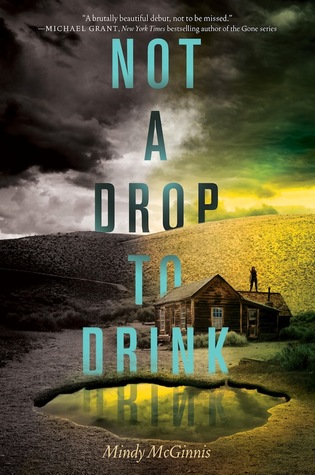
ARC Review: Not a Drop to Drink by Mindy McGinnis


Title: Not a Drop to Drink

Author: Mindy McGinnis

Rating: 4 Stars

Release Date: September 24th, 2013

Not a Drop to Drink is the type of novel that would have never appeared on my radar if it were not for the enthusiasm of dozens of bloggers. In fact, I believe this is one of the few dystopian novels I've picked up since my string of disasters with debuts last year, so color me surprised to find that McGinnis manages to do this genre justice. Not only is her debut gritty and realistic, but it combines one of the best aspects of dystopia that seem to have been buried under endless love triangles - fear. One of the primary reasons that dystopia became a favorite genre of mine was precisely because it lent itself so beautifully to psychological development; understanding how the fear of a future world led its people to behave in such inhumane ways. Not a Drop to Drink captures this dilemma perfectly, all without the eyesore of a love triangle or the burden of a mindless protagonist. If that isn't fortuitous, then I don't know what is.

As its title suggests, Not a Drop to Drink takes place in a futuristic world where water is a scarcity. Lynn has grown up in the middle of nowhere, far away from cities and other proper means of civilization, choosing to live with her mother in their small house with their small treasure. And by treasure I mean water. With water such a rarity in this world, Lynn has been forced to fight for her pond and, from a young age, has been taught by her mother how to shoot and just when to kill. In other words, shoot on sight, make no friends, and survive. When Lynn's mother is killed, though, Lynn slowly finds herself opening up to others surrounding her, but as her heart opens, so does room for danger as well...

Not a Drop to Drink is a largely plot-less novel, but that is far from being a detriment. While I found it to have an unusually slow start, it swiftly picked up and I found myself immersed in Lynn's life. McGinnis does a brilliant job of portraying the harsh brutality of the world Lynn has grown up in and we are witness to the prickly thorns surrounding her walls as she fails to connect with those around her. Lynn finds Lucy, Eli, and Neva - a young family searching for water - and with the help of her neighbor Stebbs, slowly grows to envelop them in her life. McGinnis never rushes Lynn's growth, taking her time to make her feel comfortable with strangers and re-connect with her humanity. One of the largest themes of this novel is that of life vs. survival. From the moment she was born, Lynn has simply been surviving. Her mother, a heard-hearted woman whose circumstances turned her to steel, never let Lynn feel the brunt of gentle emotions. Thus, Lynn has a long way to travel, psychologically, before she can learn to see people and not enemies, before she can learn to trust instead of kill.

I love that this is not only a far cry from the typical overbearing governments that litter dystopias, but this is also a much more realistic portrayal of a futuristic conflict. McGinnis writes beautifully and the details of her world fit in like puzzle pieces into the story. Although the main focus of this novel is on Lynn, there is still a depth of world-building that is slowly revealed over the course of the novel, as well as a plethora of other mysteries that begin to show by the end. Unfortunately, I found this was a detriment to the novel as, frankly, there was simply too much piled on to that conclusion. For once, the epilogue was mildly satisfying, but beyond that, the quick succession of events towards the end lost any real impact those concluding scenes may have had. Moreover, the characterization of many of the secondary characters was ever-so-slightly disappointing. None of them had the level of depth that Lynn or her mother possessed, and while this didn't impact my enjoyment of the novel in any particular manner, I would have loved for those other characters to come alive for me the way Lynn did.

Nevertheless, if you've lost belief in the dystopian genre, then this novel is the one to restore your faith. Not a Drop to Drink is an engaging thriller, full of concise prose and vivid characters. You'll come away from this with a far better appreciation of dihydrogen monoxide than before and, most likely, a thirst for more solid stand-alones from this genre. If nothing else, McGinnis has proved to be an author to watch out for and I can only hope she continues to belt out winners.

Tuesday, June 11, 2013

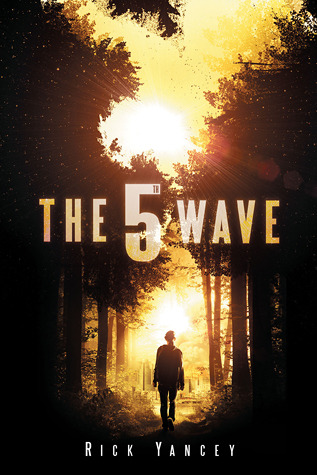
Mini-Reviews: The 5th Wave by Rick Yancey & Fall for Anything by Courtney Summers


Title: The 5th Wave

Author: Rick Yancey

Rating: DNF/2 Stars

I didn't finish The 5th Wave, but not for lack of trying, mind you. I picked this book up with great excitement, determined to love it, and while the initial chapters were delightfully creepy, as were the opening and closing lines of the consequent chapters, the middle was disastrously boring. And I hear this gets better, but I can't read this anymore. And I honestly feel terrible for saying that, especially when I make a conscious effort to read at least half of a novel before I DNF, but after a hundred pages, I simply could not turn another page.

First and foremost, if you haven't read The 5th Wave already, then please go sample the first few chapters. If the writing style works for you, then, by all means, run out and buy this book. I guarantee you will love it. On the other hand, if, like me, you're struggling to keep reading, then do yourself a favor and drop the book at once. For me, Yancey's writing style was far too tedious for me to keep up with. And I don't mean tedious in the Dickensonian sense where he writes and writes and writes. It is tedious merely because the bulk of it is composed of flashbacks when all you're truly wondering is what is going on right now. Furthermore, there is just so much extraneous information. I feel as if Yancey was trying so desperately to help us build a bond with Cassie, the main character, but all that information didn't solidify anything. Instead, what really made me like Cassie were the one-liners on morality and how humanity had changed so much since the alien invasion. And, this is a little late, but if you didn't know, this book is about an alien invasion. Actually, I lied. It's about survival and humanity - which is far more interesting - but the way this book is written just makes it come across as dull.

And, really, that is my only complaint. Okay, scratch that, it's not. I didn't actually get to the romance aspect of this novel, but I know I wouldn't have liked it because I predicted it from the start and I (a) hate when I predict events in a book and (b) it was a very cliched, coincidentally convenient, and over-done romance trope. As a character, Cassie has little to offer and the detailed re-telling of her past life did little to move me. While I cannot deny that Yancey is bursting with creativity, his idea for an alien invasion one that is absolutely stunning, it is also poorly executed. I love that there is no black and white in this book, that so much of its strength lies in that exploration of the gray area that reveals the stubbornness but also the cruelty of humanity, but without a solid story to fall back on, the philosophy in this novel was lost on me. While I won't be continuing this series, I am still excited to pick up Yancey's debut trilogy in this hopes I have more success with it than I did this latest installment.

Title: Fall for Anything

Author: Courtney Summers

Rating: 4.5 Stars

Please, please don't make me talk about this one. I can't. Fall for Anything is the type of contemporary grief novel I have been clamoring for; the type of book that is a mere snippet of time. It sucks you in from the first page and leaves you just as easily suspended at the last. Fall for Anything unflinchingly leaves no answers. It explores suicide in a manner that is painfully striking; one that reminds us all that there is no answer to this type of death. And even more startling than that, there is many a time no answer to life or the actions we take. Each of the characters in this book are boldly drawn, in lines that leave them full and developed, but obscure like a stranger we may meet as well. We see them, we feel them, we watch their transformations and even understand some of their actions, but not all of them. Never all of them.

Fall for Anything almost seems like a photograph, achingly familiar and not at the same time. Eddie, with all her real, honest, and life-like characteristics is almost painful to read about, her narration ringing true with the parts of our own selves we find hard to label and distinguish. Even the glimpses of grief that reverberated within the other characters in this novel were striking. Fall for Anything is not the fist-in-the-mouth type of read that Summers usually delivers, but this quieter, more achier kind of novel with the whispers of the past and echoes of unanswered questions is gripping in its own light. Fall for Anything is not for everyone and the lack of answers will likely frustrate many, but for those who hunt for ambiguous endings, even in the dark, this will leave you hollow.

Monday, April 22, 2013

Mini-Reviews: Arclight by Josin L. McQuein (ARC) & Burn Bright by Marianne de Pierres


Title: Arclight

Author: Josin L. McQuein

Rating: DNF/2 Stars

Release Date: April 23rd, 2013 

Aesthetically pleasing and well-written, Arclight is not a bad book. McQuein's debut - for this releases before her other novel set to release this year as well - is, in fact, a rather interesting tale that promises to be loved, appreciated, and well-received by lovers of dystopian. As a fan of this genre myself, I expected to love Arclight. Unfortunately, having tried - and failed - to read through the entirety of this novel, it is time for me to admit that Arclight and I are simply not suited for one another. In other words, I fear I have to resort to a rather typical break-up cliche: it's not you, it's me.

Arclight takes place in a world, a futuristic one, where creatures known as the Fade prowl in the dark. As such, humanity is safe only in the light, cowering from the Fade who are bound to kill them. Only Marina is known to have survived a Fade attack and even her memory is sketchy. When our novel begins, the Fade are attacking once again, eager for the girl who escaped them, but afraid of her as well. In the midst of this is Tobin, whose father died protecting Marina from the Fade, along with many other adults. Tobin, however, takes it upon himself to protect Marina and before long, a strange relationship is struck between the two, all while they must struggle to save themselves and protect their societies.

Quite simply put, Arclight is not quite as original as it seems. If anything, the society in McQuein's novel is eerily similar to that of the one in Enclave by Ann Aguirre. You have Fade who are dragging people away? OH, those sound an awful lot like vampires now, don't they? You have humans, battling for survival and fighting off these Fade? OH, don't you mean humans battling off vampires? Essentially, the Fade can very easily be equated with vampires, which renders this novel as unique as a blade of grass. Which is not a lot. Yet, perhaps this could have been overlooked if the characters were interesting, but Marina, our main character, completely lacks personality. Not only is her narration dull if there isn't any dialogue to take up space, but she is very one-dimensional and detached from the reader. Furthermore, the world-building takes up the span of one chapter towards the beginning and proceeds to info-dump like there's no tomorrow. And, to make things worse, there is apparently a love triangle in this. While I have heard it isn't all that bad, I, for one, am not sticking around to find out. Especially when one of the love interests has already lost my interest.

Arclight is the type of novel I would have persevered through just last year, only to pass it along as being "meh." With my busy schedule this year, though, and a severe lack of time to read, I cannot afford to waste it on something I know I will dislike. I do encourage every lover of dystopian to give this one a shot, though. If, like me, you don't feel much attachment within the first ten chapters, at least you didn't waste too much time. Chances are, though, that most readers will love this tale. After all, in a genre overrun by re-used ideas, most people are used to this by now and far more tolerant of this than I am. Meanwhile, I'll be off searching for the next novel I can genuinely stamp the title "unique" upon.


Title: Burn Bright (Night Creatures, #1) 

Author: Marianne de Pierres

Rating: DNF/2 Stars

I feel like I've reached that stage in my life where I need to see a neurologist. Clearly, there is something wrong with my brain because I could have sworn before cracking the spine of this one that I would love it. And, honestly, this is happening a lot. I pick up a book with a great premise - one that I love - and that book happens to be one that my most trusted friends have also loved. I start the book and BAM! my brain just shuts off, refuses to connect with the characters, and my attention wanders. I keep thinking about the other books I could be reading with my time. I keep waiting for the book to pick up its pace. I keep waiting, that is, until I decide to abandon the book altogether. 

Burn Bright has been one of my most sought-after and eagerly-looking-forward-to books for the past year. As an Aussie fantasy debut, there's little that can go wrong with it and, frankly, it lived up to my expectations of it. From the start, Burn Bright is unusual, different, and compelling. Retra, our heroine, is embarking to Ixion, a land of partying and perpetual night, to find her brother. Even from page one, Retra is the type of protagonist I love; strong, courageous, but vulnerable too. As someone who has lived her life in a strict regime of rules, breaking them is painful, but her love for her brother forces her to travel to Ixion. 

Ixion, however, is as strange as you can imagine. Nudity, drinking, sex, and drugs are all encouraged, with the backdrop of night. Yet, there are dark secrets in this town as well with people being dragged off once they became too old for the carefree lifestyle that Ixion provides, not to mention other sinister characters. Now, despite the unrealistic atmosphere this book takes on, I really did love it. Ixion reminds me a lot of Shyness (from Leanne Hall's This is Shyness), only of a more crazier variety. And I can deal with crazy, especially if it means an honest portrayal of desire and character growth. 

Yet, for all its good qualities, Burn Bright is slow. I finished a quarter of the book before Retra finally reaches Ixion - after a very boring boat ride, mind you - and despite her will to find her brother, Retra repeatedly refuses to attempt to fit in with the strange Ixion lifestyle. Which is fine. But, even though I never found Retra to be irritating, I never formed a connection with her either until, after a short time, I simply could not care. Even more than Retra, though, I was unable to warm-up to her quest for her brother or the security she felt with certain friends in Ixion. All in all, I think I needed a better understanding of these characters. You see, throwing a bunch of unique personalities in a strange realm probably works for a lot of readers, but I desperately need some bond between myself and the characters for me to feel invested in their adventures. And sadly, that was missing. At the end of the day, this is simply a clear-cut case of it's-not-you-it's-me. It looks like Marianne de Pierres as I will be going our separate ways after all; she, to more successful writing endeavors, and me to the neurologist I promised I'd see.

Wednesday, January 23, 2013

Review: Legend by Marie Lu


Title: Legend 

Author: Marie Lu 

Rating: 2 Stars/DNF

Legend is one of those books that simply demands to be read, not so much because of its original premises, intriguing characters, or fast-paced plot, but rather because everyone seems to have such a varied opinion about it. I always make it a point to read the reviews of my most trusted reviewers - those whose opinions are similar to my own - but when it came to this book, the ratings ranged from amazement, to indifference, to like, to hate. Thus, I knew I had to read this and give it a shot for myself to see what the hype really is all about. Well, if you're anything like me and if you've read your fair share of dystopians, I can tell you now thatLegend offers nothing new to this over-wrought genre and, frankly speaking, you aren't missing much if you skip it. If, however, you're nothing like me (or you're just wondering why I couldn't finish one of your favorite books), you might as well stick around. I doubt it'll be a long haul anyway.

See, the thing about Legend is that it is exactly like every other post-apocalyptic novel out there. We have our utopian-like society, we have two vastly different characters, we have the slow uncovering of betrayal, that all is not as perfect as it seems. Very, very typical. Now, it isn't that I have an aversion to typical plots - because everyone knows I read more than just a few dystopian series - but the qualities that I needed to make this novel interesting, engaging, and something worth reading were simply lacking. Well, that and I suspect I'm growing tired of this genre...is there really anything new left to explore?

One of the first things that stands out about Legend is the unique formatting of the book itself. It is told from the dual narration of June, a prodigy in her society, and Day, a thief who is accused of murdering June's brother. As such, you can imagine that June sets out to find and kill him. Well, another unique aspect of this formatting is that Day's perspective is told in gold lettering while June's is in regular black. At first, I was a little annoyed by this - the gold is, I warn you, hard on the eyes. As the story progressed though, I found myself relying on the font to help me distinguish who was speaking. Yes, the two perspectives in this are really thatinterchangeable. Not only are June and Day similar individuals, both being extremely smart, calculating, and tough, but their thoughts mirror each other almost exactly. So, really, Legend is about one character named Jay or Dune whose thoughts are shown in two different colors. =.=

In addition to the utter lack of characterization, the world-building in this novel was nothing new and I was unable to form much of a connection with the characters. Day, to some extent, is an easier person to get to know, merely because he has feeling. June, however, is distant from everyone but her older brother, who, once dead, makes her just plain unfeeling. So, really, can you blame me for not wanting to continue this? Unoriginal plot lines, characters that lacked distinct personalities, and an attachment that failed to occur. By the time I passed the half-way point of this story, I was done. I can't even say that Marie Lu is a good writer because, really, her writing was nothing special either.Legend is a tiny bit better than Article 5, but not a whole lot much. In fact, Enclave, another DNF for me, is far better, so maybe check that out instead? Or, you know, just give this a shot, because even if it's not for you, it's a quick read and you won't feel as if you wasted your time. At least, not too much.