I often write drafts on Blogger simply ranting about the issues prevalent within the Young Adult genre. Don't get me wrong: I love YA. But, let's just be honest and admit that there are some messages that are becoming trope-y and repetitive; lessons that shouldn't be pervading the minds of Young Adults and skewing their world-view.
First of all, I really need to address the issue of romance in YA. Before Twilight, having a central romance was exclusive only to contemporary novels. Even then, the story would often end with the protagonist acknowledging her crush; talking to him, becoming his friend, and maybe with the possibility of a relationship in the future. Now, however, there is a romance in every single YA novel. Irrespective of the genre, a central relationship--or, god forbid, love triangle--features prominently in the story arc of a novel culminating in the heroine finding her "true love", complete with a hot kiss and a make out scene if we're lucky.
Like any girl, I love a good romance. Give me a rom-com over a horror movie any day, friends. My issue with romance in YA, however, is that all too often it feels forced. I appreciate the authors who don't hesitate to throw their romances into the backseat. Or, better yet, don't introduce one until late in the series and leave us with a hint of possibility. The YA romances I've loved and returned to and appreciated are the ones in which the relationship aided in the growth of the main character. I want young readers to be able to pick up a novel and appreciate that finding love as a teenager is a rare and wonderful thing. I want them to read and glean that there are so many lasting and important relationships that one can formulate at this age; parents, teachers, friends. It isn't all about the romance, not in real life, so shouldn't literature be a reflection of that reality?
I just fear that the young girls I meet today are too wrapped up in finding a boyfriend instead of their bridesmaids. I attend an all-women's university and one of the most eye-opening experiences I've had lies in forging friendships that have nothing to do with the opposite sex. You wouldn't believe the number of female friendships which have begun from mutual like or dislike of a guy. You wouldn't believe. Still, though I firmly believe that there is a large place for crushes and romance in YA, particularly the New Adult age group, there is also room for more.
One of those more items, in addition to friendships and parental relationships and teacher interactions, are role models. Mindy Kaling has swiftly become one of my top role models this past year. Not only is she a woman, a minority, and not the classic hourglass-shaped model, but she's highly intelligent and incredibly successful in a field she is passionate about. Moreover, she doesn't hesitate to portray her characters, such as Mindy Lahiri on "The Mindy Project" as unconventional. Dr. Lahiri may be a gynecologist but she's also unapologetically into Hollywood and cares little for politics; stances that aren't popular or accepted but are, unabashedly, the truth. Mindy Kaling, quite simply put, is confident. She's comfortable in her own skin and that shows in the characters she plays, whether it be Kelly Kapoor or Mindy Lahiri.
I want that in YA. I want more confident protagonists. I feel as if the all-too-familiar trope in YA is to have a protagonist who is shy and unpopular and generally friendless and make her, within the span of a few hundred pages, become widely social and gain a boyfriend. Why can't we have a variety of heroines, each confident and comfortable in their own skin? Maybe the goal shouldn't always be to get teens to identify with YA protagonists but to show them that, no matter how introverted or extroverted you are, you are perfect the way you are. I feel like shaking so many of these heroines for falling trap to fear and insecurity time and time again. While these are valid and honest emotions, I also want to see confidence in my protagonists. Why is it that the "bitchy" cheerleaders are the only confident women in these novels? Why is the underlying message that to be confident is to be bossy and horrible? Let's see some more inspirational protagonists, YA. I don't just need heroines I can identify with; I need heroines I can look up to.
And, let me make this very clear: my heroines need to be real people, not models. I find that this is an issue more prevalent in Adult Romance than YA (seriously, you expect me to believe that every single character in these Adult Romance novels is stick thin with "just the right" curves and that their hunks have six-packs?). Whether it is unintentional or not, all too often the heroines and heroes of YA are beautiful and tortured. A dark past they're overcoming, a beautiful tear-stricken face, a tragic romance... Yeah, I want to read that book too. But, I also want to read the book about the not-so-perfect teens; the ones who defy Hollywood standards of beauty to be beautiful and fall in love anyway. Occasionally I'll come across novels like these but they're in the minority. Weight loss isn't a bad thing and novels about athletes with killer bodies is realistic enough, but I simply feel as if YA is underrepresented in more areas than just ethnic and sexual diversity.
It's not just about the fact that women of color don't write enough books or that women of color aren't represented enough in books or that multiple sexual orientations aren't discussed enough in novels or that people of multiple sexual orientations can't find characters to identify with; it's not just about that. It's also about taking the characters we already have--white, heterosexual--and making them rise above the status quo of tropes. Even better, writing about characters of ethnic and sexual minorities who further defy classic YA tropes. I think YA is an incredible genre--it's compulsively readable and covers such a wide range of topics that pertain to teens all over the globe. But it's been too long that we've been stuck in a rut of romance novels with introverted protagonists who are all secretly sexy.
What do you think? Are we really stuck in a cycle of repetitive tropes? Do you know of any titles with the types of protagonists I outlined above? I'd love to hear your opinion on my rant-y thoughts, dear readers! :)

Showing posts with label Discussion. Show all posts
Showing posts with label Discussion. Show all posts
Wednesday, July 15, 2015

Sunday, June 14, 2015
Recent Reads: Diversity Edition
I've been lazy when it comes to blogging, lately. I know it, you know it, publishers know it.
It's embarrassing.
In my defense, I spend every waking minute either sleeping, studying, eating, or de-stressing with friends. I squeeze in a few minutes every day to read, even if it's just one chapter, but actually sitting down to write a review--or even jot down a few thoughts--is simply too much. (I know, I know, it's SUMMER, but I'm at an internship, people! I'm supposedly conducting Very Important Math Research! I get paychecks! I have to buy my own groceries! I'M BECOMING AN ADULT!)
I've published a few reviews, here and there, that weren't written over Winter Break. I've assembled a handful of guest posts, commented on a couple of blogs a week--I've been present but, unfortunately, the books that I've wanted to discuss have slipped under the radar.
Hence, this post; Recent Reads: Diversity Edition.
One of the most notable--and pleasant surprises--of 2015 has been discovering diversity in the fiction I've been reading. YA and NA are notorious for ignoring minority races, sexes, and personalities so I'm truly so proud of the strides that the publishing industry and authors are making to lessen this gap.

First and foremost, I want to talk about Trade Me, Courtney Milan's latest novel and her debut New Adult endeavor. Courtney Milan is known for writing unusual historical romance novels--the kind that make you swoon but also make you think. I love her historical fiction primarily because she writes about the types of female heroines no other author really feels comfortable discussing, whether it be the feminists, the scientists, the overly large, or those of different races. What's more, her male characters range from the classic duke to the a-typical male virgin to the self-proclaimed male suffragist. Thus, I knew Trade Me was going to be a treat even before I cracked open its spine because--Courtney Milan.
But Trade Me surpassed even my wildest expectations. Built upon the foundation of a relatively flimsy plot line--wealthy young man volunteers to switch lives with a poor immigrant woman--Trade Me does a brilliant job of pointing out not only the privileges of the wealthy, but also of the non-immigrant. It features an Asian protagonist and is one of the first times that I have been able to sympathize completely with a character due to her life circumstances--immigrant parents who don't fit into the American culture, a series of different traditional values, struggling to make ends meet, missing family members who live oversees. And, honestly, I found the entire experience shocking and eye-opening. How was Trade Me, published in January of 2015, the first time I had been able to relate to the immigrant experience in a YA or NA novel? It made me angry but, most of all, it made me grateful to Courtney Milan for doing her research and being brave enough to write about a culture of people different from her own.
Beyond the in-your-face diversity of an Asian protagonist, though, Milan weaves this love story through many complex issues. Unfortunately, I cannot reveal much more due to fear of spoilers, but none of these characters are what they seem on the surface--and I love that. Admittedly, the whole "the rich have problems, too!" trope seems cliche but, I promise you, Milan writes it in such a way that you never find yourself thinking that way. If you're looking for a couple to swoon over, but one that will destroy your every pre-conceived notion about them, Trade Me is the book for you.
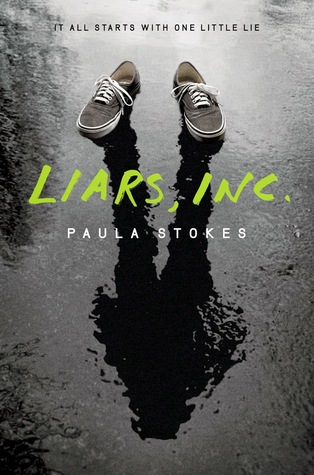
Next: Liars, Inc. by Paula Stokes. I had Stokes stop by on the blog a few weeks ago to talk about the diversity in her latest novel, a thriller, and was incredibly moved by her discussion of not only racial diversity--with Parvati, the female love-interest of the novel--but also of Max, the protagonist. From the surface, there doesn't seem to be a lot of diversity to offer with Max--after all, he is a Causasion, heterosexual male. But, Max isn't your typical male protagonist. Not only does he struggle academically, but he also isn't the classic bad boy or the shy nerd or the cute guy-next-door. And, by breaking that mold, Stokes introduces a new form of diversity: diversity of personality. It's okay not to fit into a pre-labeled, pre-stamped, and pre-approved box.
I also really appreciated the fact that the female protagonist of this novel, Parvati, wasn't the perfect love interest. I adore a sharp-tongued, nasty female lead, if only because they defy the stereotype that women must be perfect and dainty and polite. Moreover, I rarely see it done with a woman of color because--let's be honest--I think authors are worried to include PoC who aren't cast in the role of "good guy." PoC are just as flawed and real as non-PoC so, authors, don't worry about offending us by creating angry and bitterly caustic PoC. Not that Parvati is just oozing badness, but she certainly is far from perfect and I appreciate the unapologetic ambiguity in her characterization.
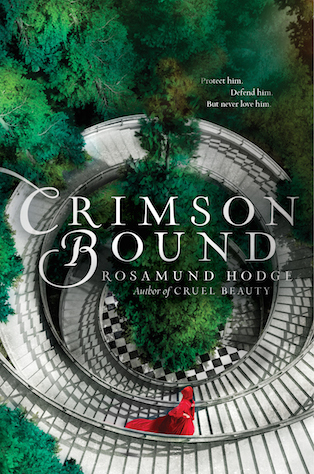
And speaking of imperfect female heroines, that brings me to Rosamund Hodge's Crimson Bound, one of my favorite novels published this year. Hodge's debut, Cruel Beauty, already struck the perfect cord with me. After all, we had an angry 'Beauty' and an evil 'Beast'--can you really even beat that? But Hodge did one better in Crimson Bound, making her protagonist a killer. Can you redeem an individual like that? Do you?
One of the strongest aspects of this novel, for me, is the fact that Hodge enables us, the reader, to sympathize with and root for a heroine who is selfish, who murders others, and in general is not the paragon of perfection we've come to associate with an ideal female lead. Now that, right there, that's diversity. Rachelle isn't all-out evil--not even close--but she also does bad, horrible things. Yet, this story comes together so perfectly, weaving together a fairy tale re-telling with the background of a host of characters who stand by their flawed personalities and still manage to come out stronger; to grow and change. Moreover, Hodge is a genius at building re-tellings that can be recognized but that also veer off the beaten track and incorporate innovate magic combined with unseen plot twists so that you're on the edge of your seat till the very end. I love them, dearly, and am waiting with bated breath for her next novel. I know she will deliver.
Of course, these aren't all the diverse reads I've read recently but they are some of the most meaningful ones I've come across this year. Others, like The Summer of Chasing Mermaids by Sarah Ockler (literally my new favorite book EVER!) and The Wrath and the Dawn will be getting their own, full-fledged reviews soon. And yet others, like Trish Doller's The Devil You Know, while well-appreciated for their feminism, simply didn't do it for me storyline-wise. (And, further, others, like Simon and the Homo Sapien Agenda were just so good I couldn't find the words to write about them!) Nevertheless, I think the awareness of characters that break the mold and defy traditional racial, sexual, and gender norms is rising and I'm excited to read more novels tackling these barriers to diversity.
If you know of any other diverse reads, please let me know in the comments below! I'm always on the prowl for a new read and, in particular, authors brave enough to write stories that may not sell, but will definitely make a statement and take a stand.
It's embarrassing.
In my defense, I spend every waking minute either sleeping, studying, eating, or de-stressing with friends. I squeeze in a few minutes every day to read, even if it's just one chapter, but actually sitting down to write a review--or even jot down a few thoughts--is simply too much. (I know, I know, it's SUMMER, but I'm at an internship, people! I'm supposedly conducting Very Important Math Research! I get paychecks! I have to buy my own groceries! I'M BECOMING AN ADULT!)
I've published a few reviews, here and there, that weren't written over Winter Break. I've assembled a handful of guest posts, commented on a couple of blogs a week--I've been present but, unfortunately, the books that I've wanted to discuss have slipped under the radar.
Hence, this post; Recent Reads: Diversity Edition.
One of the most notable--and pleasant surprises--of 2015 has been discovering diversity in the fiction I've been reading. YA and NA are notorious for ignoring minority races, sexes, and personalities so I'm truly so proud of the strides that the publishing industry and authors are making to lessen this gap.
First and foremost, I want to talk about Trade Me, Courtney Milan's latest novel and her debut New Adult endeavor. Courtney Milan is known for writing unusual historical romance novels--the kind that make you swoon but also make you think. I love her historical fiction primarily because she writes about the types of female heroines no other author really feels comfortable discussing, whether it be the feminists, the scientists, the overly large, or those of different races. What's more, her male characters range from the classic duke to the a-typical male virgin to the self-proclaimed male suffragist. Thus, I knew Trade Me was going to be a treat even before I cracked open its spine because--Courtney Milan.
But Trade Me surpassed even my wildest expectations. Built upon the foundation of a relatively flimsy plot line--wealthy young man volunteers to switch lives with a poor immigrant woman--Trade Me does a brilliant job of pointing out not only the privileges of the wealthy, but also of the non-immigrant. It features an Asian protagonist and is one of the first times that I have been able to sympathize completely with a character due to her life circumstances--immigrant parents who don't fit into the American culture, a series of different traditional values, struggling to make ends meet, missing family members who live oversees. And, honestly, I found the entire experience shocking and eye-opening. How was Trade Me, published in January of 2015, the first time I had been able to relate to the immigrant experience in a YA or NA novel? It made me angry but, most of all, it made me grateful to Courtney Milan for doing her research and being brave enough to write about a culture of people different from her own.
Beyond the in-your-face diversity of an Asian protagonist, though, Milan weaves this love story through many complex issues. Unfortunately, I cannot reveal much more due to fear of spoilers, but none of these characters are what they seem on the surface--and I love that. Admittedly, the whole "the rich have problems, too!" trope seems cliche but, I promise you, Milan writes it in such a way that you never find yourself thinking that way. If you're looking for a couple to swoon over, but one that will destroy your every pre-conceived notion about them, Trade Me is the book for you.
Next: Liars, Inc. by Paula Stokes. I had Stokes stop by on the blog a few weeks ago to talk about the diversity in her latest novel, a thriller, and was incredibly moved by her discussion of not only racial diversity--with Parvati, the female love-interest of the novel--but also of Max, the protagonist. From the surface, there doesn't seem to be a lot of diversity to offer with Max--after all, he is a Causasion, heterosexual male. But, Max isn't your typical male protagonist. Not only does he struggle academically, but he also isn't the classic bad boy or the shy nerd or the cute guy-next-door. And, by breaking that mold, Stokes introduces a new form of diversity: diversity of personality. It's okay not to fit into a pre-labeled, pre-stamped, and pre-approved box.
I also really appreciated the fact that the female protagonist of this novel, Parvati, wasn't the perfect love interest. I adore a sharp-tongued, nasty female lead, if only because they defy the stereotype that women must be perfect and dainty and polite. Moreover, I rarely see it done with a woman of color because--let's be honest--I think authors are worried to include PoC who aren't cast in the role of "good guy." PoC are just as flawed and real as non-PoC so, authors, don't worry about offending us by creating angry and bitterly caustic PoC. Not that Parvati is just oozing badness, but she certainly is far from perfect and I appreciate the unapologetic ambiguity in her characterization.
And speaking of imperfect female heroines, that brings me to Rosamund Hodge's Crimson Bound, one of my favorite novels published this year. Hodge's debut, Cruel Beauty, already struck the perfect cord with me. After all, we had an angry 'Beauty' and an evil 'Beast'--can you really even beat that? But Hodge did one better in Crimson Bound, making her protagonist a killer. Can you redeem an individual like that? Do you?
One of the strongest aspects of this novel, for me, is the fact that Hodge enables us, the reader, to sympathize with and root for a heroine who is selfish, who murders others, and in general is not the paragon of perfection we've come to associate with an ideal female lead. Now that, right there, that's diversity. Rachelle isn't all-out evil--not even close--but she also does bad, horrible things. Yet, this story comes together so perfectly, weaving together a fairy tale re-telling with the background of a host of characters who stand by their flawed personalities and still manage to come out stronger; to grow and change. Moreover, Hodge is a genius at building re-tellings that can be recognized but that also veer off the beaten track and incorporate innovate magic combined with unseen plot twists so that you're on the edge of your seat till the very end. I love them, dearly, and am waiting with bated breath for her next novel. I know she will deliver.
Of course, these aren't all the diverse reads I've read recently but they are some of the most meaningful ones I've come across this year. Others, like The Summer of Chasing Mermaids by Sarah Ockler (literally my new favorite book EVER!) and The Wrath and the Dawn will be getting their own, full-fledged reviews soon. And yet others, like Trish Doller's The Devil You Know, while well-appreciated for their feminism, simply didn't do it for me storyline-wise. (And, further, others, like Simon and the Homo Sapien Agenda were just so good I couldn't find the words to write about them!) Nevertheless, I think the awareness of characters that break the mold and defy traditional racial, sexual, and gender norms is rising and I'm excited to read more novels tackling these barriers to diversity.
If you know of any other diverse reads, please let me know in the comments below! I'm always on the prowl for a new read and, in particular, authors brave enough to write stories that may not sell, but will definitely make a statement and take a stand.
Wednesday, August 6, 2014
On Old Hollywood, YA, and Love Triangles...
I spent my weekend with Cary Grant. After watching The Philadelphia Story, His Girl Friday, and Notorious in back-to-back succession I sent Lauren @ Love is Not a Triangle the following tweet:
.PNG)


What I love most about this film, and its love triangle, is that Sebastian's presence drives forward the entire plot. Notorious is, at its heart, a love story and the spy plot threads serve as a mere backdrop. It certainly amps up the tension and allows for brilliant cinematic shots, but the true tale to be told is the one between Devlin and Alicia. As Alicia grows from a "lush" to a courageous woman; as Devlin learns to shed his veneer of cynicism and finally allow himself to love Alicia, especially when that means leaving the shadows he knows--the love triangle, once again, focuses on the characters.

 Lauren sent me the tweet on the right, responding to my tweet above and remarking that love triangles in films just weren't as difficult to deal with. Admittedly, she is right. Not only are love triangles in movies limited by time, but they also don't feature cliffhangers or sequels. Instead, the tension is maintained for a bearable amount. It doesn't drag for hundreds of pages, it doesn't linger in our minds for a year, it doesn't re-emerge for another hundred pages, only to ferment in our minds for another year, before we finally gain closure. It just doesn't happen with a movie and the two mediums, vastly different, are that way for a reason.
And after that, I just couldn't stop thinking about these films. Why was it that these love triangles on screen translated so poignantly? I despise even the slightest hint of a love triangle in literature--and I usually despise love triangles in films too--but Old Hollywood just nailed it! ...how?
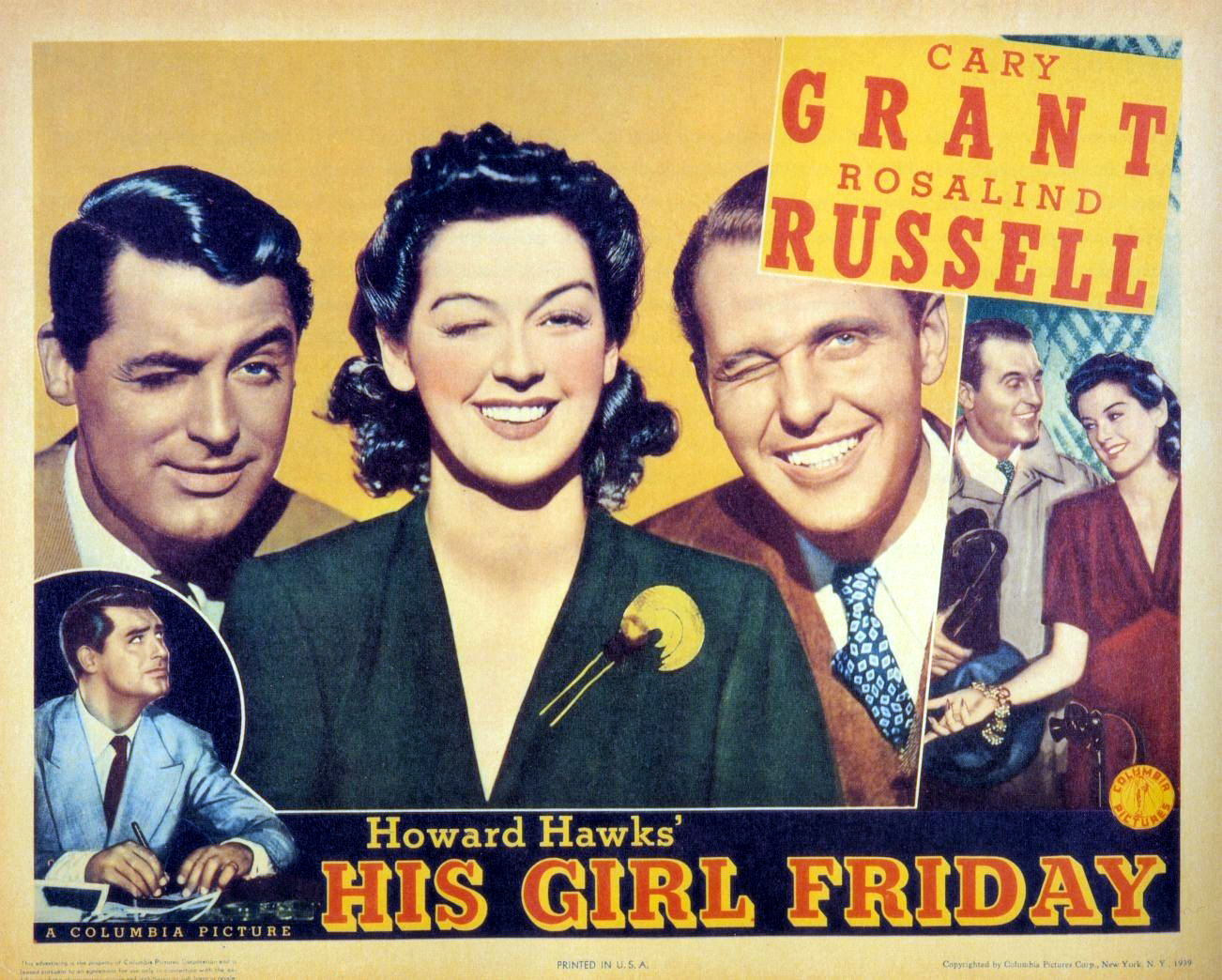
I've found that all three of these films do, in some form or the other, contain a love triangle. During Grant's era of Hollywood, "screwball" comedies were all the rage; usually involving intriguing insight into the gap between the social classes, hilarious scenes, and romances in which a divorced (or about-to-be-divorced) husband and wife couple fell back in love together. Needless to say, this romantic set-up practically calls for a love triangle and His Girl Friday represents a quintessential scenario: Grant is still very much in love with his recently divorced wife who is engaged to another man and in order to break apart their engagement, he resorts to a series of hilarious events all while showing her just how integral both he and the journalism business are to her lifestyle. It is primarily a social commentary on journalism, with comedic tid-bits and an underplayed romance, which is I why I hesitate to label it as a love triangle. You don't feel the tension between the contenders for the heroine's heart--and in this case, that's perfectly fine. His Girl Friday isn't meant to be nearly quite that dark and as a "screwball" comedy, it's certainly worth the watch.

The Philadelphia Story, on the other hand, yet another "screwball" comedy, is a film I fell in love with. Katharine Hepburn plays the role of a rich society heiress about to marry a self-made man whose rise to wealth and politics is admirable. Grant, her ex-husband, returns after two years in South America to attend Hepburn's wedding--bringing with him two newspaper reporters to cover the event. Now, the intricate details behind this set-up are ones I'll leave for the movie reviewers to explain but the film, featuring James Stewart as one of the newspaper reporters, engages in a truly captivating love triangle. In an early scene in the film Hepburn is told by Grant that she is a goddess; cool, aloof, and in a station above all others. Next, she is told by her current fiance that he worships her--even when she tells him that she wants to be loved, not worshiped. Lastly, her own father tells her that she is made of bronze--once again re-iterating the theme that both her ex-husband and future-husband have mentioned.
Critics will tell you that The Philadelphia Story was a breakthrough film for Hepburn and, seeing her performance, it isn't hard to see why. She nails the self-righteous, independent Tracy in such a manner that we come to perfectly understand the goddess-like image she holds for Grant while also viewing the flesh-and-blood human she is underneath. Stewart, a newspaper reporter whose station in life is far below that of Hepburn's in the film, becomes fascinated by the rich woman when Hepburn reads and appreciates his novel. At first, the two strike an easy friendship--Stewart never sees the sharp edges of Hepburn's character that the men who know her most intimately do see--but their affection blossoms quickly into a romance. It's that moment--when I found myself on the edge of my seat, utterly distraught over the fact that Hepburn might wind up with Stewart and not Grant--that I even realized there was a love triangle at play here.
Yet, the reason The Philadelphia Story works is because the film's focus is firmly on Hepburn's character. Each of the men in her life, just days before her wedding, begin to show her what she truly wants, not only from a life partner but from her own existence as well. Whether it be her fiance, who is riveted by Tracy's status more than he is by her, or James Stewart, who feeds her pride without understanding her world view, or even Cary Grant, who sees her for the woman she is and finds it in himself to forgive her--but still love her despite it all--the love triangle in The Philadelphia Story makes the tale all-the-more rewarding. What's more, Stewart is Grant's best man by the end of the film when Hepburn and Grant re-marry, neatly avoiding the angst and drama that seems to accompany any literary love triangle. Moreover, the subtle threads binding them all to one another are never spelled out, the way they seem to be in modern-day romantic comedies with the hero confessing "I love you. I forgive you. I can't live without you...marry me!" in a melodramatic manner. Instead, the leap from seemingly distant to true passion lies in the undercurrents of conversation and is up to the movie-goer to watch, interpret, and process.
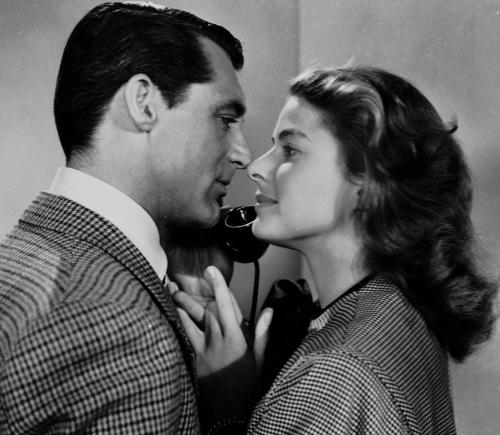
Hitchcock's Notorious is a far cry from "screwball" comedy and, instead, serves to place Grant in a much darker role. Grant, taking on the role of American agent Devlin, hires Alicia, played by Ingrid Bergman, as an American spy. Although Alicia's father has recently been arrested for treason, having worked as a German spy during WWII, Alicia herself is loyally American. Yet, following her father's sentence, Alicia drinks, parties, and conducts improper behavior with men. Devlin, upon first meeting her, is both enchanted by her beauty and repulsed by her actions. After hiring her, however, the two fall in love in Rio. In Rio, Devlin learns that Alicia's assignment is to seduce Sebastian, a German, and infiltrate his network. Alicia's duty throws a wedge in their romance and as Alicia eventually marries Sebastian, neither she nor Devlin profess their true love for another.
It's a tragic love story, acutely felt as Devlin and Alicia are their own hurdles. Devlin, spurning Alicia for taking on the job, and then Alicia, taunting Devlin as she is "with" another man. It isn't an easy film to watch, precisely because of the acerbic quality of their interactions at times, but the talent with which the movie is shot and the quality of the acting is unparalleled. Sebastian, who serves as the third wheel in this love triangle, is ironically the better of Alicia's two options. Not only is he madly in love with her, but he defies his mother by marrying her, fighting her at every instance in order to give Alicia reign over his household and shower her with every luxury. Moreover, he never once doubts that she may be marrying him for his money or his contacts; he simply believes in her. In contrast, Devlin hears of Alicia's task and assumes that her promiscuous past leads her to take the job. Bergman's famous line--"You don't think a woman can change?"--essentially drives forward the entire broken romance. Devlin cannot trust himself--or Alicia--after such a brutal war and Alicia, who needs to be seen for who she is, opposed to her past, similarly won't settle for a man who sees her as the sum of her sins the way Devlin does.

What I love most about this film, and its love triangle, is that Sebastian's presence drives forward the entire plot. Notorious is, at its heart, a love story and the spy plot threads serve as a mere backdrop. It certainly amps up the tension and allows for brilliant cinematic shots, but the true tale to be told is the one between Devlin and Alicia. As Alicia grows from a "lush" to a courageous woman; as Devlin learns to shed his veneer of cynicism and finally allow himself to love Alicia, especially when that means leaving the shadows he knows--the love triangle, once again, focuses on the characters.
I find that in YA or NA, a "bad boy" persona such as Devlin's would be explained away by a tragic past--perhaps his parents perished in war, his brother was deported to a foreign land, etc.--but Hitchcock allows us to become so embroiled in the love story he tells that such extraneous information is never necessary. I found myself inching closer and closer to the television screen as the film noir played on and, by the end, I wanted to hit rewind and live in the bubble of suspense, thrill, and romantic tension that Hitchcock had built.
From seeing and analyzing these two classics, it is evident that where Young Adult falters is in its molds. Whether it be the mold of a trilogy--which forces authors to add tension where otherwise unnecessary--or the mold of genre, these qualities spell disaster for love triangles, authors, and readers alike. We most often see love triangles emerge in dystopian or fantasy settings and, quite simply put, the romantic entanglements take away from the world-building and plot tension at hand. We, as readers, find ourselves anticipating sequels not to see where the plot is going but rather to see who the heroine winds up with. Moreover, these literary love triangles destroy the female protagonist, putting her in such a position that she acts out in silly, un-admirable ways.
Yet, Bergman and Hepburn's characters in these Old Hollywood films are classic, touching, and poignant. We feel for them, we understand their situation, and we root for them, by the end, Grant's handsome face be damned. (I take that back, I love you Cary Grant!)
Lauren sent me the tweet on the right, responding to my tweet above and remarking that love triangles in films just weren't as difficult to deal with. Admittedly, she is right. Not only are love triangles in movies limited by time, but they also don't feature cliffhangers or sequels. Instead, the tension is maintained for a bearable amount. It doesn't drag for hundreds of pages, it doesn't linger in our minds for a year, it doesn't re-emerge for another hundred pages, only to ferment in our minds for another year, before we finally gain closure. It just doesn't happen with a movie and the two mediums, vastly different, are that way for a reason.
Certainly Notorious, if it were ever to be immortalized by the written word, would lose much of its sinister appeal and impeccable atmosphere (not to mention Cary Grant's gorgeous face!). Nevertheless, I firmly believe that the decisive choice to include a love triangle in a certain work, whether it be cinematic or literary, is one that must be made after considerable thought--and Old Hollywood somehow has me wanting to see more love triangles, not less. It never occurred to me that a love triangle could work in such an effective manner, perhaps, and seeing these directorial takes on a plot point I despise simply have me looking at the love triangle in a different format altogether.
Well, that's all I have to say on the matter, but I'd love to hear from you! Do you enjoy love triangles more on screen than on the page? Do you believe that literary love triangles are all doomed? Or can YA and NA somehow manage to imitate these black-and-white classics?
I'd also love any novel or film recommendations on what books and movies you think I must read/watch before heading off to college in less than three weeks! You can leave a comment below or--better yet--just respond to my frantic tweet if you have any recommendations. :)
Monday, September 23, 2013
Banned Books, Goodreads & Other News

However, the actual banning of a book is an entirely different idea altogether. Just the image of burning books, crossing out words, or hiding a novel so it cannot be read and appreciated is downright blasphemous. After all, words have had the power to change my life, countless times, and the thought of others being denied that gift is heart-breaking.
I decided that, to celebrate Banned Books Week, I’d put together a list of some of my favorite banned titles from the American Language Association. After all, these books deserve to be celebrated, no matter what.
(My Favorite) Top Banned Books of the Past Decade (2000-2010)
 |  |  |
1. Harry Potter Series by J.K. Rowling
I knew this was banned, but to be number one on the list was a little shocking, even for me. Quite simply put, this series is transformative. It lent me strength while I grew up and taught me so many valuable life lessons. It’s…magical.
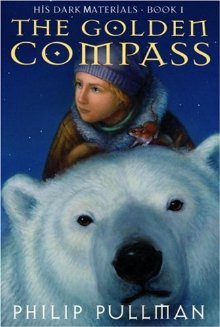
8. His Dark Materials by Philip Pullman
I know this was my first real fantasy series and it blew me away. It still does. I’ve never re-read it, but my memories of it are so vivid and my emotions are so sharp and clear because this trilogy is just incredible.
23. The Giver by Lois Lowry
I think this was my first true dystopian novel, so I remember being both eerily fascinated by it and ever-so-slightly confused. It’s truly a remarkable piece of fiction, though, only because it makes you think and explores so much gray area. I struggled to believe anyone would want to ban this back when I read it more than half a decade ago and I still struggle to believe that today.
(My Favorite) Banned Classics
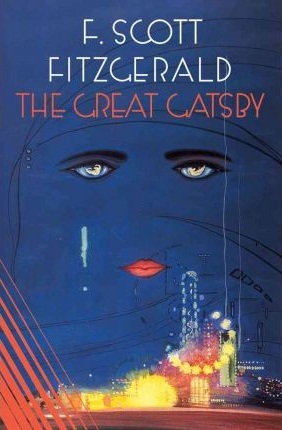 |  |  |
1. The Great Gatsby by F. Scott Fitzgerald
In the four years since I’ve discovered this book, I’ve already read it six times. And each time I’ve read it, I uncover something new about it and see this novel in a whole new light. Is it one of my favorite books ever? Yes.
4. To Kill a Mockingbird by Harper Lee
If you’ve read this book, you know just how wonderful it is. I love the book, I love the film, and I love the new anniversary edition covers. ;)
27. Native Son by Richard Wright
I read this just two years ago and it shocked me, confused me, and made me see the world in a whole new light. I don’t think that we, as people, can fully comprehend discrimination until we’ve read Native Son. We know it, on an academic level, and perhaps we’ve even experienced it, but not like this. I think this is one of the most under-read, fallen-under-the-radar classics ever, but I sincerely hope that isn’t the case in the future as it is so good.
On this note of censorship, let's stop to discuss Goodreads for a moment, shall we? Jessie from Ageless Pages Reviews and Nafiza from Bibliophilic Monologues both wrote wonderful posts about exactly what Goodreads has done and why their censorship is wrong (which is why I'm skipping over those subjects). All I really want to say about this is...what now? I joined Goodreads last year and found a community that accepted me for my bookish quirks and appreciated me for my opinion. I have - luckily - not had any of my reviews taken off of Goodreads, but I don't want to sit in the perpetual fear that they will. Does this mean I want to join Book Likes? Not really. Honestly, I appreciate Goodreads more for its ability to let me connect with other readers than anything else. I refer to the reviews of my trusted friends constantly, but even more than that, I love that readers are able to interact so easily with me and I with them. I don't worry over losing books or reviews in moving to a new website, I worry over losing friends. And so, I want to know now, what are you doing about the issue on Goodreads? Are you joining Book Likes, or completely leaving Goodreads? I will probably make myself a Book Likes account sometime soon and I will probably begin using it, but unless I can find all my friends back on it, I doubt it will completely replace Goodreads for me.
And on an entirely unrelated note, I wanted to add that I will be rather…absent…from the blogosphere over the next two months. Why? COLLEGE. I thought last year, with standardized tests every two months, was bad, but college applications are even worse. I’m currently still finalizing my list and I have two out of the twenty essays I need to write finished, but I have a looot of writing and editing in my future. I still have nearly a dozen backlogged posts, not to mention tons of ARCs to read and review in-between now and December, and I will definitely be commenting on blogs – only because I really just LOVE to – but if you notice me posting visibly less or perhaps commenting occasionally (I’m going to try to give shout-outs on Twitter, even if I can’t comment!), then just know it’s because I’m caught up in the college frenzy. I’m hoping to be mostly finished by the time December rolls around, so if I can get through this in one piece, I’ll be relieved. Anyway, just wanted to let you know! :)
And so, back to banned books! What are some of your favorite banned books? Have you experienced censorship (in another form than the current Goodreads Debacle...)? What are your thoughts about banned books? I'd love to hear, so let me know in the comments! :)
And so, back to banned books! What are some of your favorite banned books? Have you experienced censorship (in another form than the current Goodreads Debacle...)? What are your thoughts about banned books? I'd love to hear, so let me know in the comments! :)
Saturday, August 31, 2013
Discussion: Time Management
It is a truth universally acknowledged that a single bibliophile in possession of a good book to read must be in want of time to read it. Am I right or am I right? As bloggers, I think we all struggle - a lot - with managing our time, reading, commenting, reviewing, and formatting our blogs. It's time-consuming and it doesn't really give us all that much in return. Except, you know, that little thing called happiness. ;)
I've been asked - multiple times, actually - to write up a post about how I manage my time. Many people seem to be in awe of the fact that I comment on roughly 12-18 blogs a day, post reviews once in two days (max.), and manage to read at least three hundred books a year.
Well, I'm here to tell you it's not all that unusual.
A List of Reasons Why I Can Read As Much as I Do
1. Adulthood = Sucks. Many bloggers who read YA are adults, which means you have to take care of kids or cook meals or pay bills. I don't have to do any of that. I wake up, go to school, come home, study my butt off, and repeat the process. So, if there's any secret to my reading habits, it's probably my age.
2. Boring Blogging = Easier Blogging. In case you haven't noticed, my blog is very green. (It's my favorite color.) Maybe your blog is blue or red or purple or maybe it's ALL of those colors. What I'm saying is this: I don't spend a lot of time formatting my blog. I know my header and button aren't very pretty. I'll change it. Eventually. I know my posts are plain. "Title, Author, Rating, Review. Add a picture." BAM. But this works for me. I know tons of bloggers who have gorgeous blogs with reviews that have links to bookstores or include a synopsis or do a number of other creative things. I also know tons of bloggers who are active meme participants or vloggers. I don't make vlogs or participate in too many memes, which is a personal decision I made because I found that (a) I look/sound terrible in videos and also happen to get a lot of my books on my Kindle and (b) back when I participated in memes I used them as placeholders for reviews instead of enjoying the meme itself, which I recognized as incorrect and stopped. For a lot of bloggers, though, these memes and vlogs really work and I absolutely love seeing them (so don't stop!), but it does take a lot less time to organize my posts when I don't have to edit videos or format ten pictures for Top Ten Tuesdays.
Now, I just wanted to get that out of the way. I'm not here to boast about how many books I read (honestly, I feel awfully embarrassed writing up this post, but a good friend convinced me that many readers were interested in this topic, so here I am, writing this post!), but I am here to tell you that although you may not be reading as much as you like, you're probably doing a lot of other wonderful things, like spending time with your family or on other areas of your blog.
Time Management Tips & Tricks: How to Squeeze in Reading & Blogging into Our Everyday Lives
1. Read Fast. I read roughly a hundred pages an hour. I don't know if that seems like a lot or not, but it will help to keep that in mind as this list progresses.
2. Read Everywhere. I mean this statement literally. I, for instance, manage to read for seventeen minutes before I even leave the house every morning to catch my bus. How? (1) I read my Kindle while I brush my teeth for two minutes and (2) I read my Kindle while I eat breakfast every morning which usually takes fifteen minutes. Which means that before I've even left the house, I've read roughly twenty-five or more pages. I also find time to read in school, especially if I've finished a test earlier and have free time. Or on the bus back since my friends and I usually stay after school for various activities, so I find myself a nice twenty minute reading slot, so on a normal school day, I return home at 3 PM having read a total of fifty pages, combining my morning and afternoon reading slots.
3. Read Regularly. No matter how busy my day is, even if I'm pulling an all-nighter and only finish my physics project at 3 AM, I make it a point to read for thirty minutes before I go to bed. Which means another fifty pages, usually. If you're doing the math with me, this equates to roughly a hundred pages in one day. If I'm reading a normal, four-hundred page novel, I can have this done within a week. And over the weekend, I put in some extra time to have another book finished within those two (or three) days. Which means that during the school year, I finish two books a week.
If you commute via bus, train, or even car, your regular reading time could be during this time period - an audiobook while driving, an e-book on the bus or train? Just make it a point to read every day at one certain time (maybe after you make dinner but before you eat it?) and you'll likely find yourself reading more during the week. Otherwise, I used to read kind of any time I had free time, but that free time takes forever to present itself and before you know it, it's been three days since you last even looked at a book. It happens. *sigh*
4. Trust Yourself. Now, this is probably easier for some people and harder for others. I say trust yourself because I know a number of reviewers who write their reviews and re-write them and edit them and edit them again. Well, I'm telling you now: don't. Does your review read better when you edit it? Yes. It does. But does it really have a whole lot of different content? No. And this is an important thing I began to realize. I used to edit my reviews a lot - and I still edit any guest posts I hand it - but now, I've learned that just typing out a first draft of a review and running over it for spelling errors is more than enough. Ask yourself: what do you want your readers to know about this book? Characters? Plot? Flaws? If it's all in your first draft, then post it! We're not rating anyone on their best writing capability; we read reviews to find out whether or not we want to read that particular book. And if a reader can figure that out from your review, they're good to go. So: don't stress. Just write. (And post.)
5. Technology is Your Best Friend. I'm sure you've heard this one, but one thing that always surprises me is how few bloggers use their i-Devices or phones to comment on blogs. Both Blogger and Wordpress have very accessible websites on technological devices which have made my life about fifty times easier. I sometimes have mornings where I just want to snuggle in for a few extra minutes, although I'm already awake, so I use those mornings to log into Blogger and start reading and commenting on blogs. It's so much easier to read blogs on my iPhone, believe it or not, and I've become very adept at commenting as well. I also comment on blogs all the time. When I'm waiting for the microwave to heat some food, I'm commenting on a blog. When I'm waiting for my computer to boot up, I'm commenting on a blog. When I'm changing or packing my bag for the next day I'm usually reading a blog post. I carry my phone everywhere, which also means I have an ability to comment everywhere I go. It's quick and extremely efficient too.
Also: USE APPS! I use the Twitter App all the time to read author interviews or just find new blogs that have reviewed a book I'm curious about reading. The GoodReads App is my favorite, though, since I can read & like reviews (without the distraction of those shiny polls and thoughtful quotes) and occasionally jot down a few thoughts on a book I finished to help guide my reviews.
6. Inspiration...Use It! I tend to review books in one of two ways. Either I finish a book and immediately know exactly what I want to say, in which case I type out my review immediately and format it on the blog as well. Or, I usually have no idea what to say and leave it on my GoodReads shelf to return to. And once in two or three weeks, I am struck by an intense urge to review. I don't know if this happens to a lot of other people, but it happens to me, and I usually manage to belt out three or four long reviews and have them formatted for the blog over the course of an afternoon. Which usually means that my "draft" shelf on Blogger is a lot longer and I don't have to worry about reviewing for almost another month, in-between guest posts and "Showcase Sunday" memes. I know writer's block can be a pain, but when inspiration strikes, drop everything and run to the nearest computer. Also: don't just stop at one review. When I get my reviewing done in chunks, I feel so relieved afterwards and can really just focus on enjoying the reading part of this hobby instead of worrying about the other parts.
7. Find a Review Format...and Stick With It! I know a lot of reviewers who have a very distinct style, which I love - especially on dual-run blogs - since I can tell who wrote the post without even needing to look at their name. I also know a lot of reviewers who are extremely creative in their review approaches every week. And, you know what? - to each their own. I do think, though, that it's important to create a general format, if not of the review of what you want in each review, so that reviewing is easier. I used to be really tense about reviewing because what if I forgot the character's personality? or didn't mention the romance I really liked or skipped over the action sequences? Now, however, I have a mental checklist of everything I want to include in any review, regardless of the book, and while reading I try to add to that mental list if the book has something extra I want to discuss.
For instance, I always mention the protagonist, the love interest, and any flaws I saw in the novel, but in some reviews - like my recent review of The Bone Season - I felt compelled to discuss the genre because I thought readers might like to know that this isn't a book that belongs in one genre, but rather one that elements of multiple genres. So, even if you don't have a strict five or six paragraph review format, knowing what you want to say really helps. I know I have a tendency of thinking about a book long after I've finished it and finding more and more interesting things about it, but prioritizing - secondary characters, summary, villains, time period, etc. - can make sitting down and writing that review so much easier.
8. DNF, DNF, DNF! A lot of readers feel guilty for not finishing a book - and I totally get that. I was exactly like that last year. I've come to recognize, though, that I'm happier when I'm reading what I want to read and what I like to read. I hate slogging through a novel because I have to. No matter how much better the book gets by the end, there is no erasing the fact that hours of your life were wasted flipping page after page. I believe that DNFing a book is perfectly acceptable as long as you've (a) given the book a chance and (b) explain why you were unable to finish the novel. Of course, if you really, absolutely, cannot DNF a book, that's fine, but think about it. A bad book takes at least two times as much time to read as a good one, so you could be reading two great books instead of finishing a bad one. Just my take on it.
8. DNF, DNF, DNF! A lot of readers feel guilty for not finishing a book - and I totally get that. I was exactly like that last year. I've come to recognize, though, that I'm happier when I'm reading what I want to read and what I like to read. I hate slogging through a novel because I have to. No matter how much better the book gets by the end, there is no erasing the fact that hours of your life were wasted flipping page after page. I believe that DNFing a book is perfectly acceptable as long as you've (a) given the book a chance and (b) explain why you were unable to finish the novel. Of course, if you really, absolutely, cannot DNF a book, that's fine, but think about it. A bad book takes at least two times as much time to read as a good one, so you could be reading two great books instead of finishing a bad one. Just my take on it.
--------------------------------------------------------------------
Um...that's all I've got! Obviously, what works for me isn't going to work for everyone. I'm one of those highly competitive people who is competing with her own book pile, so I have a fierce determination to just keep reading. Also, reading (honestly) keeps me sane since I go to an extremely competitive school district and find it easy to lose track of where I end and my grades begin. So, really, I do extreme things like reading while brushing my teeth to keep my sanity intact. I really tried to think, though, of both things I do consciously (using my iPhone to comment on blogs, reading regularly every day, reading on the bus, etc.) and things I do subconsciously (mental checklist of topics to discuss in a review, random intervals of inspiration, etc.).
Also, I think it's important to keep in mind that while my challenge is to read at least three hundred books a year, whatever your challenge may be, it is a challenge, and that's the important thing. I hope this managed to help some readers, so let me know if I missed any important tips or tricks in the comments below! Happy Reading! :D
Subscribe to:
Posts (Atom)