Wednesday, April 30, 2014
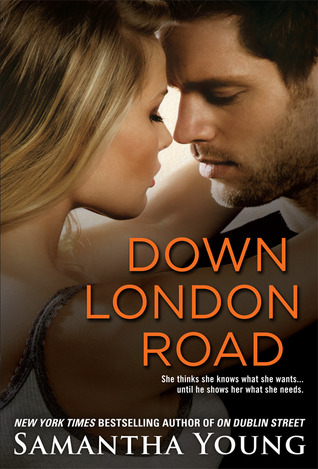
Review: Down London Road by Samantha Young
Title: Down London Road (On Dublin Street, #2)
Author: Samantha Young
Rating: 4 Stars
Young surprised me, nearly a year and a half ago, when she released On Dublin Street. Usually, I struggle with the romantic genre, but despite the cookie-cutter appearance of On Dublin Street, its unexpected depth, warm characters, and complex love story won me over, heart and soul. By the time Down London Street rolled around, however, I bought myself a copy and proceeded to forget about it in the hidden depths of my Kindle. It got lost somewhere in my TBR Collection and though I would glance over its cover online, the synopsis failed to capture my attention and it slipped my mind. Again.
Desperately in the mood for an intense, all-emotions-consuming romance, however, I stumbled upon Down London Road and, re-calling the roller-coaster ride of emotions I went through while reading On Dublin Street, prayed that Young's sequel would be even half as good as its predecessor. From the moment I began reading Down London Road, though, I already knew it would exceed my every expectation. Quite simply put, Jo's narration sucked me in. While I re-called her character - and the worst aspects of her persona - quite vividly from On Dublin Street, I expected only to like her grudgingly, as the novel wore on and revealed her many layers. Yet, from the first few sentences itself, Jo's heart and soul were laid bare with her frank, honest voice which bled through the pages and I found myself a goner, re-evaluating everything I knew about Joss's friend and sympathizing with her every step of the way.
Stuck caring for her alcoholic mother and younger teenage brother, Jo's life has been far from easy. While juggling two jobs, she finds the time to snag rich, older men in the hopes that marriage and wealth will solve the plethora of problems she finds herself facing every morning. Accompanying her current "sugar daddy" at an art exhibition, Jo meets Cameron, a sexy young graphics designer who takes one look at her and immediately judges her. Long past caring what others think of her, Jo shakes off Cameron's rudeness and finds him a job as a bartender, working alongside her. As Cameron gets to know Jo, however, stripping away the layers of her day-to-day facade and acknowledging his prior errors in judging her too quickly, the two form a fast friendship and grow to unexpectedly trust one another as well; somewhere along the way, love slips in.
What I've come to appreciate about Young's romances are the fact that they so effortlessly subvert tropes. While the romance genre is known for its general predictability, Young forces her strong, independent, and intelligent protagonists to confront their own personal problems and face them. During crucial moments of common misunderstandings, Jo deigns to discuss her issues with her boyfriend, not hide them from him and stew in silent agony. While that isn't to say that Jo faces her own set of troubles at every corner, it makes for a painless read as Jo fails to stumble into the tell-tale potholes that countless romantic heroines have found themselves in. Jo even goes so far as to steer clear of the problems Joss faced in On Dublin Street which only made me appreciate Young further. Instead, the dilemmas brought up throughout this narrative are real, harrowing ones. It is impossible to feel emotionally detached from Young's characters and, as a result, my heart ached and my pulse quickened with every new problem brought forth.
Down London Road isn't the easiest of reads to breeze through, but the character relationships - everything from friendship to strong sibling bonds to true love - are strong, vital components that drag this novel forward. Young is a master at complexity, but she has also mastered the art of conveying the heart within her novels into our own hearts as well. Down London Road was just the sort of riveting, engaging read I needed to propel me out of a reading slump. Moreover, it certainly didn't hurt that I met a couple of unforgettable characters along the way.
Monday, April 28, 2014
Just Another...Book Crush (#14): What I Thought Was True by Huntley Fitzpatrick
Just Another...Book Crush! is a monthly feature where I invite an author whose book I've recently reviewed and loved to write a guest post and share their three latest book crushes. It's a feature I'm starting mostly because I'm often very shy to approach authors, especially ones I admire, and also because I love reading guest posts since, more often than not, they convince me to pick up a book even when the reviewer cannot.
Reader, I've been dying to share this post with you since I first read it in February, believe it or not. Huntley Fitzpatrick's sophomore novel, What I Thought Was True, remains my absolute favorite contemporary read of the year and I couldn't resist the urge to invite her on the blog after it nestled its way into my heart. I only hope you all love her novel - and this post! - as much as I do.

There are a lot of heroines out there whom everyone seems to love. Rose in the Eight Cousins book was the first one I encountered. Louisa May Alcott’s heroine had seven boy cousins and they ALL loved her. Bella Swan is another—she moves into Forks and the entire male population of the high school succumbs to her charms.
I just always liked the rougher, tougher, less charming girls. Jo, from Little Women. Laura Ingalls, from the Little House books, with her stubbornness and her anger, her honest jealousy. Scarlett O’Hara, no one’s good girl. Janie Crawford from Their Eyes were watching God, t ough and true enough to do all she could to save her own life. Meg, from A Wrinkle in Time, whose faults turned out to be her salvation. None of them waited around to be saved. When the hero fell for them, it felt earned…real, in a way the perfect boy falling for the perfect girl never can.
So, that’s where Gwen Castle, from WHAT I THOUGHT WAS TRUE, came from. I wanted a heroine who was far from perfect, and a hero who loved exactly that about her, who recognized that about her. I wanted to write someone who made mistakes, hurtful ones, and learned from them. Who loved her imperfect family for its imperfections, the seemingly perfect boy because she saw his flaws and understood that he struggled with them, and tried to do better, and who finally could love herself, faults and all.
Just Another...Book Crush!
Aristotle and Dante Explore the Secrets of the Universe by Benjamin Alire Saenz
I read the summary of this and thought,” Well okay, I’ll read it, even though I know exactly what will happen.” But nothing, NOTHING, about this book happened the way I expected. It is that rare heartfelt, real book where there’s not a single cliché. The characters love one another because they are genuinely there for one another, time after time, difficult circumstance after more trouble. They show up, turn from confused fifteen year olds to seventeen year olds who know what they want (even if it takes the very last chapter for one of them to figure it out) They don’t have distant, absent, lost parents…both are from families who love them for exactly who they are. The lost brother doesn’t get redeemed, but the distant father unexpectedly, the world disapproves but they find their way through…it’s all so perfect, in the imperfect way that is the best of books…and life.
How To Love by Katie Cotugno
Sawyer LeGrande is a mess, and Reena Montero loves him anyway. And this could be the basis for a lot of cheesy love songs and bad books with abusive heroes and passive codependent heroines. But How to Love is nothing like that at all. It’s a brilliantly written story of two people who share an honest love, with so many issues of timing and circumstance getting in between that, how they find their way across the gulf. Told in time past, and time present, this book will make you ache and cry and laugh and rage. Intelligent but lost hero, smart but derailed heroine. The way they find one another. So so good.
Like No Other by Una LaMarche.
“Romeo and Juliet” –like story gets tossed around a lot. And I majored in English Lit and Shakespeare, so I don’t toss this around lightly. But this is the real deal. Bittersweet, original, incredible. About a pair of teenagers from completely, diametrically opposed backgrounds, backgrounds they genuinely believe in, who fall into an improbable but genuine love. This book is ‘bittersweet’ in every good way. I couldn’t stop thinking about it, and about the good hearts and thoughtful minds of the hero and heroine.
I absolutely loved Gwen, precisely because of her flaws. Thanks for sharing, Huntley, and I'm off to add these recs to my TBR at once! (Aristotle and Dante is a favorite of mine, so if you haven't already read it, READ IT!)
P.S. -- You can read my gushing review of What I Thought Was True HERE in case you missed it last month!
Reader, I've been dying to share this post with you since I first read it in February, believe it or not. Huntley Fitzpatrick's sophomore novel, What I Thought Was True, remains my absolute favorite contemporary read of the year and I couldn't resist the urge to invite her on the blog after it nestled its way into my heart. I only hope you all love her novel - and this post! - as much as I do.

Gwen Castle's Biggest Mistake Ever, Cassidy Somers, is slumming it as a yard boy on her Nantucket-esque island this summer. He's a rich kid from across the bridge in Stony Bay, and she hails from a family of fishermen and housecleaners who keep the island's summer people happy. Gwen worries a life of cleaning houses will be her fate too, but just when it looks like she'll never escape her past—or the island—Gwen's dad gives her some shocking advice. Sparks fly and secret histories unspool as Gwen spends a gorgeous, restless summer struggling to resolve what she thought was true—about the place she lives, the people she loves, and even herself—with what really is.As a teenager, I felt like all I did was make mistakes. I fell in love too hard, too easily and way too permanently. I talked (babbled) at the wrong times and was completely lost for words at other crucial times. I could not for the life of me love the guy who gave me his heart but handed over mine without question to the one who couldn’t. And I looked all around in books to find someone like me.
There are a lot of heroines out there whom everyone seems to love. Rose in the Eight Cousins book was the first one I encountered. Louisa May Alcott’s heroine had seven boy cousins and they ALL loved her. Bella Swan is another—she moves into Forks and the entire male population of the high school succumbs to her charms.
I just always liked the rougher, tougher, less charming girls. Jo, from Little Women. Laura Ingalls, from the Little House books, with her stubbornness and her anger, her honest jealousy. Scarlett O’Hara, no one’s good girl. Janie Crawford from Their Eyes were watching God, t ough and true enough to do all she could to save her own life. Meg, from A Wrinkle in Time, whose faults turned out to be her salvation. None of them waited around to be saved. When the hero fell for them, it felt earned…real, in a way the perfect boy falling for the perfect girl never can.
So, that’s where Gwen Castle, from WHAT I THOUGHT WAS TRUE, came from. I wanted a heroine who was far from perfect, and a hero who loved exactly that about her, who recognized that about her. I wanted to write someone who made mistakes, hurtful ones, and learned from them. Who loved her imperfect family for its imperfections, the seemingly perfect boy because she saw his flaws and understood that he struggled with them, and tried to do better, and who finally could love herself, faults and all.
Just Another...Book Crush!
Aristotle and Dante Explore the Secrets of the Universe by Benjamin Alire Saenz
I read the summary of this and thought,” Well okay, I’ll read it, even though I know exactly what will happen.” But nothing, NOTHING, about this book happened the way I expected. It is that rare heartfelt, real book where there’s not a single cliché. The characters love one another because they are genuinely there for one another, time after time, difficult circumstance after more trouble. They show up, turn from confused fifteen year olds to seventeen year olds who know what they want (even if it takes the very last chapter for one of them to figure it out) They don’t have distant, absent, lost parents…both are from families who love them for exactly who they are. The lost brother doesn’t get redeemed, but the distant father unexpectedly, the world disapproves but they find their way through…it’s all so perfect, in the imperfect way that is the best of books…and life.
How To Love by Katie Cotugno
Sawyer LeGrande is a mess, and Reena Montero loves him anyway. And this could be the basis for a lot of cheesy love songs and bad books with abusive heroes and passive codependent heroines. But How to Love is nothing like that at all. It’s a brilliantly written story of two people who share an honest love, with so many issues of timing and circumstance getting in between that, how they find their way across the gulf. Told in time past, and time present, this book will make you ache and cry and laugh and rage. Intelligent but lost hero, smart but derailed heroine. The way they find one another. So so good.
Like No Other by Una LaMarche.
“Romeo and Juliet” –like story gets tossed around a lot. And I majored in English Lit and Shakespeare, so I don’t toss this around lightly. But this is the real deal. Bittersweet, original, incredible. About a pair of teenagers from completely, diametrically opposed backgrounds, backgrounds they genuinely believe in, who fall into an improbable but genuine love. This book is ‘bittersweet’ in every good way. I couldn’t stop thinking about it, and about the good hearts and thoughtful minds of the hero and heroine.
I absolutely loved Gwen, precisely because of her flaws. Thanks for sharing, Huntley, and I'm off to add these recs to my TBR at once! (Aristotle and Dante is a favorite of mine, so if you haven't already read it, READ IT!)
P.S. -- You can read my gushing review of What I Thought Was True HERE in case you missed it last month!
Friday, April 25, 2014
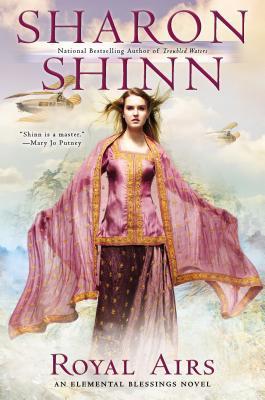
Review: Royal Airs by Sharon Shinn
Title: Royal Airs (Elemental Blessings, #2)
Author: Sharon Shinn
Rating: 3 Stars
Note: This reviews contains NO SPOILERS for Troubled Waters, the first book in this series, though you can read my review for that HERE if you'd like.
Fa la la la la, la disappointment!
Frankly speaking, I didn't expect Royal Airs to be particularly memorable after Troubled Waters. I mean, how could I? It wouldn't have been fair of me to hold this sequel to the same standards I held its predecessor, not after absolutely loving the first novel in this series intensely.
But this?
It isn't that Shinn's Royal Airs is necessarily a bad book, but it just isn't a good one either. It picks up five years after Troubled Waters from the perspective of Josetta, Zoe's half-sister, who runs a shelter for the homeless in the slums of Welce. Once a princess, now merely an idol for the crown, Josetta has discovered her purpose outside of the palace. Corene, Zoe's step-daughter, however, hasn't been as lucky. Especially not with the influence of her scheming mother and former queen, Alys, hanging above her head. In an effort to escape Alys's latest husband, Corene runs to find Josetta in the slums of Welce, only to run into a gambler: Rafe. Not surprisingly, after becoming involved with Princess Corene and then Princess Josetta, Rafe unknowingly ties himself to the royal family. Before long, Rafe and Josetta have struck a tender friendship, the future of the crown is put to the test, and foreign dignitaries are arriving in Welce: again.
From the beginning itself, Rafe is singled out as unique; an individual who possesses no blessings. In Welce, the custom of having blessings chosen for you is regarded as an important ritual, but only ghost blessings are ever chosen for Rafe. Royal Airs is told in alternating perspectives from both Rafe and Josetta, but despite this intrusion into Rafe's mind, I found that his character quickly lost his original charm. When we first meet Rafe, he is an enigma. After all, who doesn't receive blessings? Instead of this seguing into an intriguing study of Rafe's unique personality, this tid-bit is merely used as a leveraging point to emphasize just how special Rafe is - a quality which winds up becoming conveniently important as the novel wears on. Without these interesting tags to pin upon him, though, Rafe is nothing special, as far as love interests go.
Josetta, too, doesn't fare much better. I enjoyed her narration, certainly, not to mention the close bonds she shares with Corene, Zoe, and Darien, but aspects of her voice fell flat. For one, I find it difficult to fully fathom that a Crown Princess could live and run a shelter in the slums with such ease. Even beyond the credibility of her back story, however, Josetta lacks the uncertainty and confusion that characterized Zoe during the beginning of Troubled Waters. With Royal Airs neither Josetta nor Rafe undergo any monumental amount of change or growth, which I found to be disappointing. If anything, their interactions are blessedly tame; complacent and dull. Where Zoe and Darien lit the page with their strong personalities, Josetta and Rafe undergo an extremely normal courtship. Admittedly, I enjoyed their slowly developing friendship, but it lacked the spark - the sizzling chemistry, if you will - that was distinct between Zoe and Darien. Royal Airs is, significantly, more romantic than Troubled Waters was and though I did not mind this in the least, I longed for the feeling of a deeper, simmering love than those of a quick, sweet infatuation. Shinn is, as always, a master at writing love stories - which remains true even in this installment - but I found myself distanced from this romance, unimpressed with the balance of character personalities, and ultimately disappointed that Josetta and Rafe lacked both the individual and coupled strength that Zoe and Darien were known for.
Royal Airs is slow to start, as I mentioned, but once it hits its stride, its quite the entertaining journey. While I found that the plot revolved a little too conveniently around Rafe and the unexpected plot twists he brought to the page, I absolutely loved the role that Corene and Darien played in this novel. More than Josetta, it is Corene who stands out in this sequel. Caught at a difficult time period in her life, feeling unwanted and confused, Corene is a mass of complex emotion - one I wanted to be involved in. I am certainly looking forward to getting to know her in the sequel, quite desperately, only because Corene is the strong, vivacious, and intricate heroine I look for in a novel. Josetta, in comparison, who is quietly fierce, is a character I love but one who makes for a poor protagonist due to the fact that much of her life is already figured out, orderly and neat. Nevertheless, main characters aside, the character who - yet again - stole the limelight (and my heart!) was Darien. In Royal Airs, Darien continues to play a large political role in the conduct and ruling of Welce, but he continues to surpass my wildest expectations. From the outside, Darien isn't an easy person to like, so seeing Rafe slowly gain respect for him over the course of the novel was an interesting relationship to watch unfold. Moreover, Darien's cleverness and loyalty are showcased so clearly in this installment, right alongside his flaws just as they were in Troubled Waters. Needless to say, it was more than just a little bit satisfactory to read about one of my favorite characters in all his complex glory. While I wished we could have had even just one teensy romantic gesture shared with Zoe, I have no complaints whatsoever when it comes to my favorite couple (or their adorably cute daughter)!
Unfortunately, however, Royal Airs remains a sore disappointment. Troubled Waters works perfectly as a stand-alone - and an absolutely brilliant novel - but I certainly wished for a slightly more enticing welcome back to Welce. Shinn's sequel is slow, riddled with characters who lack true conflicts and complex personalities, not to mention they are quick to be saddled with the role of the "Chosen One" archetype. While the overarching plot to this series remains intriguing and there is no doubt in my mind that I will be reading the sequel, perhaps with considerably less enthusiasm. (Unless, of course, Darien Serlast is in it... *sigh*)
Wednesday, April 23, 2014
Review: The Shadowy Horses by Susanna Kearsley
Title: The Shadowy Horses
Author: Susanna Kearsley
Rating: 4 Stars
Note: I found it difficult to write my review of The Shadowy Horses without comparing it to the first novel I read by Kearsley, The Winter Sea. As a result, though both these novels are stand-alones, I discuss minor aspects of The Winter Sea in order to paint a better picture of The Shadowy Horses as a separate entity. Thus, just to confirm, this review contains no spoilers for The Winter Sea, though you can read my review for it HERE if you'd like.
The Shadowy Horses, oddly enough, threw my preconceived notions regarding Kearsley's work right out of the window. After having read The Winter Sea, I expected Kearsley's prose, plot, and characterization to follow a similar pattern, but I found myself pleasantly surprised. While her writing style does, once again, transport readers into a rich, ethereal atmosphere, little else about The Shadowy Horses was similar to The Winter Sea. Yet, despite the fact that Kearsley lacks a formulaic approach, the way most authors with a large back log tend to have, I fell in love with The Shadowy Horses just as much as I did with The Winter Sea, albeit in a slightly different way.
Verity, the protagonist of The Shadowy Horses, is a far cry from the gentle personalities shared by both Carrie and Sophie of The Winter Sea. Instead, I find her to be a much more modern, ambitious woman, driven by her passion for her history and her belief in the impossible. When she arrives in the Scottish Borderlands on an excavation, she knows nearly nothing about her mission. It isn't too long, however, before she realizes that this dig isn't for just a mere artifact or two, but rather for the lost Ninth Roman Legion. And, the only evidence substantiating that the army is, in fact, on this property? Merely the word of a young boy, Robbie, who claims to have seen the ghost of a Roman Sentinel roaming the grounds. Before Verity can dismiss the excavation as a fraud, however, and simply walk away, the ghosts around her force her to question not only her sanity, but everything she has ever believed to be true.
Oddly enough, I found the presence of the plot to be diminished in The Shadowy Horses. Although its premises is intriguing, as is the mystery contained within these pages, The Winter Sea seemed far more focused on a direct plot line than this novel did. Yet, that isn't a detriment in the least. The Shadowy Horses focuses on Verity and, moreover, her interactions with those around her. As Verity becomes part of the lifestyle at this excavation, forming relationships with those at the dig, she finds it harder and harder not to care and simply walk away. In fact, she eventually doesn't want to at all for she finds herself believing Robbie too.
What's more, the enigmatic presence of Davy, another archaeologist on site whose family ties him to the Scottish Borderland, is a little too distracting to turn away from. Despite the fact that The Winter Sea contained not one, but two, romances, The Shadowy Horses is the more romantic of these two novels, perhaps because the romance is not quite so understated or perhaps, simply, because there is space to focus largely on the development of one sole romance. Whatever the reason may be, I enjoyed the love story that played out between Davy and Verity far more than I did either of the romances in The Winter Sea - and I really adored those romances when I read them. Needless to say, there was something tangible about the relationship between Davy and Verity, something about the chemistry sizzling in the air between them, that made me fall head-over-heels for their slow-burn love. Or, perhaps, it is simply the fact that I enjoy Verity far more as a protagonist than I did Carrie or Sophie of The Winter Sea.
With The Winter Sea, Kearsley's driving purpose is to finish the story: finish the story Carrie is writing about Sophie, finish the story she herself is writing about these two heroines to give them an ending worthy of their distinct personalities. With The Shadowy Horses, however, the historical aspects are not so much the main focal point as much as the general atmosphere of the novel is. Verity becomes entrenched into this small town, complete with its belief in Robbie's "second sight" as they like to call it. For a practical, intelligent woman to succumb to local legend, all while falling for a born-and-bred Scot in the process, somehow appealed to my senses just a tiiiny bit more. It helps, too, that she fights off exes with ease, truly harboring no lingering feelings for them to the point where she can work comfortable alongside them to further her career. All the little aspects to Verity's personality molded together into a protagonist I truly did love and hold dear to my heart.
Nevertheless, it seems that with Kearsley one aspect of the story or another seems to be sacrificed along the way. As I mentioned, the historical aspects to The Shadowy Horses weren't as strong as they were in The Winter Sea, a disappointment due to the fact that I became intensely involved in the Jacobite Revolution while reading the former in a way I never became while reading the latter, concerning the Ninth Roman Legion at any rate. Still, both these novels are incredible works of historical fiction - beautifully written, richly crafted, and widely researched. In my eyes, no one book is better than the other, the positives and negatives of both neatly balancing one another. If it isn't already clear, Susanna Kearsley is a must-read for fans of historical fiction. (And, trust me, if you enjoy romance in any capacity you'll want to meet Davy...for sure!)
Monday, April 21, 2014
ARC Review: The Art of Lainey by Paula Stokes
Title: The Art of Lainey
Author: Paula Stokes
Rating: 4 Stars
Release Date: May 20th, 2014
After varsity soccer play Lainey Mitchell gets dumped by her popular boyfriend, Jason, in front of her co-workers no less, Lainey resolves to get him back, no matter the cost. With the help of her best friend Bianca, the two scout the internet for tips - to no avail. The Art of War, however, an ancient Chinese text referred to when fighting battles, seems to perfectly suit their needs. And thus, Lainey launches an all-out war to win back her ex-boyfriend, employing Micah, one of her co-workers, to help her out. As Micah recently broke up with his girlfriend, the tattooed teen agrees to fake-date Lainey in an effort for them both to win back their respective significant others. As their charade heightens, however, Lainey begins to realize that she has always wanted may not necessarily be what she really needs...
The Art of Lainey, from the get-go itself, is a refreshingly feminist novel. Ever since Lainey fell into the popular crowd in high school, she has stopped being tomboy Lainey and started being the girlfriend of Jason, her best friend's older brother. In fact, the two have been dating for so long that Lainey can't even imagine life without him by her side. In short, from the time span between middle school and high school, Lainey has been living as Cinderella; the girl who went from nothing to something. After her unexpected break-up with Jason, however, Lainey is more concerned with facing her day-to-day life than her reputation. Like any teen, Lainey is loathe to embrace change and break-ups are difficult, drawn-out affairs that force individuals to realize that not only do they crave the simplicity of their lives prior to the break-up, but they also are simply unprepared for the possibilities that change brings. Instead of running back to Jason, though, or moping in silence, Lainey forces herself to get up, get out, and get her man.
For a second, I imagine going back as someone other than Jason Chase's girlfriend. My heart starts to race. Who would that girl even be? I don't want to find out.While I'm not a fan of the fake boyfriend/girlfriend trope, I really appreciated the fact that Lainey is portrayed as an aggressive heroine. Not only is she extremely tall and muscular, to the point where she can be considered "buff", but her tumultuous feelings - anger, disappointment, shock, fear - are never suppressed. Instead, Stokes writes Lainey for the confused and complicated young woman she is and, by doing so, has unapologetically created the type of protagonist I scourge the pages of books trying to find. First and foremost, it is practically impossible to stick Lainey into any type of preconceived box. If we weren't given a description of her appearance, her narration would read just like any other popular student. Instead, however, her physical description forces her to stand out from the Mean Girl-esque Barbie dolls that plague our mind when we think of popularity in high school. Additionally, her close friendship with Bianca, a curvy young girl who has been Lainey's friend since childhood, is a far cry from the majority of childhood friendships which seem to fizzle out after high school is hit. Yet, perhaps most importantly, Lainey's aggressive stance regarding her boyfriend's behavior is never chided or looked down upon. In fact, everyone from her friends to her co-workers support her in her endeavor, despite its unconventionality. For me, the fact that Stokes gives her heroine free rein over her life, no matter the results or the morality of the situation or just the unprecedented nature of the event, is a large stepping stone in presenting a sensible, rational, but independent type of modern-day teenager.
Admittedly, Lainey's narration starts off rather shallow. After having been with only one clique for the majority of her teen years, she comes in with a slew of preconceived notions about Micah whose mohawk, tattoos, and jail sentences spell him out as the complete opposite of Jason. Gradually, though, as the story wears on, Lainey begins to change. Stokes times this impeccably, giving Lainey an ample amount of time to see the world around her in a new light, argue her own perspectives, and then come to understand and appreciate the views of others around her. In fact, the evolution of values that Lainey holds dear change so slowly that she herself doesn't even realize the extent to which she has altered as a person until she attempts to ingratiate herself back into her old lifestyle. As Lainey embarks on her "war" to win back Jason, though, she also allows herself to open up to new experiences she hadn't considered before and, as a result, is a far cry from the fearful teenager she starts out as, unwilling to let go of her past.
Micah, too, grows and changes from his friendship with Lainey, their relationship affecting them both in different ways. Once again, the build-up of emotion between these two is subtle and quite minimal, in fact, as they are both rather determined to win back their exes, but their relationship is a strong one precisely because they challenge one another. Instead of forcing Lainey to accept his lifestyle or vice versa, Lainey and Micah introduce each other to different aspects of their respective lives. And perhaps best of all, Micah isn't intimidated by Lainey, willing to dish it right back to her when she is too stubborn or simply acting too shallow to notice obvious facts staring her in the face. Thus, Stokes does away with so much unnecessary drama and angst, instead introducing both Lainey and Micah to an equal footing in their strange - and undefined - relationship.
What else does Stokes perfect? Friendships. I've already mentioned how Bianca and Lainey's continued support of one another from childhood to the teenage years isn't a relationship that is seen too often in Contemporary YA, but it truly only gets better from there. For one, Bianca and Lainey are already considering their future-lives after high school. Bianca, for instance, dreams of attending medical school while Lainey hopes to be scouted and later recruited to play soccer for the university she attends. It is all too common to hear of athletic guys contemplating their college choices or nerdy guys figuring out which Ivy League to attend, but the exploration of the college process for young females is sadly absent from literature (excluding the Dairy Queen Series, but then again, those books break a lot of classic molds). As such, the realistic conversations between these two were a pleasant surprise. Moreover, Bianca and Lainey have each others' backs in a way only true friends do. While Lainey often feels lonely because Bianca is busy and she no longer has a boyfriend to hang out with, I felt that the separation between these two girls was also a realistic issue, as is the strength of their friendship despite not spending every waking moment together.
"Do you want him back?" I lower my voice. "I do. Is that terrible? We've spent the last two and a half years together, Bianca. I don't even know who I would be without him." "You would be my amazing friend, Lainey," Bee says vehemently. "The same person you've been since second grade. Seriously. You don't need Jason to define you."The Art of Lainey combines a lot of classic elements - slow-burn/opposites attract romance, fake boyfriend/girlfriend trope, growth of a "popular" heroine - with a lot of not-so-classic ones such an aggressive heroine who isn't portrayed as bitter, strong sustainable friendships, and a love story whose foundation is based upon equality. And yet, it's the smaller instances that make this novel such a memorable one from the involvement of Lainey's parents in her life - minimal, but still there - to the three-dimensional quality of all the characters in this book, even Jason. Best of all, for me at least, is the fact that not all of Lainey's difficulties are solved in this volume. Granted, the main story line is satisfied, but niggling issues such as her friendship with Jason's sister or even Jason himself are kept unfinished. For me, this isn't so much a negligence of a plot thread but rather a subtle acknowledgement of the fact that relationships mend themselves and change over time. Just as Lainey's whirlwind romance with Jason was once a romantic tale, so is this one right now and perhaps a different one in the future, so these minor loose threads give this novel a sense of timelessness, not finality, which I appreciate. The Lainey we encounter by the end of this book isn't the same as the Lainey in the beginning and nor will she be the same as the Lainey ten, fifteen, or twenty years down the line.
It is for this reason, really - this subtle acknowledgement of time and growth and change - that The Art of Lainey is such an incredible novel. Not only is it realistic to a flaw, but it isn't afraid to portray teenage girls as complicated, emotional beings. While being a "teenage girl" always carries with it an unfortunate negative connotation, as does the statement "hell hath no fury like a woman scorned," Stokes combines both of these age-old adages and destroys them with her debut novel for Lainey is no weak, silly, or angsty teenage girl and neither is she an embittered and vengeful girlfriend. Instead, she is smart, talented, and best of all, determined. And it is Lainey's determination - her drive to achieve her goals, no matter the obstacles that stand in her way - that make this novel remarkable feminist, inspirational, and, truly, timeless.
Labels:
4 Stars,
ARC,
Contemporary,
Romance,
Young Adult
Subscribe to:
Posts (Atom)