Monday, September 16, 2013

ARC Review: The Dream Thieves by Maggie Stiefvater


Title: The Dream Thieves (The Raven Cycle, #2) 

Author: Maggie Stiefvater

Rating: 5 Stars

Release Date: September 17th, 2013

Stiefvater's The Raven Cycle is a little like wizard chess. The Raven Boys is the initial set-up, The Dream Thieves the careful maneuvering of pieces on the board, and now, with everything in its place, with secrets having emerged inside-out and back again; now, the real battle can begin. Stiefvater's latest is a mind meld; surprisingly lucid, utterly unbelievable, and wholly pleasing. If you aren't dreaming about this book afterwards, then you haven't read it right.

What makes The Dream Thieves stand out from its predecessor is its pacing. Where The Raven Boys was languid, an unusually casual pace with an aura of mystery that culminated - unfortunately - in an ending that left readers (i.e. me) wanting, The Dream Thieves is a hot Virginia summer; lazy, slow, creeping, and steadily building up to a stunning conclusion that makes the entire journey worth the wait. Moreover, it introduces a handful of new characters who not only enrich the novel, but who enhance the characters we've already come to know and love. It takes talent to create three-dimensional characters, but it takes genius to forever peel back layer after layer, making the reader feel simultaneously as if they know everything about the characters and nothing at all.

The Dream Thieves has been hailed as Ronan's story - and Ronan's story it is. That's not to say that there aren't glimpses into Adam, Gansey, Blue, and - a new "villain" I love - The Gray Man's perspectives, but it certainly does place most of the focus on Ronan. In The Raven Boys, Ronan is largely a mystery, which makes the scrutiny into his life that this novel provides necessary. I was one of the few readers who dismissed Ronan's "charm" in the previous novel, but his pain and insanity won me over in this installment. Moreover, Stiefvater meticulously answers all unanswered questions regarding Ronan's mysterious abilities, leaving practically no stone unturned. While there are still mysteries remaining - Where has Neeve disappeared off to? What is the extent of Adam's newfound powers? How will Blue's curse manifest? Where is Glendower? - Stiefvater bestows us with many unbidden answers nevertheless. In my opinion, this decision only makes the novel stronger, giving us more than enough information to keep our curiosities sated, all while fanning the flames.

One of my favorite aspects of The Dream Thieves, though, is the fact that Stiefvater enables us to view our favorite characters from the perspectives of others. Even though The Dream Thieves is Ronan's novel, the story never ceases to revolve around Gansey. It's as if his name is whispered across the pages for, despite the focus on Ronan's dreaming abilities, the plot continues to spin around Richard Gansey III. Every plot device, from the large to the minuscule, are all pieces in Gansey's quest for Glendower; every character is present only because of their connection to Gansey; every unrelated action, no matter how strange, somehow comes back to Gansey. Even better, though, is the fact that Gansey continues to morph and change, depending on the eyes who view them. The Gansey that Ronan witnesses is different from the Gansey that Blue sees under that exterior, and I love that despite the continued ordinariness of Gansey among his Raven Boys, he never ceases to change. It is Adam, however, who takes the cake when it comes to morphing. Out of all these characters, my heart breaks the most for Adam, whose darkness bleeds through these pages. The Dream Thieves stretches the boundaries between good and evil, especially so with The Gray Man who is both hero and villain, but a constant remains that these characters are ones we cannot fall out of love with. I love Adam, I love Ronan, I love Gansey, I love Noah, I love Blue...I love them all and no matter what nightmares emerge from the recesses of their mind, I will always continue to feel for them.

The Dream Thieves is brilliant precisely because it is a blend of perfect qualities. It contains Stiefvater's signature writing style; beautiful, gorgeous prose that sticks in your mind and refuses to fade away. It has a breath-taking cast, full of characters who make you question your own reality for, surely, they cannot be fictional. Its plot, though slow, is beautifully so, introducing new beings seamlessly into the tale. And yet, best of all, it clinches these characters ever closer to your heart. No matter how magnificently a novel is written and plotted, it is nothing without those raw, brutal emotions that rip through your body as your eyes frantically cross the page; and on that count, Stiefvater more than delivers, going above and beyond all hyped-up expectations. I am left wondering only one more thing: can Stiefvater possibly get any better than this?

Saturday, September 14, 2013

Just Another...Book Crush (#8): This Song Will Save Your Life by Leila Sales

Just Another...Book Crush! is a monthly feature where I invite an author whose book I've recently reviewed and loved to write a guest post and share their three latest book crushes. It's a feature I'm starting mostly because I'm often very shy to approach authors, especially ones I admire, and also because I love reading guest posts since, more often than not, they convince me to pick up a book even when the reviewer cannot. 

Today I am welcoming Leila Sales, the author of This Song Will Save Your Life. I fell head-over-heels for this story back in July when I read an ARC of it and pre-ordered a finished copy for myself the moment I finished it. It simply spoke to me on a much deeper level and was written so poignantly. Although Leila wasn't able to write a guest post for today's feature, she is sharing her Top Three Book Crushes, so we're still in for a treat! :)

Making friends has never been Elise Dembowski’s strong suit. All throughout her life, she’s been the butt of every joke and the outsider in every conversation. When a final attempt at popularity fails, Elise nearly gives up. Then she stumbles upon a warehouse party where she meets Vicky, a girl in a band who accepts her; Char, a cute, yet mysterious disc jockey; Pippa, a carefree spirit from England; and most importantly, a love for DJing.


Just Another...Book Crush!

The sorts of books that I love most are the ones where I have no idea how the author did what he or she did. When I come to plot reveals and am totally shocked, when I meet characters and can’t imagine what it would be like to view the world as they do—that’s what makes me fall for a novel. Here are three books I’ve read recently that I have made me feel that way:

The Edge of Falling, by Rebecca Serle. One of the things I love most about Rebecca’s novels is how detailed they are. People sometimes talk about “world-building” as though it’s only pertinent to fantasy or sci-fi novels. Not so. It’s those details that the author puts in—about inside jokes the protagonist and her friend have had since childhood, about what her mother’s shoes always sound like on carpeting, about Thanksgiving traditions—that make it seem like this world is real, and has always existed, and will continue to exist long after we, the readers, have turned the last page. There are few authors who manage to convince me of their worlds’ real existence as well as Rebecca Serle does.

Blackout and All Clear, by Connie Willis. Is it cheating to choose two books? They are really two halves of a whole, so I think it’s fair game to count them as one—right? Anyway, I love Connie Willis. She is my favorite living novelist. I never know where she is going with her plotlines. I read her books and sort of understand what is going on, have no idea what anything signifies, and am completely hooked the whole time. Some authors are very talented and dedicated, but Connie Willis is a genius. She seemed to disappear for close to a decade after publishing Passage, and I kept being like, “What on earth is Connie Willis up to these days? Why doesn’t she just write another book, huh?” Then I read Blackout, and I was like, “Oh.” It is the sort of novel you could spend a decade of your life writing and that would be one hundred percent justified.

Code Name Verity, by Elizabeth Wein. This is another one where I had no clue how the author did what she was doing, and I loved every minute of it. Like Blackout and All Clear, Code Name Verity is set in England during World War II, so maybe there’s something about that setting that I particularly like? I don’t know, mostly what I loved about this novel was not its history, but the complexity of its plot, the way it all fit together, the way it bucked so many assumptions and tropes of the YA world—and the friendship between the two main characters, of course. One thing that comes across in all of the stories I write is how much I value female friendships. They have been some of the most defining relationships of my life, as I think they are for many, many women, so I love seeing them explored in literature. I cried at the girls’ friendship in Code Name Verity. I won’t tell you at what point in the book because I don’t want to spoil it for you, but if you’ve read it, you’ll know.

--Leila Sales is the author of MOSTLY GOOD GIRLS, PAST PERFECT, and the forthcoming THIS SONG WILL SAVE YOUR LIFE (September 17, 2013). For more information visit her at leilasales.com or follow her on Twitter @LeilaSalesBooks.

I don't know about you, but I absolutely LOVED Code Name Verity, so I am definitely out to check out the other books Leila has recommended. Plus, if they're anything like her own novels in terms of character depth, I can't wait! Thank you so much for stopping by, Leila!

Thursday, September 12, 2013

ARC Review: Untold by Sarah Rees Brennan


Title: Untold (Lynburn Legacy, #2)

Author: Sarah Rees Brennan

Rating: 3 Stars

Release Date: September 24th, 2013

In retrospect, Untold is an extraordinarily boring novel. Unspoken was a novel I loved inexplicably; just because it was whimsical and amusing and magical and I could. With Untold, however, my feelings are far more mixed. On one hand, this novel delivered exactly what I wanted it to, but on another, I found myself left with an intangible wanting.

What Brennan has always excelled at - ever since the release of her debut - is capturing the personality behind the shells her characters wear. Kami, especially, truly blooms in this installment. Without her link to Jared, she is suddenly forced to face her deepest fears and secret hopes - alone. Moreover, her once-perfect family suddenly cracks under the pressure of magic as truths come spilling out. For me, the highlight of this novel lies in seeing Kami come to believe in herself, all while retaining her characteristic flair. I also really loved her interactions with her parents. Kami, as a half-Japanese character, is treated as such and the background on her parents, not to mention the close ties between her siblings, is written so deftly, weaving this family both together and apart.

Untold would be nothing, though, without its secondary characters. Brennan truly delves into the mindset of Kami's friends, making their lives and troubles just as real for us as Kami's. Yet, where this concept falters is in its execution. While I've come away from Untold truly understanding the layers behind characters such as Angela, Holly, or Ash, beyond adding more depth to the story, their perspectives did little. Ultimately, the relationships between these secondary characters has progressed very little. I surmise that - hopefully - we'll see them play a much greater role in Unbroken and all the backstory Brennan has written will finally come into play, but with this installment, it's rather useless.

I find that the issue with Untold lies there. Its plot is so very loose and flimsy. It's meant to be centered around Kami learning to fight back against the sorcerers, but it's composed of conversation, drama, and tension. It's certainly enjoyable, but it lacks a certain tightness to its motivations that its predecessor possessed. Moreover, I desperately longed for more; more about the magic of the Lynburns, more about Rob than just a facade of black-and-white evil, more of the classic atmosphere that Sorry-in-the-Vale possessed in Unspoken. Just...more.

(Just Jared!) You didn't think I'd end this review without mentioning Jared or Rusty, did you? ;) Rusty, as always, is a delight with his laugh-out-loud dialogue and hidden depths - which still remain hidden. Jared, however, becomes ever more real as the novel progresses. I love the few glimpses we're given into his mind - heart-breaking, but necessary - and am really impressed by the moral ambiguity associated with this character. His affection for Kami is no secret, but neither is his desire for the link, which puts him in an ironic situation. Furthermore, Brennan brings up another level of interest as she forces us to question whether Jared would be Jared without Kami in his head. It's interesting, merely because Jared is so very fixated upon Kami and does contain his own dark patches. He really does steal the show whenever he turns up on the page, though, and I really love that both he and Kami retain their own auras, despite their tight bond.

Ultimately, I can't say that Untold shows much plot progression, but it's entertaining nevertheless. I both love and hate that there's such a strong focus on character development in this novel, only because much of it failed to have much direction, but Brennan manages to keep us riveted with her every word and it's physically painful to leave behind these characters as we leave our hearts behind too. Untold isn't one of Brennan's best works, but it'll keep you coming back for more. (What? You thought Brennan wouldn't write another cliffhanger? You naive reader...you're in for a shock with these last few pages. And we thought Unspoken was bad... *shakes head*)

Wednesday, September 11, 2013

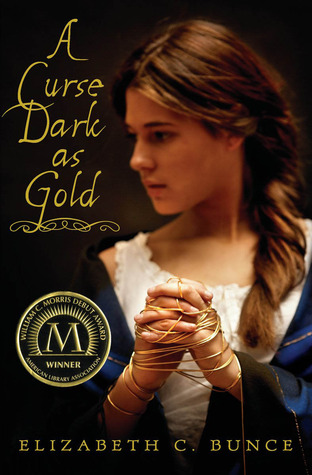
Review: A Curse Dark As Gold by Elizabeth C. Bunce


Title: A Curse Dark as Gold

Author: Elizabeth C. Bunce

Rating: 5 Stars

If you, like me, are hard-pressed to find truly chilling gothic fiction, then A Curse Dark as Gold is not one to pass up. As a re-telling of “Rumplestiltskin,” this novel is haunting, poetic, and – most importantly – whole. Out of all the fairy tales in the world, “Rumplestiltskin” is easily my least favorite. After all, who really wants to read the story of a nameless heroine who later betrays the only character who helps her and winds up marrying the man who threatened to ruin her? It simply doesn’t make for good literature and, moreover, there is something grotesque about the dark underbelly of human nature that it manages to expose. With A Curse Dark as Gold, however, Bunce has taken this flawed – and largely unlikable – tale and crafted it into a believable story, one full of human flaws, but also realistic virtues.

A Curse Dark as Gold is, as many readers will undoubtedly rush to admit, slow. And yet, it is never cumbersome. Bunce’s writing is beautiful and as she builds for us the mythical village of Shearing, she also slowly writes the creeping tale of ill luck and curses that have followed the Miller family for ages. Charlotte and Rosie, the two sisters of Stirwaters, are orphaned when this novel begins, but quickly take up the difficult mantle of running their late father’s business. As can be expected, a slew of new changes is in store for them, from their little-seen Uncle Wheeler making an appearance to the discovery of thousands of pounds of debt their father hasn’t paid and – my favorite – the introduction of Randall Woodstone, a banker. As Bunce throws multiple hurdles at these two sisters, she also peels back the layers of rumors and superstitions that surround Stirwaters and the Miller family.

One of the only reasons this novel excels is because of Charlotte. Not only is Charlotte a headstrong, self-sufficient, and reliable heroine – one who doesn’t shirk responsibility and embraces hard work – but she’s also extremely pragmatic. Charlotte refuses to believe in the Curse of Stirwaters, meeting challenge after challenge with a clear mind. And yet, as this novel progresses, as misfortune presses down upon her, Charlotte slowly begins to fall back upon the hidden mysteries of her home that she has refused to acknowledge. Where Bunce truly shines in her portrayal of Charlotte is in displaying the dual nature of her personality. Every trait of Charlotte’s that is one to be applauded – her stubborn nature, her commitment to the mill, her loyalty to her family – are all slowly spun in such a way to become her downfall and revealed to truly be flaws. A Curse Dark as Gold is, as I mentioned earlier, a very slow, creeping read, one that builds its gothic atmosphere as the curse becomes more and more actualized in our minds. As Bunce writes this atmosphere, though, she perfectly captures its effects upon her protagonist, rendering her a far more three-dimensional character than the nameless heroine she was originally based off of.

Bunce continues to strengthen the original tale of “Rumplestiltskin” through her interpretation of the dwarf himself. Jack Spinner, a mysterious man who appears whenever Charlotte and Stirwaters are nearing their ends, is one of the best villains I’ve come across. I am relieved to announce that Bunce does, in fact, tie-up all loose ends concerning Spinner’s character by the end of the novel, and she does so brilliantly, instilling a level of history, sorrow, and depth to a villain we formerly may have thought to be forgettable. And yet, what makes Spinner such a brilliant character is his ability to bring out the worst in the best people. I love that Bunce took an innocuous device from “Rumplestiltskin” – the dwarf’s ability to prey upon helpless individuals, gradually increasing his payments and forcing their own hand at evil to stop him – and brought it to life, even more encompassing than before, to drive home the extent of gray matter that exists within everyone’s hearts.

Nevertheless, A Curse Dark as Gold would fall seriously short of its mark of brilliance without its cast of secondary characters. First and foremost, the village of Shearing is a force to be reckoned with. Bunce makes this fictional environment come to life, with her accurate descriptions of the Industrial Age – how I love a well-written historical fiction novel – in England and her lyrical prose. More than that, though, her vision of Stirwaters – a mill that provides for the livelihood of an entire village – is given breath and air as these workers become just as dear to us as they are to Charlotte. Stirwaters, not to be outdone by Shearing, comes with its own ghostly atmosphere, from hexes that refuse to be erased to equipment that won’t work without the presence of a charm to ward off evil nearby. Its owners, Charlotte and Rosie, are family that worm their way into your heart. Rosie, though lacking the extent of responsibility that Charlotte faces, is no less admirable, courageous, and intelligent. I particularly loved watching the relationship arc between these siblings, from their arguments to small gestures of love.

I would do this book an injustice, however, without mentioned my absolutely favorite character, Randall Woodstone. Randall arrives in Shearing to collect the many pounds that Charlotte’s father borrowed on loan from the bank. Although he is easily dismissible at first glance, Randall soon continues to makes re-appearances in Charlotte’s life and their romance, though brief, is fitting for this time period. What I truly loved about his character, though, is that he embodies the qualities that I seek in a worthy romantic interest – loyal, intelligent, and respectful. Randall allows Charlotte free rein of her business, never interfering and only seeking to support her. Although my heart broke at the multiple hurdles they faced – not always together – I loved the progression of their relationship, from their realistic stumbles to their messy patch-ups. Bunce never allows us to view this couple through rose-tinted glasses, showing us the stark reality of their relationship and the strain of both the curse and hidden secrets, but our patience and love for these two pays off by the end.

A Curse Dark as Gold, if it isn’t already obvious, is simply not one to miss. Although this novel firmly remains a re-telling of “Rumplestiltskin” – and a brilliant one, at that – it goes on to encompass so much more than merely that, from its history to its characters. It reminded me, very much, of Jennifer Donnelly’s A Northern Light. If you’re a fan of strong heroines, one who can’t necessarily fight to the death but ones who can stand up for what they believe in and fight – in any way they know how – for their families, then this book is for you. If you’re a fan of fairy tale re-tellings, especially re-imagined ones that only serve to better the original tale, then this book is for you. And, most importantly, if you’re a fan of courage, especially found in dark times, then this book is most definitely for you. Just take my word for it – Stirwaters is worth the visit; very much so.

Monday, September 9, 2013

Fantasy Reviews: Robin McKinley Edition


Title: Deerskin

Author: Robin McKinley

Rating: 3 Stars

I genuinely feel at a loss for words when it comes to Robin McKinley, not because her work inspires speechlessness, but rather because it doesn't. After finishing The Blue Sword last year, I realized that much of McKinley's charm was lost on me. I found one of her best pieces of work to be dull and in need of desperate polishing. Thus, I didn't really intend to read Deerskin but the premises sounded too intriguing to pass up.

A beautiful princess, largely ignored for much of her life, comes to the attention of her father, the King, after her mother passes away. The Queen, known to be the most beautiful woman in all the Seven Kingdoms, makes her husband promise not to marry a woman who is of lesser beauty than she, which shockingly causes the King to announce his intentions to marry his daughter, just two years later. After beating and raping her violently, leaving her for the dead, the King leaves Lissra to her fate.

But she survives. And as a survival tale of courage, this book excels. Lissra is poignantly written and her brutal rape is delicately handled. Furthermore, despite its darkness, I enjoyed this tale. It is beautifully written in a gripping, fairy tale style, and the relationship between Lissra and her faithful companion, the dog Ash, is beautifully depicted. Even the eventual romance with the plump, but kind, Prince Ossin is sweet. I was willing to forgive the slow passages in-between in favor of a 4 Star rating as well - that's how well this book was shaping up - but it seems I am doomed to give McKinley's novels no more than a mere 3 Stars.

Unfortunately, where this book lost me was in Lissra's ultimate healing. While her mind buried the events of her past and she gradually came to know the truth, I was disappointed by the heavy guidance of a magic that dictated her actions. Lissra finds help in the form of the Moonwoman who heals both her mind and body, but throughout the story - and especially during those last scenes - the Moonwoman helps Lissra to confront her father. For me, this lacked the strength of Lissra's own courage and will to stand up to her oppressor.

Additionally, the romance that gives Lissra a new life was paced slightly abruptly. I found that the line between trust and love, friendship and romance, was drawn too faintly and that jump made far too quickly. I cannot deny, however, that Deerskin is a beautiful novel. For once, I have no real qualms with McKinley's writing and have come to admire the deft manner she dealt with the more complex issues in this story. And yet, no matter how much I wish to embrace McKinley as a fellow fantasy lover, I seem unable to fall in love with her books. Maybe Beauty or Rose Daughter will change my mind yet.

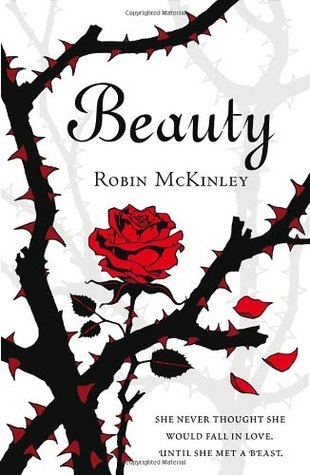
Title: Beauty

Author: Robin McKinley

Rating: 3 Stars

I'm hesitant to call Beauty a re-telling of "Beauty and the Beast" as it's not so much a re-telling as it is a telling. McKinley's rendition of this classic fairy tale not only fails to veer off from it's typical path, but it also - sadly - fails to capture much of the magic of the original tale as well. I half expected my Kindle to burst into song or for "A Tale as Old as Time" to suddenly play out of thin air, but I fear I enjoyed even Disney's telling of this tale more than McKinley's.

From the surface, there is nothing egregiously different about this story from the classic "Beauty and the Beast" tale. All the usual elements are present - Beauty willingly goes to live in the Beast's castle, the Beast slowly wins her heart, and the spell of bestiality is broken. With such a simple formula, it seems impossible to really fail; and McKinley hasn't. I cannot deny that her writing is lush and gorgeous, the magical enchantment strangely enticing, the interactions between Beauty and her Beast unerringly lovely. And yet, I feel as if the fault of this novel lies in its perfection.

Most notably, to me at least, is the utter humanity that seeps through the Beast. After a two hundred year imprisonment, this is - oddly enough - not a man to lose his temper or give in to any of his bestial traits. In fact, he is always the perfect gentleman, which essentially makes him a bore. Either than a small temper tantrum that is mentioned - not even witnessed - Beauty is given no reason to dislike the Beast. Not only is he kind and caring, but he provides Beauty with every comfort, including companionship. Of course Beauty falls in love with him - what's not to love? With this fairy tale, appearance is the only obstacle to cross, which takes away from the depth of this classic story. Beauty never has to tame the Beast, as she so bravely announces in the first part of this novel, so their love story is disgustingly sweet and a complete bore as well.

Beauty herself is also another paragon of perfection. When confronted with sending her father to his death or willingly venturing into the Beast's lair - one where, rumor has it, he eats humans - she quickly volunteers to go and swiftly begins to enjoy her time spent in the enchanted castle. Although she is described as being studious, she is disappointingly dull and never curious at all, which works well for the story, but not so much for her characterization. Furthermore, while Beauty is forced to defend her Beast against her family's opinions, they all come together in the last few pages for a typical happily-ever-after without the surprise or wonder of seeing Beauty's Beast transformed into a man.

Unfortunately, the more Robin McKinley I read, the more I am convinced that the rest of the world is seeing something I am not. I think McKinley is an extremely talented storyteller, but as an author, she manages to nearly always fall short of my expectations when it comes to characterization and development. Is Rose Daughter a sad repeat of Beauty? I suppose I'll find out, soon enough.

Reviewer's Note: I did, in fact, read Rose Daughter, but I failed to review it as my qualms with it and with Beauty were nearly identical. Ultimately, it seems McKinley is not an author for me. :/