As many of you may have guessed from the inactivity over the past few months, I have decided to stop blogging.
First and foremost: I am sorry. I cannot say enough how immensely happy this blog has made me. In the five years since I began blogging, I've grown so much as a person and have learned so much from each and every one of you. All of the comments, views, real-life meet-ups, and online discussions have meant the world to me. I found a community that I couldn't find in high school and one very different from the one I discovered in college and for that, I will always be grateful. This blog and the people I have met through it have shaped me in indescribable ways.
But, I always blogged just for fun; for me. And, this past year, blogging has gotten really tough. One of the best aspects of blogging, for me, has been the community of bloggers I've gotten to know, alongside the authors and readers and simply being so on top of the latest YA news. Recently, though, I've noticed a shift to BookTube, away from simple reviews and other blog content, and I've felt out-of-the-loop. Whether that's because I've been devoting more time to my life and college instead of this online community, or whether it's because it simply takes more effort, now, to get to know BookTubers alongside bloggers and maybe even make an entrance into that world in order to feel the same way I felt about the online book community before...I don't know. But despite creating this blog and its content just for myself, I have to admit that I have my reservations about the shift in this online community to BookTube and it has made blogging become a chore for me.
And I don't want this to be a chore.
I used to love blogging. I used to devour books with the intent of writing reviews and inciting conversations with others. Now, I tend to see a lot of promoted content on BookTube and the book blogging community has dwindled, for sure. I feel like I'm simply posting content but not interacting with that content the way I want to be, and I'm not sure how to change that, short of trying to integrate this blog into BookTube, and I don't want to do that. I don't have the resources to do that. I don't have the time or money to get video equipment and learn to use it and film myself and hold up my e-ARCs because I don't have physical copies of books to flash on the internet...that's not for me.
I also have to admit that this niche I created for myself--YA Blogging--is no longer applicable for me. I've been disappointed by YA over the years. I think though the quantity has increased, the quality has not. There are a few quality YA releases every year, don't get me wrong, but I don't love the majority of the books that readers are swooning over. And that makes me feel distant from the community, too. It isn't just a shift to BookTube, it's a shift in who I am, as well! I want to read more Adult Fiction, Nonfiction, Biographies...everything! And that's OK. And I can still blog about that, I know I can, but like I said, for me this blog isn't simply about posting and getting views, it's about the interactions; the community. And I love the community I've created in this space, but I don't think continuing this blog is the best way to interact with that community, anymore.
So, starting 2018, I will not be posting on this space anymore. I aim to be more active on Goodreads, commenting on reviews and hopefully re-kindling discussions on that platform. I will still be reading all of your blogs, faithfully, even if I don't comment and I just want to say that I am so, so sorry if I'm letting anyone down. I really have felt a lot happier and less stressed by taking time away from this blog, though, and I think at this stage in my life, when change is the only constant, I need to focus on that instead of this. I hate doing things half-heartedly and if I'm continuing with this blog, I want to give it my 100%. And I can't do that right now.
To my fellow bloggers, readers who followed me from Goodreads, and online friends: I can never thank you enough. Thank you for your endless support, your book mail that cheered me up when nothing else could, the e-mails theorizing about every detail of our favorite series, and most importantly, for sharing your lives and a part of your hearts with me every time you recommended a book you LOVED. Thank you for pushing me out of my comfort zone in the books you gifted me, and for making me the person I am today. I love you.
To all the authors who have reached out to me over the past five years, gracing me with your presence through an e-mail or a package, or even the authors who I've been lucky enough to interview and get to know: thank you for writing. Thank you for being open-minded and accepting of my reviews, when they gave your book 5 Stars but especially when they didn't. I've curated some wonderful author friendships through this platform and thank you for allowing me to pursue my passion and celebrate books, daily, with you.
To all the publishers who have taken a leap of faith and sent me an ARC or finished copy of a book: thank you! I still remember the high of getting my first physical ARC and the thrill of book mail will never get old. Thank you for sticking with me these past five years, switching addresses from my home address to my college address and back, for the e-mails and support and for showing me that professional relationships can be wonderful, too.
Though this is goodbye for Ivy Book Bindings, I still plan to be an active member of the online book community and I hope to keep in touch with everyone, either through their blogs or through social media or, best of all, through Goodreads. I cannot thank each and every one of you personally, but you know who you are and all that you have meant to me.
From the bottom of my heart, thank you so, so much for these past five and a half years. You have given me some of the happiest moments of my life and I can never thank you enough for that.

Friday, December 29, 2017

Tuesday, August 1, 2017
Monthly Rewind: July
July has been a loooong month but I can't believe it's already over! I only have two more weeks of my internship, one more week at home, two weeks of Orientation at Wellesley and then, bam, my second-to-last semester of college is about to begin!! HOW did I get here? *shakes head*
Three Things About My Life This Month
1. I spent 4th of July in the ER. Before everyone begins to panic, let me first say that I am 100% OK. I am staying in a college dorm this summer and the facilities are unfortunately pretty crappy, to the point where my bed was lofted a good six feet off the ground and while trying to get down, I fell, hit my head, lost consciousness, and needed to get a CAT Scan plus some stitches. The good thing, though, is that I got to go home and spend a few days with my family--and my grandmother who is visiting from India!!--so it was rather lovely.
 2. I have had such an incredible month exploring D.C.! Of course, it's been wonderful to catch up with friends--many of whom I haven't seen in more than a year!--but I've mostly enjoyed attending outdoor movies, film festivals, comedy shows, and visiting the different neighborhoods in D.C., of which Columbia Heights is a definite favorite. :) My internship is also going well--most of July has been slow but it's been picking up a lot in the past two weeks and I'm currently working on a project that I'm genuinely excited about.
3. I'm still in a reading slump...sort of. I ordered Quarterly's YA Book Box this past month since (a) I've been wanting to try out a book box and (b) I really wanted to pick up Aditi Khorana's The Library of Fates and she curated the box. Unfortunately, I really didn't enjoy her sophomore novel very much at all. I am hopeful that the other two books she picked will be more successful for me, but I've been struggling to get through a lot of novels that I feel should have worked for me.
Best Books I Read This Month

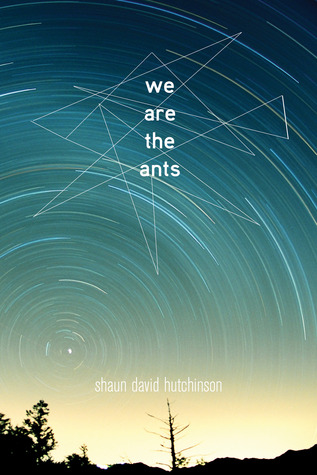
I have to be honest: I loved We Are the Ants and What to Say Next isn't quite on the same level. I loooved Buxbaum's debut and while this sophomore novel is so very good, it isn't a favorite. But, of the books I failed to finish this month, I did make my way through its entirety and found a lot to recommend. We Are the Ants is just incredible and I loved it, to pieces. I'm sure most readers have already picked it up or heard about it, but it deserves to be bumped up your TBR.
Most Popular Post
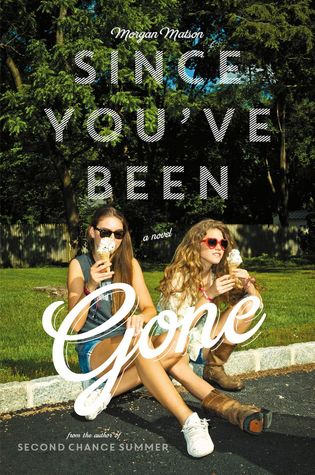
I went on a Morgan Matson binge awhile back and though this isn't a favorite of mine, it's still such a perfect summer tale and I love the emphasis on female friendships in this one. Definitely check out Matson if you're in need of a perfect summer romance.
Post I Wish Got a Little More Love
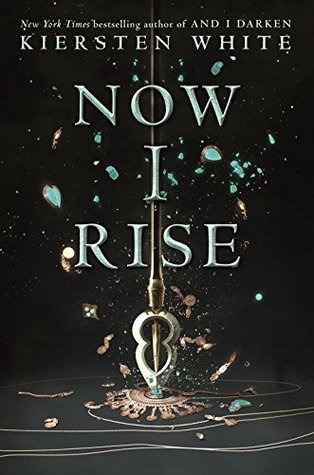
I loved the first book in this series, And I Darken, and while I didn't fall head-over-heels for this sequel like I wanted to, it's still so very good. I love this historical fantasy series with a totally kick-ass heroine at its helm, so if you haven't picked up this series yet, do yourself a favor and start now!
Obsession of the Month

The Kenilworth Gardens! I visited this beautiful nature preserve with my mother and grandmother when they visited me in D.C. for a day and we were all blown away by the beauty of these lilies. A definite hidden gem of D.C., I highly recommend a visit to these gardens if you haven't been. They're fairly out of the way but you can always stop by Columbia Heights on your way back Downtown (and Columbia Heights has some of the best, most diverse cuisine in D.C. so it's a win-win really).
Top 3 Things I'm Looking Forward to Next Month

1. The friend I consider to be my big sister is coming to visit me in D.C.! She was a senior when I was a first year and we haven't seen each other in two years so I am so, so excited to finally be reunited after such a long time!!!
2. HOME! I am going to be home for exactly six days but I am really excited to meet up with a friend or two, spend some more time with my grandmother, and just devour all the delicious homemade Indian food that I can. I'm a little stressed that I only have six days to pack all my clothes for both Fall and Spring semester, not to mention hunt down all the college-related goodies that I haven't used in the past year since I've been abroad, but I am looking forward to being back.
3. Returning to Wellesley...at last!!! I am so, so excited to go back to Wellesley. I am a Student Leader again this year, not to mention a Student Leader Coordinator, so I'll be really busy the moment I get back to campus but I'm so ready to be back. I missed Wellesley a lot last year, not to mention my friends, so I'm really looking forward to an incredible Orientation season to kick-start my final year.
Wednesday, July 26, 2017
Review: Now I Rise by Kiersten White
Title: Now I Rise (The Conquerors Saga, #2)
Author: Kiersten White
Rating: 3.5 Stars
Note: Mild spoilers for And I Darken, Book 1 of the Conqueror's Saga, below. If you haven't read And I Darken you can read my review HERE.
No one wanted to love Now I Rise more than I did. However, White's middle novel in this series is definitely a weak link, IMO. It picks up not long after where we left off--Lada trying to win the throne of Wallachia and Radu faithfully serving Mehmed--and though I immersed myself in this story completely at first, after a quarter or so I began to slow down. I struggled, or at any rate pushed myself, to continue to at least the half-way point of the story.
For me, Radu's perspective is where the story constantly lagged for me. Although And I Darken was split between the two siblings, it felt like Lada's tale through-and-through. It's important, then, in this sequel that Radu has his own story separate of Lada. But, Radu's perspective was bogged down by a lot of repetitive thinking; his thoughts cycled through an endless stream of insecurities regarding his friendship with Mehmed, how the outside world perceived their relationship, and his own jealousies. It was tiresome. I think a large part of this is because Mehmed is a character I don't like or respect all that much, so it becomes difficult for me, as the reader, to understand or sympathize with Radu's struggles.
I will say, though, that Radu undergoes a lot of interesting change in this book and the impacts of that aren't felt, or won't be felt, until the finale releases. And I am so on board and excited for that! But, in this book, Radu left a lot to be desired and I couldn't always understand his motivations or sympathize with his plight. My frustrations with Mehmed, though, extend to Lada's half of the story, too. But, with Lada, things are always so simple. I always understand why she chooses a particular path and I fully support her decisions, rash though they seem.
Lada's story in Now I Rise is remarkable, badass, and awe-inspiring. I love that this book forces her to look at women in a different light, in a lot of chapters, and I especially love that she uses her skills and power to empower other women. I love that Lada notices and cares for the women because no one else does. I am so excited to see where the sequel takes Lada and so proud of how far she's come. I especially enjoyed that, for perhaps the first time, we see Lada miss Radu. We see her acknowledge the skills he has and how she is less without him. We all too often see that with Radu but not enough with Lada and I loved that though these siblings have such complicated feelings for one another and are separated by so many miles, they are still in each other's thoughts.
Unfortunately, something about Now I Rise just didn't "click" for me but I'm absolutely on board for the sequel and cannot recommend this series enough. It's not a favorite for me, but it's still incredibly unique, creative, and badass. If you haven't already picked up this series, don't wait! You'll want to be all caught up for when the final novel releases, trust me.
Tuesday, July 18, 2017
Review: Since You've Been Gone by Morgan Matson
Title: Since You've Been Gone
Author: Morgan Matson
Rating: 4 Stars
The weakest part of Since You've Been Gone is its beginning. From the start, this novel feels all too much like an ode to a Manic Pixie Dream Girl, Sloane. Our protagonist, Emily, is shy--she lives in the shadow of her best friend, Sloane, rather happily, content to follow in her footsteps and stretch her limits, but only just barely. When Sloane up and disappears in the beginning of the summer, Emily is lonely and lost--why did Sloane leave? So when Emily receives a list from Sloane, she's determined to finish it--to cross off every item on the list, no matter how scary--because maybe, just maybe, it will bring her closer to Sloane.
I really enjoyed this novel. Not as much as Matson's latest, The Unexpected Everything, but pretty darn close. Emily is the type of protagonist I can get behind--reserved, confused, but determined to push forward. I mention that the beginning of this novel is the most difficult to get through but that's because Emily is still a shell of a person. Not only is she fixed upon an idea of herself that is inexplicably linked to Sloane, but she remembers Sloane as a Wild Thing, full of life and light. I'm so tired of that romanticized Manic Pixie Dream Girl who seems to float through life effortlessly but is secretly hiding a deep pain. But, the story quickly changes direction, becoming more about Emily and less about Sloane.
It's easy for me to read this book with a heavy dose of disdain, only because I am no longer the shy, reserved teen I used to be. Perhaps if I had read this when it released two summers ago I would have been shocked and inspired by Emily's dares to go skinny-dipping or wear a backless dress. After two years in college, I am quite the different person and I found myself both sad that Emily--and Past Me, really--was so reserved and proud of the growth that Emily undergoes throughout this novel. She finally finds herself--who SHE is--without Sloane or anyone else to define herself by. It's so hard and so important to tear yourself away from the friends who "know" you and really know yourself on your own and I appreciate that Matson puts so much emphasis on that.
The friends Emily makes are unlikely, from class president Frank to his desperate-for-a-girlfriend cousin and Dawn, the girl who works at the pizza place around the corner from Emily's ice cream store job. Each of them shape her and motivate her in different ways and I always like how Matson's novels feature lots of time for growth and simple interaction. Emily's family is eccentric and her younger brother is daring and though she doesn't have any issues with them, I enjoyed how they were incorporated into the story in a meaningful way.
And, of course, the romance. Morgan Matson writes the perfect slow-burn romances and this one was no different. Frank and Emily start off as friends and they don't even realize when they begin to blur the line between best friends and something more. It's a little messy because Frank has a girlfriend, but fear not, the drama is minimal. What I enjoyed most about their friendship is that it's not just Emily who is re-defining herself this summer; it's Frank, too. We don't have as much of a insight into his psyche as we do Emily's but I really enjoyed how Emily went from thinking of Frank solely as class president or by his accolades and instead began to see him as a person.
My one qualm with this novel remains Sloane. We see her through Emily's eyes for almost all of this novel and she is painted as the classic Manic Pixie Dream Girl (as I've mentioned). By the end, though, there are a series of events that catapult us to learn more about Sloane--the full extent of her affection for Emily, her "secrets", why she moved, etc.--but I felt as if it was too much far too quickly. I wanted more time to process Sloane and her friendship with Emily before this novel abruptly cut to an end. Moreover, I felt as if there were a few dangling threads and while I can guess what would have happened, it would have been nice to get an epilogue or just a little something more after such a huge bomb is dropped in the last couple of chapters.
I think it's safe to say, though, that I've found a new fave in Morgan Matson. Though this isn't a favorite of mine, I thoroughly enjoyed this novel and would recommend it without hesitation. It's a thoughtful look into re-defining who you are and I'm sure that if I had read this a few years ago I would have been floored. Present Day Me is a little more mature and a lot more extroverted so while I can still appreciate this book, I won't be clutching it to my chest with tears. But, regardless of where you are in your life, give this one a try--I don't think you'll regret it.
Monday, July 17, 2017
'I Read YA' Week (Day 8): A YA Book Everyone Needs to Read
For those of you who have missed it, this past week has been Scholastic's annual 'I Read YA' Week! The fabulous team over at Scholastic invited me to participate in this event and today I am joining the campaign with one of their Daily Social Challenges, today's being a YA book everyone needs to read.
As an avid reader, it's impossible for me to pick just one YA book I think everyone needs to read. Thus, I'm pulling out this photo of some of the YA books--and authors--I think everyone needs to read.

First up? Courtney Summers. Summers writes dark, gritty books that seep into your soul. They touch upon the viciousness of high school, the cruelty of teenagers, the darkness of grief, and the mad world that women are forced to navigate. I truly believe that anyone who picks up her novels will find something to relate to and it's impossible not to become caught up in her writing and the general atmosphere of her books. She is, by far, among the most under-rated and magnificent YA contemporary authors that we have.
Next? Gayle Forman. I love Forman's If I Stay and Where She Went duology (and even her standalone I Was Here) but I love Just One Day and in particular, Just One Year, even more. I love that this duology is about travel and romance and finding yourself. The first book is entirely about Allyson, who spends a whirlwind day with a near-stranger she falls for and then discovers herself, changing her life in the process. The sequel is about what happens to that near-stranger and his path navigating familial expectations and the world at large, from different countries and corners to others. It's deeply moving and wildly inspirational.
Finally, Maggie Stiefvater. My favorite Stiefvater novel is The Scorpio Races which is simply beautiful, but I think her Raven Boys series is a must-read. It's wonderfully compelling, the friendships and relationships tugging on heartstrings, and it's magically innovative. I read a lot of fantasy/supernatural novels and its unlike anything I've come across before. For me, more than the Raven Boys being a must-read, Stiefvater is a must-read; her books capture the teenage spirit in all its complexity so perfectly and her writing is sublime.
I could wax poetry about a dozen other YA novels, but the ones I really believe everyone should read--and especially those who believe YA doesn't have much to offer--are the books written by Courtney Summers, Gayle Forman, and Maggie Stiefvater. What are the YA books you think everyone needs to read? I had such a hard time picking just these three but I'm always on the lookout for more recommendations!
Subscribe to:
Posts (Atom)