Sunday, March 30, 2014

Review: This Lullaby by Sarah Dessen


Title: This Lullaby 

Author: Sarah Dessen 

Rating: 4 Stars

For Remy, planning her mother's fifth wedding is not a surprise. A cynic when it comes to love, Remy's life has been a flash of watching her mother cycle through different boyfriends, different husbands, and different attempts at happily-ever-after. Remy's own father, a musician, never even met her before he passed away, leaving behind a song, "This Lullaby", as his only legacy and gift to his daughter. Needless to say, Remy's life has been meticulously planned, not around love, but around preventing it. Of her rules, staying away from musicians ranks at the top of the list, swiftly followed by ending every relationship she's been in before becoming emotionally attached. Now, the summer before her freshman year at Stanford University, Remy has everything figured - or she thinks she does. Until, that is, Dexter bumps into her and forces her to re-evaluate everything she thought she knew about love, life, and family.

I picked up This Lullaby desperately needing to immerse myself back into the Young Adult genre. Sarah Dessen, though sticking to a rather predictable formula, nevertheless manages to stun audiences every time, using her words and characters to weave together the best aspects of the Young Adult Contemporary genre. With a Dessen novel, I can always expect a realistic protagonist, one whose flaws are even more obvious than her strengths; a swoon-worthy love interest who never "heals" the heroine, but merely helps her reach the stage where she can "heal" herself; strong female friendships with meaningful conversations; and complex familial ties. In all these aspects, This Lullaby did not disappoint in the least.

It has always surprised me that Dessen is never criticized for writing unlikable heroines when most authors most definitely are. In retrospect, though, it is clear that Dessen's protagonists are balanced, both their light and dark qualities ones which readers are able to connect to. Remy, however, doesn't fit into this box perfectly, which I swiftly welcomed. From the beginning itself, Remy is cynical and indifferent. When it comes time to break up with her boyfriend, she performs the task with a cold and singular type of devotion, reciting the lines without thinking about them because this is a path she has traveled down before - many, many times. Yet, despite her plethora of boyfriends and past sexual experiences, Dessen draws a firm line, making it clear that Remy's actions do not label her as a slut. Instead, we grow to love and appreciate Remy, despite her prickliness and especially despite the fact that she is not the simpering virgin that dominates literature.

Dexter, the cute musician who is drawn to Remy from the moment he lays eyes on her, is an utterly swoon-worthy addition to this cast. With Dexter and Remy, their relationship is slow and meaningful, carefully forcing Remy to break her own rules. It is her friends, in particular, who notice this change, though not all of them encourage it. While Remy's friends do not factor into a large portion of the plot, they are nevertheless present and distinct in their personalities, both supporting her decisions and offering their own. It doesn't come across as the classic one-best-friend-to-rule-them-all type of friendship, but it is unique and important in its own right. Even with Dexter, their relationship hardly follows the classic story arc. While it is, admittedly, peppered with a few circumstances which have been done before, I enjoyed its originality and, moreover, Remy's growing discomfort with her attachment to Dexter.

The crux of This Lullaby lies not in the Remy accepting her love for Dexter, but rather in her accepting the idea of love at all. Even within her own family, Remy cannot comprehend how her older brother has fallen in love; how did he make that decision? It doesn't hit Remy that love isn't a controllable emotion; that no matter how hard she tries, she either has to give in and fall at some point or merely make herself unhappy. In an effort to ensure she never becomes her mother, Remy fails to see that her mother's re-marriages are not a sign of failure, but rather a sign of hope; of trying at love, again and again and again. Remy's ultimate growth is a combination of her familial influence, her friendships, her blossoming relationship with Dexter over a summer which is coming to an end, and so much more as well. Dessen's novels contain such realistic issues and focus on them so thoroughly, with single-minded devotion, that their conclusions are intensely satisfying. It seems as if, these days, more and more contemporary novels seem to tackle on a multitude of issues from relationship problems to self-discovery and sibling strife all in one novel when, really, Sarah Dessen figured out the key a long time ago. This Lullaby is not my favorite Dessen novel, not by a long shot, but it is the one I will remember with the most clarity (if for nothing else than for the fact that there is a Potato Song within these pages). If more authors wrote the way Dessen did, you'd be hard-pressed to get be out of the Contemporary YA section...ever.

Friday, March 28, 2014

Recommended Reads: Books I Haven't Reviewed Edition

Quite simply put, I've been a little bit too busy, a little bit too tired, and a little bit too lazy to review every book I've read so far this year. I make a genuine effort to review the books I read, but sometimes I come across terrible ones I just cannot be bothered to waste time to review, or indifferent ones I cannot summon up any feeling to review, or just excellent time-pass reads which I am not required to review for publishers and which, fortunately or unfortunately, end up at the bottom of my review pile until I simply give up on them and decide not to review them altogether. At roughly a quarter through the year and a third of the way through my reading challenge, however, I figured it would be a good idea to compile a short list of the novels I haven't reviewed but which I do believe deserve a shove in the direction of any willing reader.

"Chick-Lit" At its Finest
pic name pic name pic name
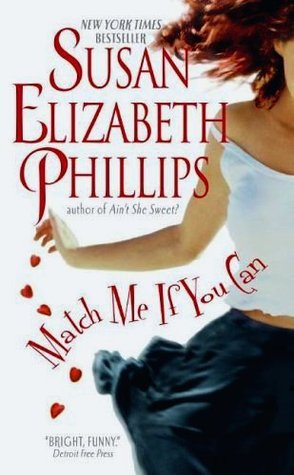
I've loved both Kristan Higgins work and that of Susan Elizabeth Phillips in the past and these three titles are every-bit as swoon-worthy and heart-warming as you could hope. (It definitely helps that they each contain swoon-worthy hunks too!) While some of Higgins and Phillips work is organized, very loosely, into a series, each book can be read as a stand-alone. Match Me if You Can is the 6th Chicago Stars book, of which I've only read the first book, and Call Me Irresistible is the 6th Wynette, Texas book, none of which I've read before, so you can read these books in whichever order you desire - it makes no difference. 

It's Getting HOT in Here!
pic name pic name pic name
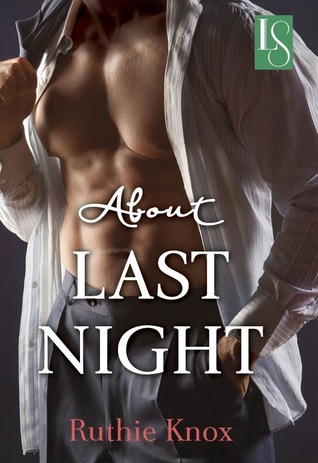
Ruthie Knox's books manage to be both incredible sexy and wonderfully poignant. Bailey's Asking for Trouble is the 4th installment in a series she writes, of which I've only read the first book, but it's my favorite one of the bunch. If you're looking for steamy reads with depth, place your bets on these good-looking covers. ;)

No Recommendation Required 
pic name pic name pic name
I've reviewed work by these three authors before and waxed poetry about their writing style and characterization that I hardly felt the need to re-iterate those same words. Laugh, told in the same vein as Live, is absolutely wonderful and Mary Ann Rivers leaves me speechless every time. Stealing Heaven is far more light-hearted than Scott's Heartbeat and a great deal cuter, so if you're in the need of a quick novel to curl up with and smile, this is the one. And Stardust is downright magical. Admittedly, I enjoyed the film better, but I'm not complaining after listening to the audio version of this one as well.

Short and Sweet: Novellas
pic name pic name pic name
I discovered Courtney Milan earlier this year and fell in LOVE. Both of these novellas are absolutely fantastic, as are her full-length historical romance novels. Milan's work is less steam and more depth, which I appreciate, so look out for a series of mini-reviews concerning her work sometime in the near-future. And Ilona Andrews. Well, I love them and Silent Blade is no exception. It's a short sci-fi novella that manages to pack both incredible world-building and plenty of sizzling romance into its short pages. A definite must-read for all fans. 

I apologize both for not having taken the time to review these and for writing increasingly shorter, poorer quality reviews these days. Just bear with me and hopefully my reviews will get back on track and feel less like performing a chore, which they've somewhat felt like these past few days. If you'd like any more information on these books, though, do e-mail me (ivybookbindings@gmail.com) and I'd love to fill you in on any more information you may require as this post truly is quite inadequate in addressing specifics about these novels.

Wednesday, March 26, 2014

ARC Review: Plus One by Elizabeth Fama


Title: Plus One

Author: Elizabeth Fama

Rating: 4 Stars

Release Date: April 8th, 2014

From the moment I cracked open the spine of Plus One, it felt as if Elizabeth Fama had written her sophomore novel just for me.

For the past year and a half, practically, I've been dutifully rejecting every dystopian novel that has come my way, from the older Maze Runner to the newer The 5th Wave and the unreleased Salvage. In other words, I have been mentally and not-so-mentally raging about the dystopian genre; at its lack of originality, its failure to draw forth complex characters, and at its blatant efforts to tone down political and sexual themes for a teenage audience. Needless to say, when Plus One fell into my lap, I had reached the end of my patience, determined to give up on the genre as a whole if Fama's sophomore novel - which had already received wide acclaim - failed me as well. Plus One, however, proved to be not only the novel I needed to read, but the novel I didn't even realize I wanted to read. If you've ever experienced a similar emotion - of becoming immersed inside a novel your imagination couldn't even have conjured up - then you'll know that that isn't an experience you're likely to forget. Ever.

In 1918, when the flu pandemic destroyed much of human life, our government decided to segregate humans into two groups: Night and Day. With strict curfews put in place, alongside rules, regulations, and a different type of lifestyle entirely, our society worked tirelessly to prevent the spread of the pandemic, believing that this method of split civilization would work to contain the disease. Following its success, however, the segregation remained, Smudges and Rays staying apart, yet another twisted form of the classic "separate but equal" which, as history sadly informs us, is only separate, not equal. Plus One begins with Sol, our protagonist, planning to break into a hospital in broad daylight with the intention of showing her dying grandfather the face of his great-granddaughter before he passes away. For Sol and Poppu, her grandfather, going outside during the day is a criminal offense. Ever since Sol's brother, Ciel, was switched to a Day schedule, however, Sol has seen little of her brother and even less of his family. It is Poppu's dying wish, though, that forces Sol to break the rigid rules of her society, daring into the sunlight and into the hospital where her newborn niece lies sleeping. Only, D'Arcy, a Ray apprentice whose perceptive nature immediately finds Sol suspicious, quickly derails her best-laid plans. But there are plans in motion that neither Sol nor D'Arcy can anticipate and before either of them quite know it, their lives become about so much more than a dying wish, societal rules, or even a sleeping baby.

From the beginning itself, Fama's sophomore novel stand out due to its impeccable world-building. Fama unveils the details of this world slowly, gradually, and timely. It's an extremely detailed set-up and I appreciated that Fama never skipped over the political repercussions of her world. If anything, the political motivations, gains, and corruption of Fama's society are just as palpable and integral in her world as they are in ours. While this isn't a dystopian novel (strictly speaking since it isn't futuristic, merely an alternate type of society), we do come to know of many imperfections within this society - imperfections spurned by both political drive and human nature. As a stand-alone, Plus One avoids the icky set-up of a classic dystopian trilogy in which the "big reveal" behind an imperfect society is hyped up to such an extent that by the time we discover its secrets, we are no longer impressed. Instead, Fama times her clues perfectly, dropping hints but never ruining the ultimate surprise for readers, which proves to be satisfying in a clever manner, drawing together threads from much earlier on in the novel to tie up the story as a whole. Another plus point is that the class inequalities are explored carefully, proving to be multiple shades of gray instead of the black-and-white Sol may originally think it is.

Nevertheless, those technical issues aside, the plot of Plus One is driven by Sol's love for her grandfather, Poppu. In an effort to ensure he holds his great-granddaughter before he dies, she sets out to break the law. While Fama does use sparing flashbacks to build the strength of the bond that Sol feels for her grandfather and older brother, the love within this family is palpable and ever-present, more a feeling than a combination of words, which I loved. Additionally, these flashbacks never took away from the novel, only adding to it due to the fact that they were sparse and concise. All too often it is easy to become embroiled in the past, not the present, but Fama never wanders down that path. Furthermore, Plus One continues to win points from me due to its ending. It is ever-so-slightly open, the way I like it, and I hope Fama writes a companion novel set in this same world because I'd love to know more about the political machinations of this society. (Admittedly, we are given quite a lot, but, as always, I just want MOAR.)

When it comes to the romance, however, (which its cover promises is far more prominent than it really is), Plus One faltered, ever-so-slightly. While I loved D'Arcy, the romantic interest of this novel, and found him to be a million shades of swoon, I wasn't wholly sold on the romance. Granted, there is a hefty amount of development and Sol and D'Arcy, though enticing characters on their own right, are even more explosive together. Yet, their relationship jumps very quickly from like to love once they realize a mini-plot twist. Admittedly, I could understand their excitement at this revelation, but I couldn't emotionally get behind it as I didn't feel as if their relationship exuded that level of affection. Fama writes it on the page flawlessly but as for my heart? It just couldn't take in the magnitude of feeling that Fama claimed lay between them. I also felt as if the word "love" was thrown around a little too casually here. Sol's time is short, from page one itself, because she takes it upon herself to break the law. We know she'll be serving time in jail and I feel as if the relationship between D'Arcy and Sol was rushed into love as a consequence despite the fact that it didn't feel as natural. Moreover, while I am all for sex in YA, the short sex scene in Plus One didn't serve a purpose. Once again, it felt as if D'Arcy and Sol rushed into this because their time was so limited and while I am able to understand that sentiment, I wish that their experience had some meaning. I wish it gave strength or courage or at least comfort. Instead, it felt very much like bucket-list sex. Like "I might die soon so let's just get it on now while we can" kind of sex which I wasn't a fan of.

I was fortunate enough to have Elizabeth Fama reach out to be about my issues with her portrayal of the romance in this novel and I'd like to share with you what she said:

I just wanted to say that I was happy to see you mention the "bucket-list" sex that bothered you. For me, you hit the nail on the head when you said "The relationship between D'Arcy and Sol was rushed into love" and "D'Arcy and Sol rushed into [sex] because their time was so limited." 

Your discomfort is appropriate, in my opinion. The sex scene is in there for a very serious reason, and I think of it as crucial to the more meaningful theme of the book: the loss of liberty and civil rights. I wanted Sol and D'Arcy to bring a human face to the injustice, by making the reader care about them. Here are two young people who should have the simple right to get to know each other and be together, who can't be together for an arbitrary reason imposed on them by the government. And now you--the reader--have gotten to know and love them and you want them to be together, at whatever pace is comfortable for them, and doesn't it stink that this system interferes with that? Doesn't that mean we should all protect our liberties? (This sentiment that I hoped readers would feel is stated explicitly by Grady Hastings, who is quoting Clarence Darrow in his speech when he says "You can only be free if I am free.") Sol's determination to have sex with D'Arcy while she can is symbolically the crux of the book for me. Her urgency is directly related to the loss of control she feels, knowing they'll be torn apart. I think Sol and D'Arcy are the kind of kids who would have had a longer courtship if their world and their circumstance had been different. But given their situation, they didn't feel they had the luxury to choose.

For me, reading Elizabeth's words shed a LOT of light on this story. I chose to first share my original sentiments in this review because I can sense that other readers may feel this way about the love story as well - and that, as Fama has said, is a normal reaction. When forced to think beyond this bubble, though, beyond the scope of just that one sex scene or those few moments when the word "love" slipped out, I love that, in reality, this entire relationship is a statement about Fama's imaginary society. All too often, swoon is added into a novel in order to make it more appealing to audiences. For me, the fact that the romance in Plus One serves a greater purpose and does, in fact, both engage readers and hold a deeper meaning within the plot of this story, truly won me over regarding its growth arc. Often times, it takes stepping back to look beyond mere emotion to understand the magnitude of a scene, both in real-life and in literature, and I hope other readers will appreciate this aspect of Plus One as well. Needless to say, Plus One comes very highly recommended from me. If its cover hasn't already compelled you to pre-order it, then I certainly hope I will.

Once again, a huge thank you to Elizabeth Fama for taking the time to write to be about Plus One. Your words have enhanced my appreciation as a reader, thinker, and analyzer and for that, I cannot thank you enough.

Tuesday, March 25, 2014

Review: The Winner's Curse by Marie Rutkoski


Title: The Winner's Curse (The Winner's Curse, #1)

Author: Marie Rutkoski 

Rating: 4 Stars

Ironically enough, I think the hype surrounding The Winner's Curse is its only flaw. 

Quite simply put, Rutkoski's latest venture into fantasy is stunning. Filled with rich world-building, vivid characters, and a simmering romance sure to make readers swoon with its intensity, Rutkoski adeptly maneuvers around typical tropes flawlessly. The Winner's Curse lacks a cliffhanger, lacks a love triangle, lacks insta-love, lacks a Mary Sue...basically, every nit-picky issue churned through the YA genre time and time again is absent from this novel. Moreover, the content within The Winner's Curse proves to be thought-provoking, pushing readers to fall in love with characters who are forced to make difficult decisions, whose moral compasses don't always point in the right directions. And, don't get me wrong, I loved all of this. 

But, after all the hype - the sheer LOVE pouring out for this book prevalent all over the blogosphere - I expected to be stunned. I expected to be brought to my knees in amazement, to shed tears of emotion and to be filled with the desire to re-read The Winner's Curse the moment I finished it. 

And, because I didn't feel that heady rush of emotion, I began to notice miniscule flaws within the story. Arin's severe lack of background. Odd shifts of time during the second-half of the novel. Disappointingly short action sequences. Political motivations hastily sped through. 

While the first-half of The Winner's Curse had me hook, line, and sinker, its second-half began to expose the holes in its veneer of perfection. Essentially, the plot direction of the latter half of this story is dense. It could, even, easily go on for another hundred pages, if only Rutkoski had bothered to include the fine detail she effortlessly poured through the first half of the novel. It isn't a major flaw; it isn't even a flaw I would have noticed had I not cracked open the spine of this book being aware of the hype surrounding it. Perhaps, if I had received an ARC, this would have been a 5 Star read. Alas, though I enjoyed The Winner's Curse, I did not love it. I want the sequel - desperately - but I also do not foresee this series becoming a trilogy, merely because the conflict seems to be rather condensed. Shadow and Bone felt like the start to an epic; The Winner's Curse, in contrast, merely seems to be the start of something very good.

Monday, March 24, 2014

ARC Review: Going Over by Beth Kephart


Title: Going Over

Author: Beth Kephart

Rating: 3 Stars

Release Date: April 1st, 2014

I feel oddly conflicted about Going Over.

Kephart's writing is, as always, a thing of beauty. From her vivid descriptions to her short, succinct phrases which convey emotion so artfully, the prose of this novel is to be marveled. Moreover, its subject matter - the tumultuous time period during which the Berlin Wall separated families and lovers in East and West Germany - has dutifully been researched, making this a novel which unabashedly immerses its readers into this era. Kephart writes of two young lovers, but even more than their tragic romance, she writes of their growth; of their relationship with family and friends, of their delicate dreams in a time period of suffering, and of their unrelentless hope for a future which seems so far away.

Nevertheless, that being said, I felt equally connected and distanced from certain aspects of this story.  Going Over is told primarily from the Ada's point of view, a young teenage girl who dearly misses her boyfriend stuck on the other side of the wall. In fact, it is Ada's perspective which brought this time period to life for me, particularly the entire story line concerning a young boy she looks after in day care. It is written with poise and flavor, fleshing out these complex relationships and managed to resonate deeply with me. On the other hand, though, the perspective of Stefan, her boyfriend who lives on the wrong side of the Berlin Wall, fell flat. It was told in second perspective, which felt unnecessary, and the love story within these pages didn't completely win me over as a result. While the romance is not the central point of the novel, it is a driving force of agency between these characters, dictating much of their actions and shaping their personalities. As a result, to feel indifferent towards it did me no favors.

Moreover, the crux of this novel lies in the fact that Stefan and Ada are separated. Ada is constantly convincing Stefan to take the risk, jump the wall, and live with her. It's dangerous and Stefan shares many reservations about this, which makes up the main story line of this book. Interspersed are other plot threads, all relevant to the time period, but this main arc didn't strike completely true with me. Mostly because the tipping point that launches Stefan into finally jumping the wall for Ada rang false, not selling me on this epic love story in the least.

Small Damages, also by Kephart, won me over heart-and-soul when I read it last year. Not only did it contain beautifully written characters full of messy dilemmas, but it forced me to re-evaluate my opinions on the many issues it covered. Compared to that, Going Over falls flat as it never truly propelled me to think beyond the scope of the story. If you're looking to get a taste of Kephart's writing style, however, alongside a moving story, I cannot recommend that novel enough. Going Over is beautifully written and its ending is downright poetic, but I still am far more conflicted about it than I'd like to be...