I've been lazy when it comes to blogging, lately. I know it, you know it, publishers know it.
It's embarrassing.
In my defense, I spend every waking minute either sleeping, studying, eating, or de-stressing with friends. I squeeze in a few minutes every day to read, even if it's just one chapter, but actually sitting down to write a review--or even jot down a few thoughts--is simply too much. (I know, I know, it's SUMMER, but I'm at an internship, people! I'm supposedly conducting Very Important Math Research! I get paychecks! I have to buy my own groceries! I'M BECOMING AN ADULT!)
I've published a few reviews, here and there, that weren't written over Winter Break. I've assembled a handful of guest posts, commented on a couple of blogs a week--I've been present but, unfortunately, the books that I've wanted to discuss have slipped under the radar.
Hence, this post; Recent Reads: Diversity Edition.
One of the most notable--and pleasant surprises--of 2015 has been discovering diversity in the fiction I've been reading. YA and NA are notorious for ignoring minority races, sexes, and personalities so I'm truly so proud of the strides that the publishing industry and authors are making to lessen this gap.
First and foremost, I want to talk about Trade Me, Courtney Milan's latest novel and her debut New Adult endeavor. Courtney Milan is known for writing unusual historical romance novels--the kind that make you swoon but also make you think. I love her historical fiction primarily because she writes about the types of female heroines no other author really feels comfortable discussing, whether it be the feminists, the scientists, the overly large, or those of different races. What's more, her male characters range from the classic duke to the a-typical male virgin to the self-proclaimed male suffragist. Thus, I knew Trade Me was going to be a treat even before I cracked open its spine because--Courtney Milan.
But Trade Me surpassed even my wildest expectations. Built upon the foundation of a relatively flimsy plot line--wealthy young man volunteers to switch lives with a poor immigrant woman--Trade Me does a brilliant job of pointing out not only the privileges of the wealthy, but also of the non-immigrant. It features an Asian protagonist and is one of the first times that I have been able to sympathize completely with a character due to her life circumstances--immigrant parents who don't fit into the American culture, a series of different traditional values, struggling to make ends meet, missing family members who live oversees. And, honestly, I found the entire experience shocking and eye-opening. How was Trade Me, published in January of 2015, the first time I had been able to relate to the immigrant experience in a YA or NA novel? It made me angry but, most of all, it made me grateful to Courtney Milan for doing her research and being brave enough to write about a culture of people different from her own.
Beyond the in-your-face diversity of an Asian protagonist, though, Milan weaves this love story through many complex issues. Unfortunately, I cannot reveal much more due to fear of spoilers, but none of these characters are what they seem on the surface--and I love that. Admittedly, the whole "the rich have problems, too!" trope seems cliche but, I promise you, Milan writes it in such a way that you never find yourself thinking that way. If you're looking for a couple to swoon over, but one that will destroy your every pre-conceived notion about them, Trade Me is the book for you.
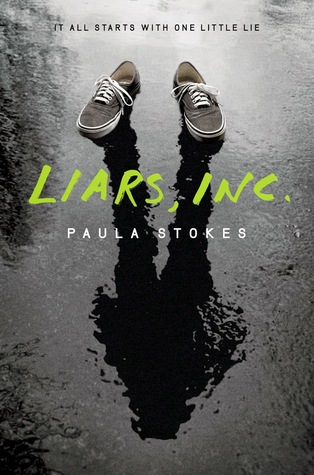
Next: Liars, Inc. by Paula Stokes. I had Stokes stop by on the blog a few weeks ago to talk about the diversity in her latest novel, a thriller, and was incredibly moved by her discussion of not only racial diversity--with Parvati, the female love-interest of the novel--but also of Max, the protagonist. From the surface, there doesn't seem to be a lot of diversity to offer with Max--after all, he is a Causasion, heterosexual male. But, Max isn't your typical male protagonist. Not only does he struggle academically, but he also isn't the classic bad boy or the shy nerd or the cute guy-next-door. And, by breaking that mold, Stokes introduces a new form of diversity: diversity of personality. It's okay not to fit into a pre-labeled, pre-stamped, and pre-approved box.
I also really appreciated the fact that the female protagonist of this novel, Parvati, wasn't the perfect love interest. I adore a sharp-tongued, nasty female lead, if only because they defy the stereotype that women must be perfect and dainty and polite. Moreover, I rarely see it done with a woman of color because--let's be honest--I think authors are worried to include PoC who aren't cast in the role of "good guy." PoC are just as flawed and real as non-PoC so, authors, don't worry about offending us by creating angry and bitterly caustic PoC. Not that Parvati is just oozing badness, but she certainly is far from perfect and I appreciate the unapologetic ambiguity in her characterization.
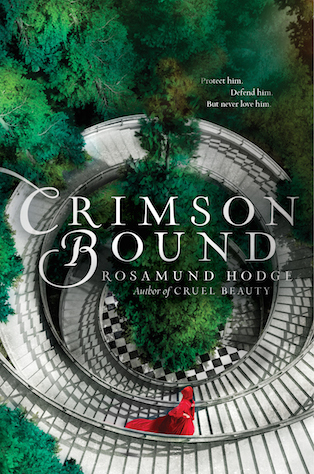
And speaking of imperfect female heroines, that brings me to Rosamund Hodge's Crimson Bound, one of my favorite novels published this year. Hodge's debut, Cruel Beauty, already struck the perfect cord with me. After all, we had an angry 'Beauty' and an evil 'Beast'--can you really even beat that? But Hodge did one better in Crimson Bound, making her protagonist a killer. Can you redeem an individual like that? Do you?
One of the strongest aspects of this novel, for me, is the fact that Hodge enables us, the reader, to sympathize with and root for a heroine who is selfish, who murders others, and in general is not the paragon of perfection we've come to associate with an ideal female lead. Now that, right there, that's diversity. Rachelle isn't all-out evil--not even close--but she also does bad, horrible things. Yet, this story comes together so perfectly, weaving together a fairy tale re-telling with the background of a host of characters who stand by their flawed personalities and still manage to come out stronger; to grow and change. Moreover, Hodge is a genius at building re-tellings that can be recognized but that also veer off the beaten track and incorporate innovate magic combined with unseen plot twists so that you're on the edge of your seat till the very end. I love them, dearly, and am waiting with bated breath for her next novel. I know she will deliver.
Of course, these aren't all the diverse reads I've read recently but they are some of the most meaningful ones I've come across this year. Others, like The Summer of Chasing Mermaids by Sarah Ockler (literally my new favorite book EVER!) and The Wrath and the Dawn will be getting their own, full-fledged reviews soon. And yet others, like Trish Doller's The Devil You Know, while well-appreciated for their feminism, simply didn't do it for me storyline-wise. (And, further, others, like Simon and the Homo Sapien Agenda were just so good I couldn't find the words to write about them!) Nevertheless, I think the awareness of characters that break the mold and defy traditional racial, sexual, and gender norms is rising and I'm excited to read more novels tackling these barriers to diversity.
If you know of any other diverse reads, please let me know in the comments below! I'm always on the prowl for a new read and, in particular, authors brave enough to write stories that may not sell, but will definitely make a statement and take a stand.
Sunday, June 14, 2015
Wednesday, June 10, 2015
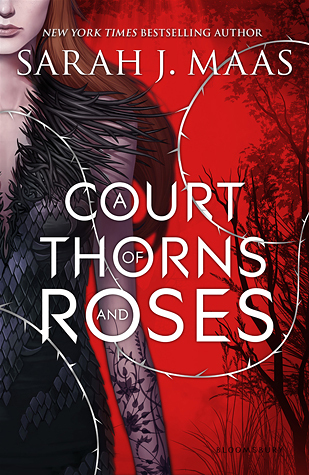
Review: A Court of Thorns and Roses by Sarah J. Maas
Title: A Court of Thorns and Roses (A Court of Thorns and Roses, #1)
Author: Sarah J. Maas
Rating: 3 Stars
It's no secret that Sarah J. Maas just doesn't do it for me. Her debut Thrones of Glass fell seriously short of impressive--for me, that is--and though I have regarded her fans with a degree of jealousy (seriously, no one wants to joins the Sarah J. Maas bandwagon more than I), I still remained skeptical about her latest, A Court of Thorns and Roses. When the masses praise Maas (see what I did there?), their recommendations rarely apply to me. With ACoTaR, however, I admit that this is far superior to Throne of Glass in every way. Not only has Maas's prose improved, but her plot, her world-building, and her characters are more lively and entertaining than ever. Still, though ACoTaR has jump-started her into the hearts of many readers, I'm afraid there is still no room for her in mine.
A Court of Thorns and Roses reads much like a re-telling of the beloved fable, "Beauty and the Beast." And, at first, I loved it. I was head-over-heels for Feyre, the youngest of three sisters who has learned to hunt and feed her feeble family. I waited in breathless anticipation as it was pain-stakingly revealed that Feyre had broken the laws of the land by killing one of the Fey, under disguise of a wolf, and would be whisked away from her home and family to live out the remainder of her life with Tamlin, whose friend she killed. And then, just when it seemed I had arrived at my favorite part of this well-known tale--when Beauty falls in love with the Beast--I had the rug pulled out from underneath me.
You see, Tamlin is no Beast. Tamlin, despite the mask melded to his face, despite the fact that he and his kingdom are under a curse, is a Beauty. And Feyre, too, is a Beauty. Who ever heard of "Beauty and the Beauty"? The crux of "Beauty and the Beast" lies in the magic--the sheer magic--of having a young, capable, intelligent, beautiful woman find something to love in a snarling, grotesque beast. Tamlin, however, is hot. I wouldn't take much of an issue with this--after all, the "Beast" of Marillier's Heart's Blood is a strikingly good-looking man--but at least Marillier's "Beast" is snarling and rude, contemptuous and unapproachable. Tamlin is kind--sweet, even--and is eager to please Feyre. In fact, Tamlin goes above and beyond--ensuring that her family is taken care of, bringing her paints, showing her the hidden beauties of his kingdom--to make Feyre happy. Neither the reader nor Feyre have to work to love Tamlin. It's a foregone conclusion from the moment he transforms from his temporary bestial form to his ethereal self.
Having read Rosamund Hodge's Cruel Beauty, which pushes the boundaries of the "Beauty and the Beast" re-telling with a prickly heroine and a truly horrendous hero, I found ACoTaR to be tame, dull, and boring, even, in its romance. From the hype surrounding this novel, its eye-catching cover, and the synopsis that promised so much more I think my expectations were higher than they should have been. I really thought this was going to be more along the vein of Cruel Beauty than a New Adult novel in a fantasy setting. (And, for those of you on the fence about this, I highly recommend Cruel Beauty as an alternative.)
I find next to nothing compelling about an easy love story. It was well-written, I'll give it that, and I find immense potential in the world Maas has created, not to mention the secondary characters whose personalities are far more complex than that of Feyre or Tamlin, but I just didn't swoon at this romance. Is it fan-your-face hot? Absolutely! But the type of slow-burn, butterflies-in-your-stomach, giddy sensation that accompanies a well-written "Beauty and the Beast" tale was simply missing. Moreover, Mass knows this love story is too easy; she knows that it needs more of a challenge. So, the entire second-half of the novel, that's exactly what she does--introduce a few more thorns into this bed of roses. What I really enjoyed about the second-half of the novel is the fact that we, as the reader, finally feel the stakes at hand. We begin to question and worry and tense up at the thought that these two may not make it through, after all.
But, despite that, I much prefer a novel where the tension stems from the romance between the two leads--the plausibility of it, the question of whether or not it will finally come to fruition--than anything else. Moreover, I have my own plethora of spoiler-y issues with the second-half, namely from the way Feyre is treated as a woman. Nevertheless, I will not hesitate to admit that ACoTaR is compulsively readable and though this wasn't the re-telling I wanted it to be, I'm hoping that the sequel--an original, and not a re-telling, from my understanding--will pull me deeper into this world and its characters. For now, I'll wave the Sarah J. Maas bandwagon a disappointed goodbye.
Saturday, May 30, 2015
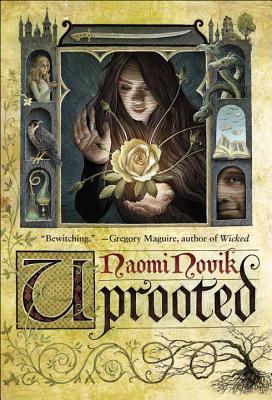
Review: Uprooted by Naomi Novik
Title: Uprooted
Author: Naomi Novik
Rating: 4.5 Stars
Oh, this was good.
I originally dismissed Uprooted as being a Middle Grade novel--something about its cover reminded me of Frances Hardinge--and, not being a reader who gravitates towards the MG genre, I didn't bother to even read its synopsis. Big. Mistake.
Luckily for me, Uprooted began showing up on my newsfeed constantly. So often, in fact, that I finally scourged through all its reviews, read its synopsis, and proceeded to get my hands on it immediately. Though it has been compared to "Beauty & the Beast," its similarities to the fairy tale begin and end with a young girl being whisked away to live in a tower with a "beast" of a man who converses with none and harbors secrets of his own. Uprooted takes off on its own after that initial set-up, deviated almost entirely from the fable we know and becoming a magical tale in its own right. If I had to compare it to any novel, I'd compare it more to A Court of Thorns and Roses, which also released around the same time. Maas's novel and Novik's both feature strong protagonists who are imprisoned by a "beast" only to find themselves willing to help this "beast" in overcoming the struggles that plague him. Maas's novel is far more deeply entrenched in the New Adult genre--romance-centric with hints of erotica--while Novik's is a fantasy novel, through-and-through.
Needless to say, I've enjoyed Novik's far more than I expected to and cannot recommend this gem of a stand-alone story enough.
Agnieszka, the protagonist of our tale, is a wisp of a girl. Not only is she prone to losing items and has a knack for dirtying her clothes, she is as unexceptional as they come. Kasia, her best friend, is her exact opposite: beautiful, talented, and capable. Thus, the entire village expects that the Dragon, the wizard who guards their lands, will take Kasia to his tower. Every ten years, the Dragon selects a girl from the village to live with him for a decade. For ten years these girls live, away from their families and loved ones, serving him dutifully until he releases them with a sack of money and beautiful, gold-spun dresses. He's a fair and capable lord but his unwillingness to interact with the villagers--and the fact that he will likely take Kasia away--makes Agnieszka resent him.
When the Dragon selects Agnieszka instead of Kasia, she--and those around her--are all astonished. It quickly becomes evident, however, that Agnieszka is a witch. By law, the Dragon is compelled to take her on as an apprentice and train her in magic. As Agnieszka struggles to learn, however, dangerous evils are brewing. The Wood, the dark forest in which people disappear, is stirring and the royal family grows restless at the fact that their Queen, who vanished into the wood twenty years ago, has still not been found. Novik expertly weaves fantasy alongside political intrigue and deep, meaningful relationships to present Uprooted. Trust me, once you sink your teeth into this world, the last thing you'll actually want is to be uprooted at all.
One of my favorite aspects of this novel is the friendship between Agnieszka and Kasia. Kasia has been preparing all her life to be chosen by the Dragon and when she is left behind, neither she nor her mother know what to think. Similarly, Agnieszka, despite hating the fact that her best friend would be snatched away from her, could not help but be relieved that she would not be chosen by the Dragon herself. With their roles reversed, however, I thoroughly enjoyed watching as both Agnieszka and Kasia grew on their owns, facing the strange twists of fate that life threw at them. More than that, though, I appreciated the manner in which their friendship changed with time and circumstance. As a student fresh out of her first-year of college, I connected with their honest--and often tumultuous--relationship. I love nothing more than when fantasy incorporates realistic elements in a make-believe world and Novik does it better than I've seen in awhile.
Nevertheless, I practically squealed when I realized how politically driven this novel was. Uprooted contains an intriguing plot, one that is best experienced blind, but the magical and royal politics of this realm are not only fleshed-out, they are manageable in this stand-alone volume. Moreover, they contribute to the stellar world-building and through the political sphere, the villain of this novel becomes all the more evil. I'm glad I didn't read this at night because--believe me--the Wood is terrifying. It's hard, these days, to create a believable evil but Novik manages it--just as she manages nearly everything else in this novel--to perfection.
The only aspect of this novel that I found (sliiiightly) lacking was the romance. I adored it. Agnieszka and the Dragon are a pair of complements. Though they seem unlikely at first, what with her being held prisoner by him, as Agnieszka grows and gains more agency, so too does she attain more equal ground with the Dragon. Novik paces their romance well and the growth of their feelings for one another feels authentic. I only wish, though, that we could have seen more of their interactions in the latter-half of the novel. Agnieszka and the Dragon are not together throughout the novel and though that aids the plot greatly, I also wished for more of them together. And, in particular, I wanted to learn more about the Dragon. Agnieszka I feel as if I know completely--her voice is friendly, her mannerisms adorable, and her strength admirable--but the Dragon is still an enigma, in many ways. Nevertheless, I swooned and sighed and, at the end of the day, I can't ask for much more.
If it isn't already clear, Uprooted is a must-read for fantasy lovers. It's beautifully written, scripted to perfection, and unique in the sense that it reads like lore--like a Marillier novel--despite being much more far-reaching than her Sevenwaters tales tend to be. For a fantasy-loving, political-plot-adoring, romance-swooning, stand-alone-admiring reader like me, Uprooted was a couple hours of sheer joy.
Friday, May 22, 2015
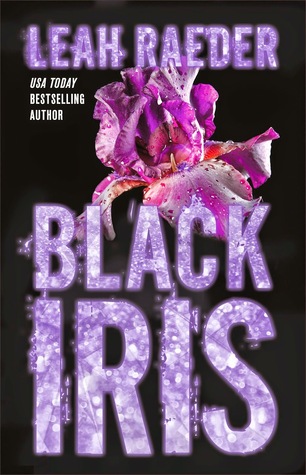
Review: Black Iris by Leah Raeder
Title: Black Iris
Author: Leah Raeder
Rating: 4 Stars
I don’t think I can adequately begin to express just how important of a book Black Iris is. I attend an extremely liberal, accepting college but, even then, this novel made me feel less alone and more comfortable in my own skin—and that’s no small feat.
Black Iris is a revenge story, one that I often found difficult to read, but Raeder’s prose is pure magic and it is impossible to stay away from this book for long. While Unteachable was a clear-cut forbidden romance, filled with emotion and romance, Black Iris is its darker, more mysterious cousin. Raeder crafts this novel in such a way that timelines converge, split apart, and shift dramatically. It’s easy to think you know what’s happening or what the end result is or who the victim and perpetrator really are—but, truly, you’ve simply been kept in the dark until the final, all-too-unpredictable reveal. It’s a brilliant feat of writing, this combination of prose and plot, and when you add Raeder’s cutthroat emotion—the kind that seeps into your skin and deep into the pits of your stomach—it is evident that Black Iris is different. It is special.
In all honesty, I do not love this book. I don’t think I could ever read it again—a strange combination of hitting too close to home and not too close at all—but that does not negate the fact that I thoroughly enjoyed the experience of it. More than anything else, I am grateful to Raeder for writing about sexual fluidity; for creating characters who do not fit in any boxes but still manage to find happiness. It is important for readers to be able to pick up a book and find characters they identify with—sexually, and personality-wise. With Unteachable Raeder already made strides in writing an unlikable heroine who, somehow, we manage to root for. With Black Iris, the lines are even more blurred. I do not know if I always rooted for this heroine, but I always respected and supported her decision; I always accepted who she was and her bravery in reaching that place of self-confidence.
Black Iris is best read blind. I hesitate to discuss the plot or the characters or anything, really, with the exception of my feelings. And, oh my, did I feel. I fell for the wrong characters, I rooted for the morally corrupt, I switched sides. There is nothing I love more than a novel that inspires such a wide range of emotion and with Black Iris, that is precisely what you are guaranteed. Leah Raeder, thank you for having the courage to write such an important, meaningful novel. I appreciate your guts and, in particular, you sharing your story in the acknowledgements section. It means more than you can know, perhaps.
Wednesday, May 13, 2015
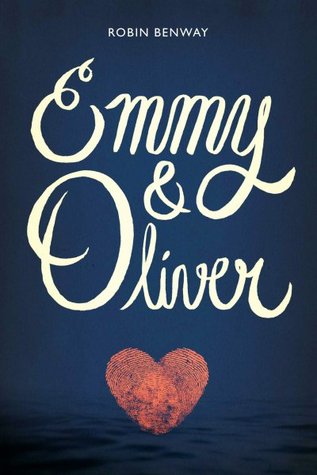
ARC Review: Emmy & Oliver by Robin Benway
Title: Emmy & Oliver
Author: Robin Benway
Rating: 4 Stars
Release Date: June 23rd, 2015
Emmy & Oliver is the type of best friend romance I would normally be clamoring head-over-heels for...only, it's a liiitle more complex than that. Emmy and Oliver are not only neighbors, they're best friends. They've grown up alongside one another and for the first seven years of their life, they have shared everything, including their birthdays. When Oliver's father arrives to pick him up after school one Friday afternoon, no one thinks much of it. After all, Oliver spends every weekend with his father. When he doesn't come back to school on Monday, however, that's when Emmy starts worrying. When he doesn't come back for ten years, it's a tragedy.
At seven, Oliver is kidnapped by his father and, at seventeen, he is found in an apartment in New York City. To Oliver, his life has been a series of adventures; him and his father against the world. Oliver was led to believe that his mother abandoned him and, grief-stricken and confused, he never attempted to contact her. A curious Google search a decade later reveals that his mother has been searching for Oliver all her life. Oliver's absence has not only fractured his life, it has torn up the lives of their entire community. Emmy's parents, once carefree, have been strict, curfew-abiding jailers for much of Emmy's life. Their fear following Oliver's kidnapping has haunted Emmy her entire life and now, at seventeen, all Emmy wants is to surf and attend UCSD--dreams that will never be fulfilled as her parents have already planned that she will commute to college from home and instead of enroll her in dangerous sports like surfing, the most they have allowed her to do is have a car.
When Oliver returns, Emmy doesn't know what to think. She and Oliver were best friends ten years ago but can they still be best friends now? Is Oliver even the same person? Although Oliver hasn't been maltreated by his father, Emmy cannot even begin to understand his life or emotional state. She, living in the same home and growing up with the same friends, Caroline and Drew, who also used to be friends with Oliver, is comfortable and happy where she is. But Oliver, who has traveled around the nation and is coming all the way from New York City...does he even want to live with his mother anymore? While Oliver's mother never stopped looking for him, she also refused to stop living. Now married with two twin girls who Emmy babysits every week, the world has gone forward despite the fact that Oliver has come back and the road ahead for Emmy, Oliver, and those closest to them is paved with hardships.
It took me awhile to truly immerse myself in this tale, primarily because Benway has to set-up the backdrop of this novel and Oliver's story is a sad, depressing one. Though he doesn't suffer from trauma and has been treated like a son by his father, he doesn't go out of his way to befriend students and his arrival in high school isn't the easiest of transitions. Yet, Emmy is a laid-back, easy-going heroine and her willingness to draw Oliver back into her life is what truly made me invested in this love story. Emmy is frank and open about her life, showing Oliver her favorite spots to surf and immediately treating him as the friend he always was to her. The fact that Emmy accepts that Oliver was gone for ten years but acts as if he knows her is what enables him to leave his shell and slowly join her circle of friends.
Emmy and Caro are the type of best friends you always read about or see on television but Benway makes them even more realistic than the classic portrayal. Caro is the youngest of five siblings and unlike Emmy, who is an only child and under the constant scrutiny of her parents, Caro's parents could hardly care less where she is or what she does. She shares a room with her messy older sister, Heather, and Caro dreams of sharing an apartment with Emmy and attending college with her. Drew, who has recently told his family that he is gay, struggles with the fact that his parents still love him and yet are disappointed in him. Their trio is a tight one and while Emmy grows and changes due to Oliver's presence in her life, her friends do too. They each have their own issues and the fact that they became so alive, despite remaining secondary characters, is a testament to Benway's skill.
Emmy and Oliver's own romance is sweet and slow to develop. You're almost not certain if they'll choose to remain friends but it's so very obvious that their feelings for one another run deeper than mere friendship and the support they give one another is incredible to watch. Emmy and Oliver have one another's backs and when they find it difficult to speak with their parents or other friends, they somehow have the right words to coax the truth from one another. Reading about their relationship is heart-warming and swoon-worthy in all the right ways. Especially because, first and foremost, they will always be friends.
I really enjoyed how this novel focused so deeply on family units and parental relationships. Whether it be the relationship Emmy sustains with her parents where she is forced to hide parts of her personality to please them or the one between Oliver and his mother where he feels unable to confide in her, Benway captures both the difficulties and joys of family. Emmy & Oliver is being marketed as a love story but, truly, I felt as if the romance was secondary to the growth both Oliver and Emmy undergo over the course of this novel and, what's more, their friendship and relationships with others--from their parents to their friends to the one between Oliver and his father--is what is at the crux of this novel. Sure, there's a love story too--a sweet, sweet one--but Emmy & Oliver is about so much more than that mere label.
Benway writes in a manner that makes even the darkest of subjects accessible and her trademark humor, combined with the easy sarcastic dialogue she imbibes within her characters, makes her novels fly by. I just can't put one of her books down and Emmy & Oliver, with an older cast on the cusp of transitioning into college, brings forth a variety of themes and concepts that I love to see in YA. Benway explores the idea of freedom in college, not to mention the harsh reality of leaving behind your high school friends, with such aplomb that I hope she returns to this older YA age group and explores more of those ideas in greater depth. Having read her entire backlist at this point, I cannot wait to see what she has up her sleeve next (I'm keeping my fingers crossed for another Also Known As novel). Whatever it is, though, it'll be worth the wait.
Subscribe to:
Posts (Atom)